Park Hill Neighborhood Guide
An architect- and real estate-informed guide to Park Hill—covering its three distinct subareas, history, architecture, housing eras, parks, transportation, market conditions, ownership considerations, and the trade-offs that matter when evaluating an individual property.
Facts, professional judgment, and property-level implications are intentionally separated.
This guide is designed to help readers make better neighborhood and property decisions—not to persuade anyone to buy or sell. It combines cited public information, historical research, architectural analysis, field observation, and real estate experience.
Greater Park Hill is not one uniform market. South Park Hill, North Park Hill, and Northeast Park Hill developed at different times and can differ meaningfully in housing era, architecture, lot pattern, tree canopy, amenities, traffic exposure, and market behavior.
Important geographic note: Broad Park Hill conclusions should not automatically be applied to every block or property. Use this guide as orientation, then verify address-specific conditions before making a real estate decision.
Verified Fact
A sourced statement that can be independently checked.
Professional Observation
A pattern observed through practice, field review, or repeated experience.
Architect Perspective
Design analysis involving buildings, lots, streets, infrastructure, and urban form.
Broker Perspective
Practical interpretation based on transactions, market behavior, and buyer-seller decisions.
Last reviewed: August 2026. This guide is educational and should not replace property-specific due diligence, legal or tax advice, engineering review, inspection, appraisal, insurance review, school-assignment verification, or lender guidance.
A Neighborhood Built in Layers
Park Hill is best understood as a collection of related neighborhoods rather than one uniform residential environment. Housing era, architecture, block character, lot conditions, commercial access, and market behavior can vary meaningfully across Greater Park Hill.
Three Park Hills
South Park Hill, North Park Hill, and Northeast Park Hill form Greater Park Hill.
Multiple Housing Eras
Homes span early twentieth-century construction through postwar development and later renovation or infill.
Architectural Variety
Tudors, bungalows, Denver Squares, revival styles, ranches, and other residential forms appear across the area.
East-Central Denver
A central location with strong relationships to City Park, Colfax Avenue, Colorado Boulevard, and northeast Denver.
City Park Access
City Park is a major recreational and cultural anchor immediately west of South Park Hill.
Park Hill Park
The 155-acre former golf-course property is now city-owned public open space with long-term park planning underway.
Distributed Commercial Nodes
Kearney Street, Oneida Park, East Colfax, and smaller nodes create different walkability patterns by location.
Property-Level Differences
Block, lot, renovation quality, building condition, and housing era can matter more than broad neighborhood averages.
Professional observation: Park Hill is often discussed as one neighborhood, but property decisions become more accurate as the analysis narrows. Start with Greater Park Hill, then evaluate the subarea, block, lot, house, condition, and price. Construction era, renovation quality, traffic exposure, tree canopy, commercial access, and public investment can differ meaningfully over relatively short distances.
Greater Park Hill Is Three Related Neighborhoods
For this guide, Greater Park Hill refers to South Park Hill, North Park Hill, and Northeast Park Hill. These areas share history and geography, but they developed at different times and should not be treated as interchangeable.
The most useful comparison is not simply “Park Hill versus another neighborhood.” It is often South, North, or Northeast Park Hill, then the specific block, lot, housing era, and condition of the individual property.
South Park Hill
General character: Earlier development, strong architectural variety, mature streetscapes, and close relationships to City Park and neighborhood commercial nodes.
Consider: Older building systems, renovation quality, traffic exposure near major corridors, and block-by-block differences in walkability.
North Park Hill
General character: Transitional housing eras and a broad mix of residential forms, schools, civic institutions, and neighborhood-serving businesses.
Consider: Housing age, exact block context, tree canopy, commercial access, and which nearby homes form the true competitive market.
Northeast Park Hill
General character: Stronger postwar influence, distinct Black history, and proximity to the evolving Park Hill Park property.
Consider: Later housing stock, public-investment changes, open-space access, major-road relationships, and differences between interior and edge conditions.
Professional observation: Neighborhood labels are useful for orientation, but they are too broad for property-level decisions. In Park Hill, the analysis becomes more accurate as it narrows from subarea to block to lot to house.
Three Areas. Different Housing Contexts.
This comparison is intended as a practical orientation—not a ranking. Conditions can change within a few blocks, and every property should be evaluated using current, address-specific information.
South Park Hill
Housing context: Greater concentration of early twentieth-century homes, including Tudors, bungalows, Denver Squares, and other revival forms.
Daily life: Strong relationships to City Park, Kearney-area businesses, Colfax, and established residential streets.
Evaluate carefully: Renovation history, older systems, drainage, sewer condition, and arterial exposure.
North Park Hill
Housing context: A broader transition among early, mid-century, and later residential forms.
Daily life: Schools, civic institutions, parks, neighborhood businesses, and residential streets create varied block-level experiences.
Evaluate carefully: Construction era, immediate comparable set, tree canopy, and exact commercial or traffic relationships.
Northeast Park Hill
Housing context: Stronger postwar influence and a different pattern of residential development.
Daily life: Neighborhood identity is increasingly influenced by Park Hill Park and surrounding public investment.
Evaluate carefully: Open-space proximity, future change, road access, lot conditions, and differences between interior and perimeter blocks.
How to use this comparison
Start with lifestyle: Identify the parks, schools, transportation, commercial areas, and daily destinations that matter most.
Then evaluate the block: Compare traffic, parking, orientation, privacy, tree canopy, alley conditions, and pedestrian routes.
Finally evaluate the property: Review housing era, architecture, systems, renovation quality, lot relationship, maintenance history, and price.
Important: Exact boundaries and property conditions should be confirmed through current City and County of Denver records and property-specific due diligence.
A Neighborhood Built Over Generations
Park Hill’s present character is the product of more than a century of Denver growth. Formal development began in the late nineteenth century, followed by major periods of residential construction in the early twentieth century and again after World War II.
Because the neighborhood developed gradually rather than through one coordinated plan, its streets contain multiple housing eras, architectural styles, construction methods, lot patterns, and infrastructure conditions.
From Streetcar Suburb to Established Denver Neighborhood
Early Park Hill grew as Denver expanded eastward. Streetcar service helped make residential development farther from downtown practical while still connecting residents to employment, shopping, and civic life.
The neighborhood’s connected streets, sidewalks, alleys, traditional setbacks, and small commercial nodes still reflect those earlier development patterns.
Major construction periods in the 1920s and 1930s introduced many of the Tudors, bungalows, Denver Squares, and revival-style homes associated with Park Hill today. Later development in the 1940s and 1950s introduced simpler postwar forms, including ranch houses and other mid-century residential types.
Why Construction Era Still Matters
Different building eras can mean different assumptions about:
- foundations and framing;
- electrical infrastructure;
- plumbing and sewer materials;
- insulation and windows;
- mechanical systems;
- garage relationships; and
- floor-plan organization.
Age alone does not determine quality. It helps establish which questions should be asked.
Park Hill's Identity Was Shaped by Housing, Integration, and Civic Action
Park Hill’s history extends beyond architecture. Like many American cities, Denver experienced racially restrictive housing practices, discriminatory lending, steering, blockbusting, and other barriers that affected where people could live.
Park Hill became an important setting for organized efforts to resist those patterns. Residents, churches, civic organizations, and neighborhood leaders worked to support an integrated community.
In 1960, residents helped organize the Park Hill Action Committee, which became closely associated with neighborhood integration efforts. Park Hill resident Rachel Noel, the first Black woman elected to the Denver Board of Education, later played a major role in Denver’s school-integration history through her 1968 resolution calling for an integration plan.
This history deserves more than a generic description of Park Hill as “diverse.” The neighborhood’s identity was shaped partly through active conflict and organizing around race, housing, education, and access to opportunity.
How Park Hill Took Shape
Late 1800s
Formal Park Hill development begins as Denver expands eastward.
1920s–1930s
Major residential growth adds many of the Tudors, bungalows, Denver Squares, and revival-style homes associated with Park Hill.
1940s–1950s
Postwar construction expands farther north and introduces simpler, more horizontally organized housing forms.
Today
Renovation, preservation, infill, public investment, and changing transportation continue to reshape Greater Park Hill one property and project at a time.
Architect Perspective: Historic character should not be confused with building condition. A Park Hill home can retain exceptional craftsmanship while still requiring meaningful investment in drainage, electrical systems, plumbing, insulation, roofing, foundations, or mechanical equipment. The more useful question is not simply “How old is this house?” but “What has happened to this house since it was built?”
Architecture Creates Character. Construction History Shapes Ownership.
Park Hill developed over multiple generations, creating a broad mix of architectural styles and construction methods. A beautifully restored Tudor and a modest postwar ranch may both be excellent homes, but they often present very different maintenance, renovation, and ownership considerations.
Understanding the home’s era, systems, alterations, and relationship to its lot is often more useful than identifying architectural style alone.
A Timeline of Residential Design
1900–1919
Typical traits: porches, formal rooms, detached alley garages, masonry, original woodwork, and traditional proportions.
1920–1939
Typical traits: Tudors, bungalows, Denver Squares, revival styles, decorative masonry, fireplaces, hardwood floors, and detailed millwork.
1940–1965
Typical traits: ranch forms, simpler detailing, more informal layouts, larger windows, and increased emphasis on automobiles and garages.
Renovation & Infill
Typical traits: expanded floor plans, modernized systems, additions, adaptive reuse of older homes, and limited contemporary replacement construction.
Architecture Across Park Hill
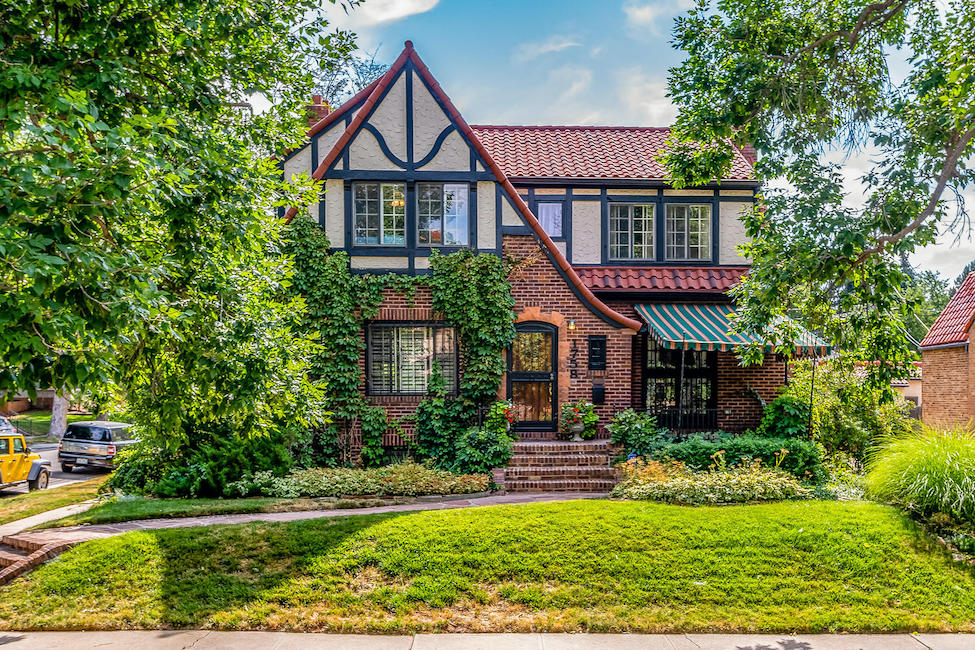
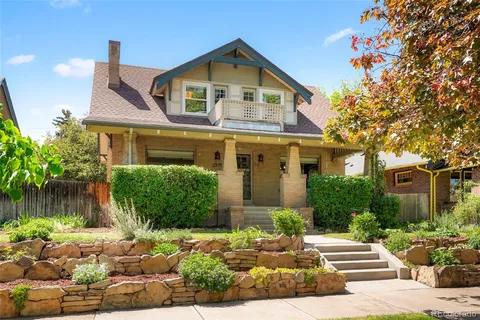
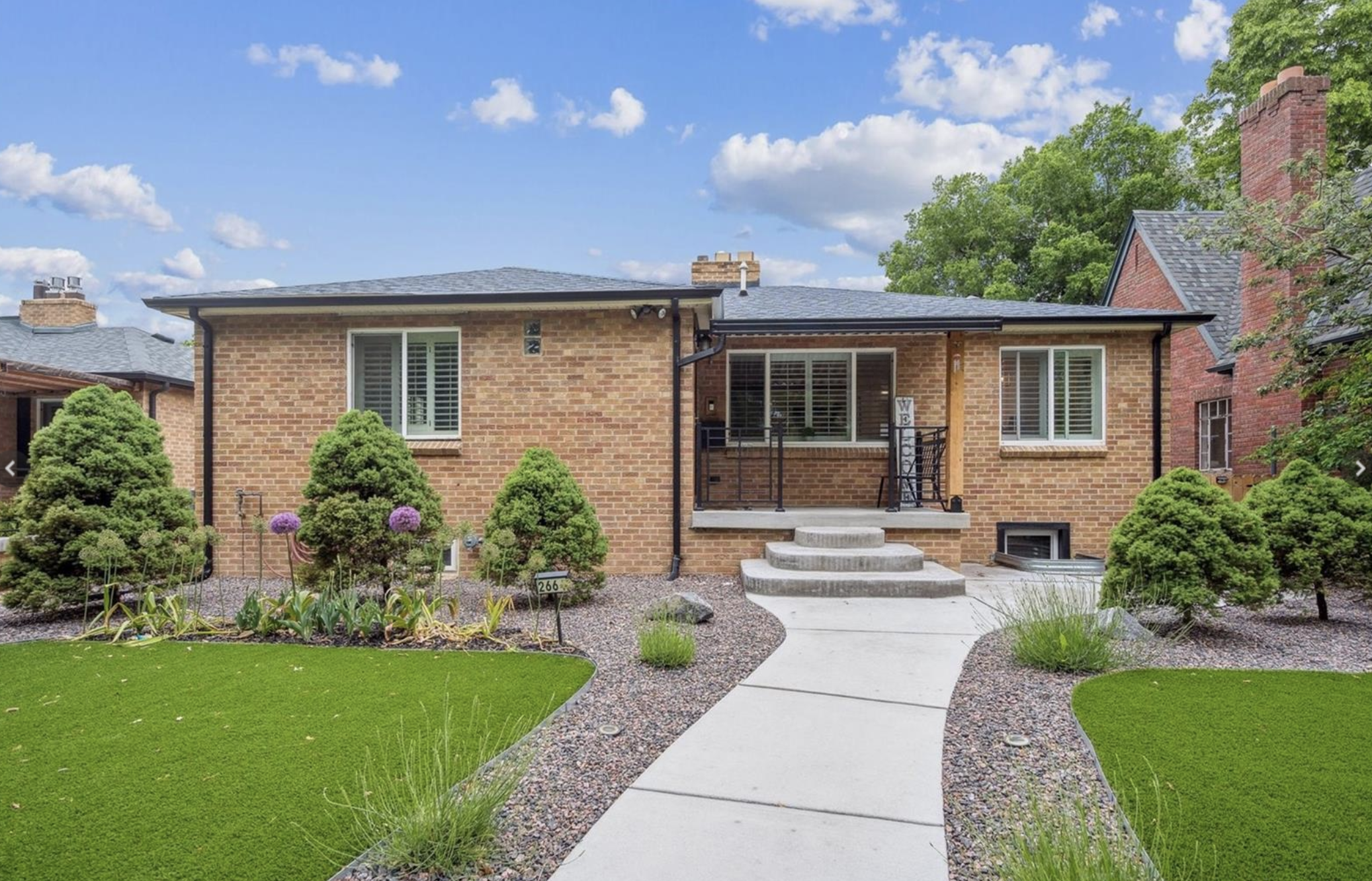
Renovated Does Not Automatically Mean Lower Risk
Park Hill listings frequently use terms such as “updated” or “fully renovated.” Those descriptions can refer to very different levels of work. The useful distinction is between improvements that primarily change appearance and improvements that materially change building performance.
Cosmetic Improvements
- paint;
- flooring;
- cabinetry;
- countertops;
- decorative lighting; and
- fixtures.
These improvements can significantly change first impressions while providing limited information about the underlying building.
Performance Improvements
- sewer replacement;
- drainage improvements;
- foundation stabilization;
- roof replacement;
- electrical modernization;
- plumbing replacement;
- HVAC replacement;
- insulation improvements; and
- appropriate window restoration or replacement.
These investments may be less visible but often have a greater effect on long-term ownership and buyer confidence.
What Deserves Additional Attention in an Older Park Hill Home?
Foundation & Drainage
Look for settlement, cracking, previous repairs, grading, downspout discharge, irrigation, and evidence of moisture movement.
Sewer & Plumbing
Evaluate sewer condition, supply piping, waste lines, water pressure, repair history, and whether later remodels integrated properly with original systems.
Electrical & Mechanical
Review service capacity, panel type, grounding, wiring history, heating and cooling systems, water heating, and the effect of additions on original equipment.
Envelope & Alterations
Review roof, flashing, masonry, windows, insulation, ventilation, additions, structural modifications, and available permit or design documentation.
Architect Perspective: The most useful question is not whether an older house is “good” or “bad.” Every property is a combination of original construction, maintenance, repairs, renovations, site conditions, and remaining systems. When evaluating a Park Hill home, ask not only what has been updated, but how it was updated, why it was updated, and what remains.
Daily Life Depends on Where You Are Within Park Hill
Park Hill combines established residential streets with parks, schools, cultural destinations, small commercial nodes, and access to major transportation corridors. But daily routines vary significantly by address.
Some homes provide easy walking access to coffee, restaurants, parks, or schools. Others offer quieter residential settings but require a bicycle or car for many errands. The better question is not simply whether Park Hill is walkable—it is whether a specific property supports the destinations and routines that matter to you.
Two Major Open-Space Stories
City Park
City Park is a major recreational and cultural anchor immediately west of South Park Hill. It offers extensive open space, walking routes, recreation, and access to major cultural institutions.
For nearby properties, proximity can be a meaningful lifestyle advantage. It can also bring visitor activity, traffic, and parking considerations that should be evaluated at the block level.
Park Hill Park
The approximately 155-acre former golf-course property is now city-owned public open space. Long-term planning is underway for recreation, ecological restoration, tree canopy, gathering areas, circulation, and other public uses.
The important distinction is that Park Hill Park is a major emerging asset—not yet a fully completed traditional city park. Buyers should evaluate both current conditions and evolving plans.
Park Hill Doesn't Have One Main Street
One of Park Hill’s defining characteristics is its distributed commercial pattern. Instead of one dominant shopping district, restaurants, coffee shops, markets, services, and gathering places appear in several smaller nodes embedded within or along the edges of the neighborhood.
That creates different versions of walkability. A home near Kearney Street can have a very different daily rhythm from one near Oneida Park, Fairfax Street, or East Colfax. The useful question is not simply whether Park Hill has good restaurants and shops—it is which destinations are actually convenient from a particular address.
The Classic Neighborhood Node
This small commercial cluster feels integrated into the surrounding residential neighborhood rather than separated from it. That is part of its appeal.
Residents can combine coffee, specialty groceries, deli food, dinner, wine, and neighborhood services within a compact area surrounded by traditional Park Hill streets.
Spinelli's Market
A neighborhood specialty market and deli at 23rd Avenue and Dexter. Spinelli’s combines sandwiches, Italian specialty products, take-home meals, catering, and everyday market convenience.
Why it matters: This is the kind of small independent market that can materially change daily life for homes within walking distance.
Honey Hill Cafe
A neighborhood cafe focused on coffee, breakfast, pastries, and casual daytime use, with indoor and outdoor seating.
Why it matters: Coffee shops often function as informal neighborhood living rooms, creating everyday social activity rather than only destination dining.
The Cherry Tomato
A longstanding neighborhood Italian restaurant occupying a historic commercial location at East 23rd Avenue and Dexter.
Its significance is partly cultural: it represents the kind of independently operated restaurant woven into Park Hill’s residential fabric.
Neighbors
A small neighborhood wine and dining destination that adds an evening-oriented use to the Kearney-area commercial mix.
Together with the market, cafe, and restaurants nearby, it helps this node serve different parts of the day.
ttArch interpretation: Kearney/Dexter is Park Hill’s strongest example of an established neighborhood-scale commercial node. Its value is less about the total number of businesses and more about how naturally everyday commercial uses fit into the surrounding residential fabric.
A Newer Layer of Neighborhood Commerce
Park Hill Commons demonstrates how contemporary commercial and residential investment can be inserted into an established neighborhood. The Fairfax Street cluster combines restaurants, coffee, wine, personal services, coworking, and residential uses within a compact block.
Yuan Wonton
A destination for handmade wontons, dumplings, and Canto-American cooking.
Notable recognition: Chef Penelope Wong won the 2026 James Beard Award for Best Chef: Mountain.
This gives Park Hill a restaurant with significance extending well beyond the immediate neighborhood.
Copper Door Coffee
A locally rooted coffee roaster and cafe that adds daytime activity and an everyday-use destination to the Fairfax cluster.
Sexy Pizza
A casual neighborhood pizza option that broadens the cluster beyond destination dining and gives nearby residents another practical walkable food choice.
Trellis
A wine-focused gathering place that adds evening activity and another social use to Park Hill Commons.
ttArch interpretation: Fairfax represents a newer model of Park Hill commercial life. It is more intentionally mixed-use and destination-oriented than Kearney/Dexter, but it still operates at a neighborhood scale. Its strongest contribution may be the combination of everyday uses with genuinely notable dining.
The Neighborhood Gathering Place
Oneida Park is different from Park Hill’s older commercial corners. It operates as an intentionally organized neighborhood center, combining restaurants, coffee, specialty food, personal services, health-related businesses, and a central gathering space.
That common space is important. It allows the district to function not only as a place to buy something, but as a place to meet, linger, attend events, or spend part of an afternoon.
Esters at Oneida Park
A full-service neighborhood restaurant and one of the center’s principal food destinations.
Torpedo Coffee
A local coffee shop serving craft coffee and grab-and-go food, with outdoor seating that helps activate the center during the morning and daytime.
Illegal Pete's
A casual Colorado restaurant option that broadens Oneida Park’s everyday dining mix.
The Local Butcher Market
A specialty-food use that makes Oneida Park more useful for routine neighborhood shopping rather than only restaurant visits.
Also at Oneida Park: DANG Soft Serve Ice Cream, Spicy Thai II and Sushi Wow, Famous Philly Cheese Steak & Wings, veterinary care, dental care, salons, pet services, automotive services, and other neighborhood businesses.
ttArch interpretation: Oneida Park is the strongest dedicated gathering-place model among Park Hill’s commercial nodes. Its central space, food options, coffee, specialty retail, and services allow it to function as a small neighborhood center rather than a simple row of storefronts.
A Regional Corridor, Not a Neighborhood Main Street
East Colfax should be understood differently from Park Hill’s smaller internal commercial nodes. It is a major Denver transportation and commercial corridor containing restaurants, bars, shops, services, entertainment, transit, and redevelopment opportunities.
Its scale creates both advantages and trade-offs. Proximity can provide substantially greater commercial variety and transit access, but properties closest to the corridor may also experience more traffic, noise, construction activity, parking pressure, and land-use change.
For buyers, distance matters. A property two blocks from Colfax can have a very different relationship to the corridor than a property deep within Park Hill’s residential interior.
How the Commercial Nodes Compare
Kearney / Dexter
Best understood as: Established neighborhood services.
Strength: Everyday usefulness and residential integration.
Fairfax
Best understood as: Contemporary neighborhood mixed-use.
Strength: Destination dining plus everyday amenities.
Oneida Park
Best understood as: Planned neighborhood gathering place.
Strength: Social space, dining, services, and multiple uses in one location.
East Colfax
Best understood as: Regional commercial and transit corridor.
Strength: Breadth of destinations and regional connectivity.
Broker Perspective: Commercial proximity should be evaluated as a property-specific relationship, not simply counted as an amenity. Being three minutes from coffee may be highly desirable; being directly behind a busy restaurant or beside a heavily used parking area may create a different experience. Walk the actual route, visit at different times of day, and understand what the nearby businesses mean for both convenience and activity.
Understanding Park Hill Schools
Schools are one of the most important—and most easily oversimplified—parts of evaluating a Denver neighborhood. Greater Park Hill includes several elementary schools, access to a middle-school enrollment zone, nearby middle-school options, and multiple high-school pathways through Denver Public Schools.
The ratings below use the 2025 Colorado Department of Education School Performance Framework as the primary objective reference. They are intended to help readers understand current academic context—not to reduce a school to a single number.
State Performance
Current official CDE accountability rating.
Achievement
How current academic performance compares with state expectations.
Growth
Whether students are progressing academically over time.
Trend
Multi-year direction rather than one isolated result.
Atlas interpretation scale: Very Strong Current Performance = unusually strong current state-accountability profile; Strong / Meeting Expectations = current Performance Plan; Mixed — Investigate Further = performance varies materially by year or indicator; Current Improvement Focus = current Improvement Plan or lower state rating. These descriptions summarize public academic data and are not statements about school culture, individual teachers, student experience, or whether a school is personally right for a particular child.
Elementary Schools Serving Greater Park Hill
Park Hill School
2025 CDE rating: Performance Plan.
Current context: Park Hill School earned 90.6% of available framework points in the 2025 state report and has remained on a Performance Plan across the 2022, 2023, 2024, and 2025 reporting years.
Atlas interpretation: The current public accountability profile is exceptionally strong. Buyers should still review program fit, school culture, enrollment, transportation, and the exact address assignment.
Stedman Elementary
2025 CDE rating: Improvement Plan.
Trend: Stedman was rated Improvement Plan in 2022 and 2023, Performance Plan in 2024, and Improvement Plan again in 2025.
Atlas interpretation: The recent state-accountability profile is mixed rather than consistently high or low. Families should look closely at current achievement, growth, programs, leadership, student experience, and whether recent improvement efforts align with their priorities.
Smith Elementary
2025 CDE rating: Performance Plan.
Trend: Smith was rated Priority Improvement in 2022 and moved to Performance Plan in 2023, 2024, and 2025.
Atlas interpretation: The recent trend is important. Current state accountability shows the school meeting expectations, with a stronger recent profile than several earlier reporting years.
Why these schools are shown: They are significant elementary schools within the Greater Park Hill geography. This is not an exhaustive list of every DPS, charter, magnet, or private option a family might consider. Verify the exact address through DPS School Finder before assuming attendance eligibility.
Middle School Requires Understanding the Enrollment Zone
DPS uses a Greater Park Hill / Central Park Middle School Enrollment Zone. Students who live inside an enrollment zone are guaranteed access to one of the schools in that zone, but not necessarily their first-choice school. Families rank preferences through SchoolChoice, and placement depends on priorities, capacity, and the assignment process.
McAuliffe International School
2025 CDE rating: Performance Plan.
Trend: McAuliffe received a Performance Plan in each reporting year from 2022 through 2025.
Atlas interpretation: Its current accountability profile is consistently strong. It is also one of the schools included in the Greater Park Hill middle-school enrollment-zone system, so living within the zone does not mean automatic placement at McAuliffe.
Hill Campus of Arts & Sciences
2025 CDE rating: Improvement Plan.
Trend: Hill was rated Performance Plan in 2022 and Improvement Plan in 2023, 2024, and 2025.
Atlas interpretation: Current state accountability indicates an ongoing improvement focus. Families should evaluate the school’s academic trajectory together with its program offerings, student experience, leadership, and fit for the individual student.
Greater Park Hill / Central Park zone schools currently listed by DPS: Denver Discovery, Denver Green School Northfield, DSST: Conservatory Green Middle School, DSST: Montview Middle School, McAuliffe International School, and William (Bill) Roberts ECE-8.
This zone provides more choice than a traditional single-school boundary, but it also makes address verification and SchoolChoice strategy more important.
High School Options
East High School
2025 CDE rating: Performance Plan.
Trend: East has remained on a Performance Plan across the 2022–2025 state reporting period.
Atlas interpretation: East has a strong current state-accountability profile and is one of Denver’s large comprehensive high schools. Its size and breadth of programming create a very different experience from a smaller campus, which should be considered alongside academic data.
Northfield High School
2025 CDE rating: Performance Plan.
Atlas interpretation: Northfield currently meets state performance expectations and represents another significant high-school option for families considering northeast Denver. Program offerings, transportation, enrollment rules, and exact address eligibility should be checked directly through DPS.
How to Use School Data When Evaluating a Home
1. Verify
Enter the exact address into DPS School Finder.
2. Compare
Look at achievement, growth, trend, programs, and school environment.
3. Visit
Talk with the school and evaluate whether it fits the individual student.
4. Recheck
Boundaries, zones, programs, and ratings can change.
Important: School performance can be meaningfully compared using public data. School assignment cannot be assumed from the neighborhood name. DPS boundaries, enrollment zones, SchoolChoice procedures, program availability, and capacity can change. Always verify the exact property and current school year before relying on an assignment.
Transportation & Connectivity
Driving
Colorado Boulevard, Colfax Avenue, MLK Jr. Boulevard, Monaco Parkway, and nearby interstate connections provide regional access, but traffic exposure varies substantially by property.
RTD Bus
Bus routes serve multiple corridors throughout Greater Park Hill. Service usefulness depends on the exact route, destination, frequency, and distance from the property.
A Line
The nearby A Line is commuter rail—not light rail—and connects Union Station with Denver International Airport. Convenience to stations such as 40th•Colorado or Central Park varies by address.
East Colfax BRT
Construction is reshaping transit and streetscape conditions along East Colfax. The long-term goal is improved reliability and multimodal access, while construction creates short-term disruption.
The Current Park Hill Real Estate Market
Greater Park Hill should not be interpreted as one uniform housing market. South Park Hill, North Park Hill, and Northeast Park Hill operate at materially different price levels and contain different mixes of architecture, housing age, lot patterns, renovation quality, home size, and location characteristics.
The tables below therefore separate the three subareas before presenting Greater Park Hill as a whole. Public portal data is useful for identifying current market direction, but it is not a substitute for a property-specific REcolorado comparative market analysis.
Park Hill Subarea Comparison
| Subarea | Median Sale Price | YoY Change | Median Days on Market | Sale-to-List | Zillow Typical Value |
|---|---|---|---|---|---|
| South Park Hill | $1,032,653 | -3.9% | 16 days | 98.6% | $943,758 |
| North Park Hill | $652,281 | -13.0% | 14 days | 100.1% | $661,368 |
| Northeast Park Hill | $530,821 | +10.2% | 32 days | 100.6% | $454,015 |
Redfin figures: three months ending May 2026. Zillow Home Value Index figures: June 30, 2026. Different methodologies should be compared directionally rather than blended into one statistic.
South Park Hill
| Market Indicator | Current Figure | Interpretation / Period |
|---|---|---|
| Median sale price | $1,032,653 | Three months ending May 2026 |
| Year-over-year median change | -3.9% | Change in homes sold, not an appraisal of every home |
| Median sale price / sq. ft. | $370 | Down 11.9% YoY |
| Homes sold | 58 | May 2026; +22.9% YoY |
| Median days on market | 16 days | Compared with 11 days one year earlier |
| Sale-to-list ratio | 98.6% | May 2026 |
| Sales above list | 19.6% | May 2026 |
| Listings with price drops | 40.9% | Current Redfin market measure |
| Zillow typical home value | $943,758 | June 30, 2026; +2.1% YoY |
| Zillow for-sale inventory | 41 | June 30, 2026 |
Interpretation: South Park Hill remains the highest-priced of the three subareas. Its housing stock includes a greater concentration of substantial early-20th-century homes and historically desirable residential blocks, but the current data also shows that buyers are not treating every listing equally. A 98.6% sale-to-list ratio and a high share of price reductions reinforce the importance of condition, renovation quality, block, architecture, and initial pricing.
Sources: Redfin South Park Hill Housing Market; Zillow South Park Hill Home Values.
North Park Hill
| Market Indicator | Current Figure | Interpretation / Period |
|---|---|---|
| Median sale price | $652,281 | Three months ending May 2026 |
| Year-over-year median change | -13.0% | Strongly influenced by mix of homes sold |
| Median sale price / sq. ft. | $378 | Current Redfin figure |
| Homes sold | 60 | May 2026; +33.0% YoY |
| Median days on market | 14 days | Compared with 11 days one year earlier |
| Sale-to-list ratio | 100.1% | May 2026 |
| Sales above list | 34.4% | May 2026 |
| Listings with price drops | 29.0% | Current Redfin market measure |
| Zillow typical home value | $661,368 | June 30, 2026; -2.8% YoY |
| Zillow for-sale inventory | 48 | June 30, 2026 |
Interpretation: North Park Hill occupies a middle position in both geography and pricing, but that description can hide substantial property variation. The subarea includes older brick homes, remodeled properties, smaller houses, larger additions, and different block conditions. The sharp year-over-year median decline should not be interpreted as proof that every North Park Hill property lost 13% of its value; Zillow’s typical-value measure shows a much smaller decline, illustrating the effect of methodology and sales mix.
Sources: Redfin North Park Hill Housing Market; Zillow North Park Hill Home Values.
Northeast Park Hill
| Market Indicator | Current Figure | Interpretation / Period |
|---|---|---|
| Median sale price | $530,821 | Three months ending May 2026 |
| Year-over-year median change | +10.2% | Smaller sales sample; interpret cautiously |
| Median sale price / sq. ft. | $267 | Down 7.9% YoY |
| Homes sold | 23 | May 2026; -21.7% YoY |
| Median days on market | 32 days | Compared with 40 days one year earlier |
| Sale-to-list ratio | 100.6% | May 2026 |
| Sales above list | 54.4% | May 2026 |
| Listings with price drops | Not reported | Redfin did not publish a current figure |
| Zillow typical home value | $454,015 | June 30, 2026; -3.6% YoY |
| Zillow for-sale inventory | 50 | June 30, 2026 |
Interpretation: Northeast Park Hill currently has the lowest median price of the three Park Hill subareas and the longest reported marketing time. The +10.2% Redfin median increase should be treated cautiously because only 23 homes sold in the reported May period and Zillow’s broader typical-value measure was down 3.6% year over year. The contrast is a useful reminder that a changing mix of sales can move a neighborhood median substantially without representing identical appreciation across the housing stock.
Sources: Redfin Northeast Park Hill Housing Market; Zillow Northeast Park Hill Home Values.
Why the Price Differences Are So Large
The roughly half-million-dollar spread between the current South Park Hill and Northeast Park Hill median sale prices should not be interpreted as a simple premium applied to otherwise identical homes.
The three subareas contain materially different combinations of:
- construction era and architectural style;
- finished square footage and floor-plan organization;
- lot dimensions and outdoor space;
- garage configuration;
- renovation quality and system updates;
- historic character and original craftsmanship;
- proximity to City Park and established commercial nodes;
- relationship to major streets, transit, and redevelopment areas; and
- the mix of detached homes, attached housing, and smaller residential products sold during a particular period.
Market differences are therefore partly location differences and partly housing-stock differences.
Greater Park Hill — Blended Context
| Indicator | Reported Figure | Source Period |
|---|---|---|
| Redfin Park Hill median sale price | $750,747 | Three months ending May 2026 |
| Year-over-year median change | -1.9% | May 2026 |
| Median sale price / sq. ft. | $407 | +6.1% YoY |
| Homes sold | 140 | May 2026; +16.0% YoY |
| Median days on market | 15 days | May 2026 |
| Sale-to-list ratio | 99.6% | May 2026 |
| Homes sold above list | 31.5% | May 2026 |
The blended Park Hill median is useful for orientation only. It should not replace the subarea analysis or direct property comparisons.
Denver Metro Context
| Indicator | June 2026 | Interpretation |
|---|---|---|
| Median closed price | $614,000 | +1% YoY |
| Closed listings | 4,024 | Approximately flat YoY |
| Median Days in MLS | 19 days | Unchanged YoY |
| Active listings | 12,508 | -9% YoY |
| Weeks of inventory | 13 | REcolorado described the market as balanced |
Source: REcolorado June 2026 Denver Metro Market Watch. The metro geography is substantially larger than Park Hill and is included only as broader market context.
What the Current Market Means for Buyers
- Choose the subarea before relying on a Park Hill average. A South Park Hill Tudor and a Northeast Park Hill ranch may both be Park Hill homes while competing in very different price segments.
- Compare architecture, finished area, lot, garage, basement, block, renovation quality, and systems—not just bedroom count and price per square foot.
- A price reduction can create negotiating opportunity, but investigate why the listing required the reduction.
- Fast marketing times do not mean every property requires the same offer strategy. Property condition and initial pricing continue to matter.
- Do not interpret Northeast Park Hill’s recent median increase or North Park Hill’s median decline as direct forecasts for an individual home.
- For older homes, preserve inspection and property-specific due-diligence protections appropriate to the building.
What the Current Market Means for Sellers
- Price against the property’s actual Park Hill subarea and buyer competition rather than the blended neighborhood median.
- Within South Park Hill, substantial differences in architecture, lot, renovation quality, location, and finished area can produce large differences in value.
- Within North and Northeast Park Hill, avoid assuming a lower neighborhood median means buyers will overlook condition or overpricing.
- Current sale-to-list ratios near 100% do not mean sellers can disregard initial positioning; price reductions remain common in parts of Park Hill.
- Document significant improvements such as sewer, roof, electrical, HVAC, foundation, drainage, windows, additions, and permitted renovations.
- Evaluate current competing listings as carefully as recent closed sales because today’s buyer is choosing among the homes available now.
Michael’s Realtor & Architect Perspective
A Park Hill address tells me where to begin the analysis—not what the property is worth.
I first identify the subarea and the buyer segment most likely to consider the property. Then I look at the block, architecture, construction era, lot, floor-plan quality, finished area, natural light, basement utility, garage, renovation history, building systems, and condition.
That physical analysis helps determine which comparable sales are genuinely relevant. Two homes can be only a few blocks apart and still offer very different ownership experiences and compete for different buyers.
The goal is not to force a property into a neighborhood average. It is to understand why the market should—or should not—treat that property like the homes being used as comparisons.
Decision Takeaway
Park Hill’s market cannot be understood through one blended median.
South Park Hill currently operates at a substantially higher price level, North Park Hill occupies a broad middle market, and Northeast Park Hill provides a lower-priced entry point into Greater Park Hill. But those differences reflect more than geography. They also reflect the homes themselves.
Current public data shows that correctly priced homes can still move relatively quickly throughout Park Hill, while price reductions and differing sale-to-list behavior show that buyers remain selective.
For both buyers and sellers, the most reliable sequence is:
Subarea → Block → Property Type → Architecture → Condition → Direct Competition → Price.
Market-data note: Figures were reviewed August 8, 2026. Redfin neighborhood figures generally reflect the three-month period ending May 2026 and are calculated from MLS and/or public-record data. Zillow figures use the Zillow Home Value Index and inventory data through June 30, 2026. REcolorado figures describe the broader Denver Metro market for June 2026. These sources use different geographic boundaries, reporting periods, property classifications, and methodologies. Their figures should be compared directionally rather than combined into one calculated statistic. Neighborhood medians can also change materially because of the mix and number of homes sold. This information is educational and is not an appraisal, comparative market analysis, forecast, or guarantee of future value.
Primary sources: Redfin South Park Hill Housing Market; Redfin North Park Hill Housing Market; Redfin Northeast Park Hill Housing Market; Redfin Park Hill Housing Market; Zillow South Park Hill Home Values; Zillow North Park Hill Home Values; Zillow Northeast Park Hill Home Values; REcolorado June 2026 Denver Metro Market Watch.
Future maintenance standard: Update this section with a direct REcolorado subarea export whenever reliable neighborhood-level MLS statistics are available. MLS property-level analysis should remain the preferred source for a property-specific valuation or seller pricing strategy.
How to Evaluate a Park Hill Home
Buying in Park Hill is less about finding the “perfect” house and more about understanding how location, architecture, condition, and long-term ownership fit together.
The strongest decisions come from evaluating the property as a complete system—not simply comparing finishes, square footage, or a neighborhood-wide median price.
Park Hill Is Not One Housing Market
Neighborhood averages are useful for orientation, but they are rarely sufficient for valuing a specific Park Hill property. South Park Hill, North Park Hill, and Northeast Park Hill contain different housing eras, architectural types, lot patterns, renovation histories, and buyer expectations.
The most useful comparisons are usually homes that a buyer would realistically consider interchangeable.
Start With the Subarea
South, North, and Northeast Park Hill should be analyzed separately before narrowing to the immediate competitive set.
Then Match the Property
Compare architecture, construction era, size, lot, basement, garage, condition, renovation quality, and immediate location.
Use Price per Square Foot Carefully
Price per square foot can provide context, but it does not capture layout quality, architecture, lot, basement utility, natural light, outdoor space, or renovation quality.
Broker Perspective: Comparable sales are not selected simply because they are nearby. The strongest comparable is a property a buyer would realistically consider instead. Geographic proximity matters, but buyer substitution matters more.
Evaluate the Block Before the House
A home can be renovated. Its location cannot. Before becoming absorbed in the interior, spend time evaluating the surrounding block and the daily conditions that come with it.
Street
Traffic volume, street width, parking, noise, sidewalks, crossings, and relationship to major corridors.
Landscape
Tree canopy, shade, irrigation, sidewalks, mature roots, lot drainage, and overall streetscape continuity.
Daily Access
Walking routes to parks, schools, restaurants, transit, groceries, and the destinations you actually expect to use.
Context
Neighboring property condition, alley access, privacy, school activity, commercial adjacency, and likely future change.
Understand the House Before You Fall in Love With the Finishes
Systems
- foundation and structure;
- roof and drainage;
- sewer and plumbing;
- electrical service;
- heating and cooling;
- windows, masonry, and insulation.
Alterations
- addition history;
- renovation quality;
- available permits;
- structural modifications;
- design continuity;
- integration with original systems.
Property-Specific Records
- zoning;
- landmark status;
- easements;
- tax records;
- insurance considerations;
- school assignment;
- seller documentation.
Architect Perspective: The goal is not to become your own inspector or engineer. It is to recognize how the major parts of the property relate to one another so you know when additional expertise is warranted. A beautiful interior should never prevent you from asking how the building actually performs.
The Park Hill Buyer Decision Framework
Work from the broadest decision to the most specific. Each step narrows the analysis and prevents one attractive feature from dominating the entire decision.
1. Lifestyle
How do you want to live?
2. Location
Which subarea and block fit?
3. Property
Does the lot and architecture work?
4. Condition
What has been maintained or changed?
5. Price
Does value reflect the complete picture?
The strongest buying question is not simply “Do I love this house?” It is “Do I understand this house well enough to know whether it is right for me?”
Position the Home Before You Price It
Park Hill’s architectural and housing diversity makes accurate positioning especially important. A home should not be marketed simply as “a Park Hill property.” It should be understood within its true competitive market: subarea, architecture, construction era, lot, condition, renovation quality, and immediate block context.
The strongest marketing does not manufacture value. It helps buyers recognize the value that already exists.
Define the Competitive Market
Subarea
South, North, and Northeast Park Hill can attract different buyer expectations and pricing patterns.
Architecture
Tudors, bungalows, Denver Squares, ranches, and infill homes often compete within different buyer pools.
Condition
Original, partially updated, comprehensively renovated, and recently constructed homes should not be valued as though condition were equivalent.
Immediate Context
Block quality, traffic, parks, commercial access, lot orientation, and neighboring property conditions can materially affect buyer perception.
Broker Perspective: The best comparable sale is not automatically the closest sale. It is the property a buyer would realistically have considered instead. Thinking in terms of buyer substitution helps define a more accurate competitive market.
Preparation Should Build Confidence, Not Hide the House
Presentation matters, but Park Hill buyers often care just as much about maintenance history, building systems, and authenticity. The goal is to remove avoidable distractions while making the home’s condition and strengths easier to understand.
Maintenance
- address obvious deferred repairs;
- service major systems;
- resolve active leaks or drainage problems;
- complete routine exterior maintenance;
- review sewer, roof, and mechanical history.
Presentation
- declutter without stripping character;
- improve lighting;
- clean thoroughly;
- repair small visual distractions;
- present landscaping and entry clearly;
- retain meaningful architectural features.
Documentation
- roof records;
- sewer work;
- electrical upgrades;
- plumbing improvements;
- HVAC replacement;
- foundation or drainage work;
- permits, plans, warranties, and invoices.
Preserve the Qualities Buyers Came to Park Hill to Find
Historic character does not require a home to remain frozen in time. Thoughtful modernization can improve function and performance without eliminating the details, proportions, materials, and craftsmanship that make the property distinctive.
Architect Perspective: Older homes do not need to imitate new construction to compete effectively. Original brickwork, hardwood floors, millwork, built-ins, porches, windows, fireplaces, and traditional proportions can be meaningful assets when they remain functional and appropriate. The strongest updates usually improve the way the home lives without erasing the architecture that gives it identity.
The Park Hill Seller Framework
1. Understand
Define the property’s true competitive market.
2. Prepare
Address maintenance and present the home clearly.
3. Document
Organize improvements, permits, warranties, and maintenance history.
4. Position
Price and market the home around evidence, not exaggeration.
The purpose of marketing is not to convince every buyer. It is to help the right buyer understand the property clearly enough to make a confident decision.
The Future of Park Hill
Park Hill is an established neighborhood, but established does not mean static. Public investment, transportation improvements, redevelopment, housing reinvestment, and changing patterns of daily life will continue to shape the neighborhood.
For buyers and homeowners, the useful question is not whether Park Hill will change. It is which characteristics are likely to evolve—and which qualities are fundamental to the neighborhood’s identity.
Four Forces Shaping Park Hill
Transit
Investment along East Colfax is changing how people move between northeast Denver, downtown, and destinations along the corridor.
Reinvestment
Older homes continue to be repaired, expanded, remodeled, and occasionally replaced, gradually changing individual blocks rather than transforming the neighborhood all at once.
Public Space
Parks, streets, sidewalks, bicycle connections, and other public investments can influence how comfortably residents move through and use the neighborhood.
Commercial Corridors
Neighborhood-serving businesses will continue to evolve as ownership, consumer preferences, development economics, and surrounding population patterns change.
East Colfax Bus Rapid Transit
East Colfax is one of Denver’s most important east-west transportation corridors. The city’s Bus Rapid Transit investment is intended to improve transit reliability and passenger movement along the corridor.
For Park Hill, the significance is broader than the transit vehicles themselves. Major transportation investment can affect pedestrian conditions, station-area activity, development interest, commercial patterns, and the way residents connect to downtown and other parts of Denver.
The effects will not be identical throughout Park Hill. Properties closer to the corridor may experience the changes more directly, while much of the neighborhood’s residential interior will remain physically removed from Colfax.
Decision Point: Transit investment should not automatically be treated as either a benefit or a drawback. A buyer considering a property near Colfax should evaluate the specific distance to the corridor, walking route, traffic conditions, station access, noise exposure, and surrounding land uses.
What's Changing—and What's Enduring
Likely to Keep Changing
- individual home renovations and additions;
- infill construction;
- commercial tenants and restaurant mix;
- transportation options and infrastructure;
- housing prices and market conditions;
- the intensity of development along major corridors.
More Likely to Endure
- the established street grid;
- mature residential blocks;
- architectural diversity;
- the neighborhood’s relationship to City Park;
- proximity to central Denver;
- the importance of trees, yards, porches, and neighborhood-scale streets.
Architect & Broker Perspective: Strong neighborhoods do not remain unchanged. They absorb new investment while retaining enough continuity to remain recognizable. Park Hill’s long-term strength is closely tied to this balance: adapting older housing for contemporary life while preserving the street patterns, mature landscape, architectural variety, and neighborhood scale that give the area its identity.
Is Park Hill Right for You?
The goal is not to decide whether Park Hill is objectively “better” than another Denver neighborhood. The more useful question is whether its housing, streets, parks, architecture, location, maintenance expectations, and neighborhood character align with the way you want to live.
A strong decision considers both the qualities you value and the trade-offs you are willing to accept.
Park Hill May Be a Strong Fit If You...
Value Established Character
You appreciate mature streets, layered history, older homes, established landscaping, and a neighborhood that has evolved over generations.
Prefer Architectural Variety
You value Tudors, bungalows, Denver Squares, ranches, and other individual residential forms more than a highly uniform housing environment.
Want Central-Denver Access
You value proximity to City Park, central Denver, major corridors, neighborhood businesses, and a range of transportation options.
Accept Property-Specific Complexity
You are comfortable evaluating older systems, renovation quality, block context, and maintenance rather than expecting every property to perform the same way.
Questions About Living, Buying & Owning in Park Hill
These answers are intentionally concise. The earlier sections of this guide provide the deeper context behind architecture, subarea differences, buying considerations, transportation, schools, and long-term neighborhood change.
Is Park Hill a good neighborhood?
Park Hill may be a strong fit for people who value established residential streets, mature landscaping, architectural variety, central-Denver access, and older housing. Whether it is right for you depends on your priorities, maintenance expectations, budget, and the specific property and block you are considering.
Is Park Hill one neighborhood?
No. Greater Park Hill includes South Park Hill, North Park Hill, and Northeast Park Hill. They share history and geography, but housing era, architecture, commercial access, streetscape character, and market behavior can differ meaningfully.
What types of homes are common in Park Hill?
Depending on location, buyers may encounter Tudor Revival homes, brick bungalows, Denver Squares and Foursquare forms, Craftsman and revival influences, postwar ranches, renovated historic homes, additions, and limited contemporary infill.
Are Park Hill homes expensive?
Prices vary considerably by subarea, architecture, construction era, lot, condition, renovation quality, and block. A single Greater Park Hill median is useful for broad orientation but is not sufficient to value an individual property.
What is the difference between South, North, and Northeast Park Hill?
South Park Hill generally contains a stronger concentration of earlier twentieth-century architecture. North Park Hill includes a broader transition among housing eras. Northeast Park Hill has a stronger postwar development influence and a different relationship to the evolving Park Hill Park property. Exact conditions still vary block by block.
Are older Park Hill homes difficult to maintain?
Older homes require a different ownership mindset rather than automatically being more problematic. Buyers should understand the condition of the roof, foundation, drainage, sewer, plumbing, electrical systems, HVAC, envelope, and previous renovations. A well-maintained older home can offer a very different ownership experience from one with deferred maintenance.
What should buyers inspect carefully in Park Hill?
Property-specific priorities vary, but older homes often deserve careful evaluation of foundation and structure, drainage, sewer, plumbing, electrical service, roof, heating and cooling, windows, masonry, insulation, and previous additions or remodels. Specialized inspections may be appropriate depending on what the general inspection reveals.
Is Park Hill walkable?
Parts of Park Hill support convenient walking to parks, schools, restaurants, coffee, transit, and neighborhood businesses, while other areas are predominantly residential. Evaluate the actual walking routes from a particular address rather than relying only on a neighborhood-wide score.
What are the main commercial areas in Park Hill?
Kearney Street and Oneida Park are important neighborhood-scale commercial nodes, while East Colfax provides a much larger commercial and transportation corridor along the southern edge. Smaller businesses and services are distributed elsewhere throughout Greater Park Hill.
How important is City Park to Park Hill?
City Park is a major open-space and cultural anchor immediately west of South Park Hill. For nearby residents it can provide convenient recreation and access to major cultural institutions, while properties closest to heavily used destinations should also be evaluated for traffic, parking, and visitor activity.
What is Park Hill Park?
Park Hill Park refers to the approximately 155-acre former golf-course property now owned by the City and County of Denver as public open space. Long-term planning and implementation are evolving, so readers should distinguish existing conditions from future concepts and verify current city information.
Is Park Hill a historic district?
Greater Park Hill as a whole is not one City and County of Denver local historic district. The neighborhood does contain historically significant buildings and individual landmarks. Buyers planning major alterations should verify property-specific landmark, zoning, easement, and permitting conditions.
How do schools work in Park Hill?
Denver Public Schools uses a combination of individual attendance boundaries, enrollment zones, and SchoolChoice procedures. A home’s proximity to a school does not necessarily guarantee assignment. Verify the exact property using current DPS information before relying on a school assumption.
How will East Colfax Bus Rapid Transit affect Park Hill?
The project is intended to improve transit reliability and corridor access along East Colfax. Its practical effect will vary by location. Properties close to the corridor may experience changes in transportation access, pedestrian activity, traffic patterns, construction conditions, and surrounding development more directly than interior Park Hill blocks.
Should I buy a renovated Park Hill home or renovate one myself?
Neither approach is automatically better. A completed renovation may reduce immediate work, while an unrenovated home can provide greater control over design and priorities. In either case, evaluate the quality of construction, major systems, permits where applicable, and whether previous changes improved both appearance and building performance.
Is Park Hill a good long-term investment?
No neighborhood can guarantee appreciation. A more useful analysis considers qualities that may support long-term buyer interest, including location, housing supply, architectural character, public amenities, transportation, property condition, and continued neighborhood investment. Individual purchase price and property quality remain critical.
What makes Park Hill different from a newer neighborhood?
Park Hill offers layered development, architectural variation, mature landscaping, traditional streets, older building systems, and substantial property-to-property differences. Newer communities may offer greater construction consistency, newer infrastructure, and more predictable housing products. Neither model is inherently better.
How should I evaluate a specific Park Hill property?
Work progressively: Greater Park Hill → subarea → block → lot → house → condition → price. This helps prevent broad neighborhood assumptions—or one attractive feature—from overwhelming the complete property analysis.
The Most Useful Question
Instead of asking “Is Park Hill a good neighborhood?”, ask:
“Is this particular home, on this particular block, in this particular part of Park Hill, the right fit for how I want to live?”
Why I Look at Neighborhoods Differently
I approach neighborhood and property decisions from two related but different professional perspectives: as a licensed architect and as a Denver-area real estate professional.
The architectural perspective helps me understand how buildings, lots, streets, landscape, infrastructure, and neighborhood form work together. The real estate perspective helps me understand how buyers, sellers, inspectors, appraisers, lenders, contractors, and the market respond to those places and buildings.
Neither perspective is sufficient by itself. Used together, they create a more complete framework for deciding whether a neighborhood or property truly fits the person making the decision.

Michael Thomas
My work focuses on helping people understand how a home’s design, construction, condition, location, market position, and future possibilities affect the decision to buy, sell, renovate, or remain in place.
The ttArch Neighborhood Atlas reflects that same approach: provide useful information, explain uncertainty, identify meaningful trade-offs, and help readers reach conclusions that fit their own priorities.
Park Hill is a particularly good example. Broad neighborhood statistics provide context, but the strongest decisions usually come from understanding the specific subarea, block, lot, architecture, building condition, and price together.
Sources, Verification & Helpful Resources
The Park Hill Neighborhood Guide is intended to be a living resource. Factual statements should be tied to current primary or authoritative sources wherever practical, and time-sensitive information should be rechecked before publication and during scheduled maintenance reviews.
City & Property
City and County of Denver mapping, zoning, landmark information, parks, open-data resources, permits, and property records.
Schools
Denver Public Schools School Finder, enrollment-zone information, SchoolChoice materials, and individual school resources.
Transportation
Regional Transportation District route and station information, City transportation planning, and official East Colfax BRT project materials.
History & Community
Denver Public Library collections, neighborhood and preservation resources, city historical materials, and other authoritative primary or institutional sources.
Final citation pass required before publication: Replace this production summary with the guide’s complete citation register and live links after all historical, transportation, school, park, market, and property-related claims have been reverified. Each source should support the specific statement for which it is cited rather than merely serving as a general reference.
Educational and editorial notice: This Neighborhood Atlas guide provides general neighborhood, architectural, market, and property-related education. It does not constitute an architectural evaluation, property inspection, engineering opinion, appraisal, comparative market analysis, legal advice, tax advice, environmental assessment, insurance advice, lending advice, school-assignment guarantee, or prediction of future value.
Neighborhood conditions, school boundaries, public projects, transportation service, zoning, market conditions, property records, regulations, and other information can change. Verify material facts using current authoritative sources and appropriate property-specific professional review before making a decision.
Start With the Decision You Are Trying to Make
If you are considering a Park Hill home, preparing to sell one, comparing neighborhoods, or trying to understand a property issue, the first step is simply identifying what you need to know.
A conversation can help separate the important questions from the noise and determine what research, inspection, market analysis, architectural review, or other expertise may actually be useful.
No pressure. No obligation. No assumption that a transaction is the correct outcome.
Consultation note: An initial conversation is intended to clarify your objectives and determine whether Michael Thomas may be able to assist. It does not create an architectural, brokerage, agency, fiduciary, legal, inspection, engineering, tax, appraisal, or other professional relationship. Any professional engagement, representation, scope of services, compensation, and responsibilities must be established separately in writing.