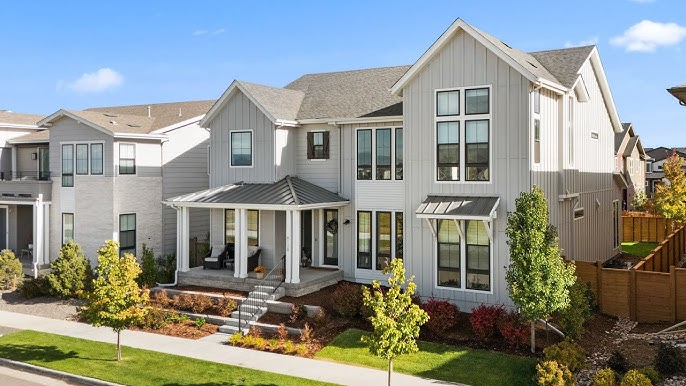
DENVER HOME BUYING + FINANCING
The Right Down Payment Is Not Always the Minimum—or 20%.
You do not necessarily need a 20% down payment to buy a home in Denver.
Depending on the loan program, your qualifications, and the property, some conventional mortgages allow down payments as low as 3%, FHA financing generally requires a minimum investment of 3.5%, and eligible VA buyers may be able to purchase with no down payment.
But the minimum down payment and the right down payment are not always the same thing.
The better question is: How much should you put down while still keeping enough cash for closing costs, reserves, repairs, moving expenses, and the unexpected costs that can come with owning a home?
That distinction matters in Denver, where using additional cash for the down payment may lower your loan balance and monthly payment—but can also leave you with less flexibility after closing.
QUICK ANSWER
For many Denver buyers, a realistic down payment may fall somewhere between 3% and 20%+, depending on the mortgage program and financial strategy.
- Some conventional programs allow 3% down.
- FHA financing generally allows eligible borrowers to start at 3.5% down.
- Eligible VA borrowers may qualify for 0% down.
- With many conventional loans, putting less than 20% down can mean paying mortgage insurance.
The right choice depends on more than hitting a percentage. I would look at the down payment alongside your monthly housing cost, cash reserves, financing terms, property condition, and broader financial comfort.
By Michael Thomas, Real Estate Agent + Licensed Architect · Updated September 2026
DOWN PAYMENT EXAMPLES
What 3%, 5%, 10% and 20% Down Actually Look Like
A percentage can sound abstract until you translate it into actual dollars. These examples use three illustrative Denver-area purchase prices. They are not intended to represent a market median or a recommendation about what you should spend.
| Purchase Price | 3% Down | 5% Down | 10% Down | 20% Down |
|---|---|---|---|---|
| $500,000 | $15,000 | $25,000 | $50,000 | $100,000 |
| $700,000 | $21,000 | $35,000 | $70,000 | $140,000 |
| $900,000 | $27,000 | $45,000 | $90,000 | $180,000 |
Important: this is not your total cash needed.
The figures above represent only the down payment. A buyer may also need cash for earnest money, inspections, appraisal or lender-related expenses, closing costs, prepaid taxes and insurance, moving expenses, immediate repairs or improvements, and reserves after closing.
That is why I would not evaluate a Denver home purchase by asking only, “What is the largest down payment I can make?” I would rather ask, “How much can I comfortably put down while still preserving enough financial flexibility to own the property responsibly?”
Potential advantages
- Lower loan amount
- More immediate equity
- Potential mortgage-insurance savings
- Potentially stronger financing profile in some scenarios
Potential advantages
- Preserve cash reserves
- Keep money available for improvements
- Maintain financial flexibility
- Avoid putting every available dollar into initial equity
REAL ESTATE + ARCHITECTURAL PERSPECTIVE
The condition and future needs of the property should influence the down-payment decision.
Two buyers purchasing similarly priced homes may reasonably choose very different down payments. A recently renovated property with limited near-term work may create one cash-reserve strategy. An older Denver house with an aging roof, older mechanical systems, deferred maintenance, or renovation plans may justify preserving substantially more cash after closing.
The financing decision and the property decision should be evaluated together.
THE 20% QUESTION
Do You Really Need 20% Down to Buy a Home in Denver?
No. A 20% down payment is often treated as the default benchmark for buying a home, but it is not a universal requirement.
Many buyers purchase with substantially less than 20% down, depending on the mortgage program, credit profile, income, property type, and lender requirements.
The more useful question is not “Can I reach 20%?” It is “What down-payment amount creates the strongest overall financial position for this purchase?”
| Down Payment | Cash Down on $700K | Approx. Loan Amount* |
|---|---|---|
| 5% | $35,000 | $665,000 |
| 10% | $70,000 | $630,000 |
| 15% | $105,000 | $595,000 |
| 20% | $140,000 | $560,000 |
The tradeoff: mortgage insurance vs. liquidity
One of the main reasons buyers aim for 20% down is to avoid private mortgage insurance on many conventional loans. PMI increases the monthly housing cost, so it should be considered—but not in isolation.
A 20% structure can mean a smaller mortgage and no PMI, while a 10% structure can preserve substantially more cash. Neither is inherently better. Compare the actual monthly savings with the liquidity you would give up.
Waiting until you reach 20% can also have a cost if you already have appropriate financing, a comfortable monthly budget, adequate reserves, and a property that fits your long-term plans.
REAL ESTATE + ARCHITECTURAL PERSPECTIVE
The property itself should influence how aggressively you use your cash.
When I help a buyer evaluate an older Denver home, I am also thinking about the roof, mechanical systems, windows, electrical and plumbing infrastructure, exterior maintenance, and renovation plans. A home with meaningful near-term capital needs may justify retaining more cash.
I view the down payment as part of the property strategy—not merely the loan structure.
CASH PLANNING
Down Payment vs. Cash to Close: They Are Not the Same Thing
One of the most common misunderstandings among buyers is assuming that the down payment equals the total amount of cash needed to buy the home. It does not.
The broader number to understand is cash to close. Depending on the transaction and loan structure, buyers may also need funds for lender closing costs, title-related charges, appraisal, prepaid homeowners insurance, prepaid property taxes, escrow funding, inspection expenses, HOA-related fees, and other transaction-specific expenses.
Money required during the transaction
Examples can include earnest money and inspection expenses.
The final amount required to complete the purchase
This reflects down payment, closing costs, credits, prior deposits, and other adjustments.
Cash intentionally kept after ownership begins
For repairs, maintenance, moving, emergencies, and improvements.
Usually a credit—not a disappearing cost
When properly credited at closing, earnest money becomes part of the funds already contributed toward the purchase, subject to the contract.
How much should you keep after closing?
There is no single reserve amount that works for every buyer. But I would rarely want someone to structure a purchase so aggressively that closing leaves them with virtually no liquidity.
Even a well-maintained home can create immediate costs: appliances, plumbing or electrical repairs, HVAC service, roof work, drainage, painting, flooring, window coverings, landscaping, moving expenses, insurance deductibles, or unexpected maintenance.
REAL ESTATE + ARCHITECTURAL PERSPECTIVE
The amount of cash I would want a buyer to preserve can depend substantially on what they are buying.
A home with an older roof, dated HVAC equipment, aging sewer infrastructure, older electrical service, deferred exterior maintenance, or planned renovation may justify a different reserve strategy from a newer home with recently replaced systems.
That does not make the older property a poor purchase. It means the buyer should understand the likely capital demands of ownership before deciding how much cash to put into the down payment.
MONTHLY AFFORDABILITY
How Your Down Payment Affects the Monthly Payment
The down payment affects more than the amount of cash you bring to closing. It also changes the size of the mortgage—and therefore the monthly cost of owning the home.
In general, a larger down payment means a smaller loan balance. That usually reduces monthly principal and interest and may reduce or eliminate mortgage-insurance costs, depending on the loan structure.
| Down Payment | Cash Down | Approx. Loan Amount* |
|---|---|---|
| 5% | $35,000 | $665,000 |
| 10% | $70,000 | $630,000 |
| 15% | $105,000 | $595,000 |
| 20% | $140,000 | $560,000 |
The mortgage is only part of the monthly cost
Your actual monthly housing cost may also include property taxes, homeowners insurance, mortgage insurance, HOA dues, utilities, maintenance, repairs, and future capital improvements.
That is why I prefer to think about total monthly housing cost rather than simply the mortgage payment.
A useful approach is to ask your lender to model 5%, 10%, and 20% down on the same purchase price and compare cash to close, monthly payment, mortgage insurance, loan pricing, and reserves remaining.
REAL ESTATE + ARCHITECTURAL PERSPECTIVE
The financing structure should support the ownership plan.
If a property may need a roof, mechanical-system replacement, sewer work, windows, exterior repairs, remodeling, accessibility changes, or a future addition, I want those likely costs visible before deciding how much cash should be locked into the down payment.
A lower monthly mortgage payment can be valuable. So can having the resources to responsibly maintain and improve the property.
LIQUIDITY + RESERVES
Should You Put More Money Down or Keep Cash in Reserve?
For many buyers, this is the real decision. Once you have enough cash to comfortably meet the minimum requirements of the loan, the question becomes: Should additional cash go into the down payment—or stay available after closing?
A larger down payment may reduce the loan balance and monthly payment. Keeping more cash available may improve flexibility, reduce financial stress, and make it easier to handle repairs, improvements, or unexpected expenses.
Reasons it can make sense
- Lower mortgage balance
- Lower monthly principal and interest
- Reduced or eliminated mortgage insurance
- More immediate equity
- Potentially improved loan terms in some situations
Reasons to preserve liquidity
- Unexpected repairs
- Insurance deductibles
- Appliance replacement
- Roof or mechanical work
- Moving, furnishings or remodeling
- Income disruption or other priorities
Property condition should influence the decision
Two homes with the same purchase price can create very different reserve needs. A recently updated property with newer roof, mechanical systems and limited deferred maintenance may support one strategy. An older home with near-term roof, HVAC, electrical, window, exterior or renovation needs may justify preserving more liquidity.
REAL ESTATE + ARCHITECTURAL PERSPECTIVE
I am also thinking about what the home may ask of the buyer financially over the next several years.
A house can look attractive cosmetically while carrying meaningful future costs. Conversely, an older home can be an excellent purchase if those costs are understood and incorporated into the financial plan.
The goal is not to maximize the down payment. It is to create a purchase structure that remains comfortable after you get the keys.
FIRST-TIME BUYER OPTIONS
Down Payment Options for First-Time Denver Home Buyers
First-time buyers often assume their options are limited until they have saved a very large down payment. That is not necessarily true.
Depending on qualifications, loan program, property, and lender, several paths may be available. The important distinction is that low down payment does not automatically mean low cost. Compare the full financing structure—not simply the minimum cash requirement.
Some programs allow 3% down
Qualified buyers may have access to low-down-payment conventional financing. Mortgage insurance commonly applies below 20%, and loan pricing varies by borrower and program.
3.5% minimum for eligible borrowers
FHA-insured financing can be useful for some buyers but has its own mortgage-insurance structure and property requirements.
0% down may be available
Eligible veterans, active-duty service members, and certain surviving spouses may qualify for VA-backed financing with no down payment, subject to program and property requirements.
Down-payment and closing-cost assistance
Qualified borrowers using a CHFA first mortgage may have access to assistance. Program terms and eligibility can change, so verify current details with CHFA or a participating lender.
Compare the whole loan, not just the down payment
A buyer might compare 3% conventional, 3.5% FHA, 5% conventional, or a qualifying CHFA-assisted structure. Compare interest rate, mortgage insurance, loan fees, monthly payment, cash required at closing, reserves remaining, property eligibility, long-term cost, and how long you expect to own the home.
Also remember that different programs define first-time home buyer differently. Do not assume you are eligible or ineligible based only on whether you have owned property before.
REAL ESTATE + ARCHITECTURAL PERSPECTIVE
The financing plan should leave room for the actual property you are buying.
For a first-time buyer, preserving cash can be especially important because the first year of ownership often introduces maintenance, tools, landscaping, appliances, insurance deductibles, and larger capital items that were not part of renting.
A lower-down-payment strategy can be entirely reasonable if it leaves the buyer in a stronger position to own and maintain the home responsibly.
PROPERTY TYPE + FINANCING
How Property Type Can Affect Your Down Payment and Financing
The down-payment decision is not based only on income, credit, and available cash. The type of property you are buying can also affect how the lender evaluates the loan.
A detached single-family home, condominium, townhouse, and 2–4 unit property can present different underwriting questions—especially in Denver, where buyers regularly compare very different housing types within the same search.
Single-Family Homes
The financing analysis is often more direct, but property condition can still create appraisal or underwriting issues when there is significant deferred maintenance, safety concerns, incomplete construction, or unusual characteristics.
Condominiums
The lender may also review the condominium project, including financial condition, insurance, litigation, critical repairs, project status, and HOA-related characteristics. A qualified buyer can still encounter a project-level financing issue.
Townhouses
“Townhouse” describes a building form, not always the legal ownership structure. A townhouse may be fee-simple, part of a PUD, or legally a condominium—each of which can affect lender review.
Two- to Four-Unit Properties
Duplexes, triplexes and fourplexes can involve different down-payment, reserve, appraisal, occupancy and rental-income considerations. The financing conversation should start early.
New construction can be different too
New condominium projects and recently converted projects may be subject to additional project-review requirements. A brand-new condo building can therefore create a different financing process than an established project.
REAL ESTATE + ARCHITECTURAL PERSPECTIVE
The physical form, legal ownership structure, and financing structure should tell the same story.
A condominium purchase is not only about the unit. The structure, envelope, roof, parking, elevators, mechanical systems, maintenance history and HOA can influence ownership costs and, in some cases, financing eligibility.
Similarly, a duplex may look like a simple extension of a single-family purchase, but legal use, zoning, unit configuration, condition and income potential can materially change the analysis.
DECISION FRAMEWORK
How to Decide What Down Payment Is Right for You
There is no single down-payment percentage that is best for every Denver buyer. The right amount depends on the relationship between your monthly payment, available cash, loan structure, property condition, expected ownership horizon, and tolerance for financial risk.
Start with the monthly payment
What total housing cost feels sustainable after principal, interest, taxes, insurance, mortgage insurance, HOA dues, utilities, maintenance and repairs?
Determine how much cash you need to keep
Account for emergency reserves, property repairs, moving, furnishings, insurance deductibles, planned renovations and other major goals.
Evaluate the property itself
Consider the roof, HVAC, sewer, electrical, plumbing, windows, drainage, exterior maintenance and planned improvements.
Compare several loan scenarios
Ask your lender to model 5%, 10%, 15% and 20% down and compare payment, mortgage insurance, loan costs, cash to close and reserves remaining.
Think about your ownership horizon
How long you expect to own the home can influence the value of putting additional cash into the property.
Avoid arbitrary percentages
Twenty percent is not automatically responsible, and the minimum is not automatically optimal. The strongest structure balances payment, reserves and property needs.
| Question | If “Yes” | Possible implication |
|---|---|---|
| Will 20% down leave strong reserves? | Yes | Larger down payment may make sense |
| Does the home need near-term work? | Yes | Preserving cash may be valuable |
| Is PMI expensive in your scenario? | Yes | More down may be more attractive |
| Are you stretching the monthly payment? | Yes | More down may improve comfort |
| Would more down drain liquidity? | Yes | Consider keeping more cash |
| Do you expect major renovations? | Yes | Preserve capital for the work |
| Are you likely to own long term? | Yes | Lowering the loan balance may have greater value |
REAL ESTATE + ARCHITECTURAL PERSPECTIVE
The strongest purchase is the one where the financing structure, property condition, and ownership plan work together.
Before finalizing the down payment, I would want a buyer to answer four questions clearly: What will my total monthly housing cost be? How much cash will I have left after closing? What is the property likely to need over the next several years? Does the financing structure still leave me comfortable if something unexpected happens?
Related Denver Home-Buying Resources
FREQUENTLY ASKED QUESTIONS
Frequently Asked Questions About Down Payments in Denver
These answers provide a practical starting point. Your lender, loan program, property, and personal financial circumstances determine the actual requirements for your purchase.
There is no single required percentage for every buyer. Depending on the loan program and borrower qualifications, some conventional loans may allow down payments as low as 3%, FHA financing may allow 3.5%, and eligible VA borrowers may be able to purchase with 0% down. The right amount depends on the loan, the property, your cash reserves, and your overall financial strategy.
No. Twenty percent is a common benchmark because it can reduce the loan amount and may eliminate private mortgage insurance on many conventional loans. But many buyers purchase successfully with less than 20% down.
It may be. For some qualified buyers and conventional loan programs, 5% down can be viable. You should also consider monthly payment, mortgage insurance, closing costs, reserves after closing, property condition, and lender requirements.
Not automatically. Ten percent reduces the amount borrowed and may improve the monthly payment or mortgage-insurance cost, but it also requires committing more cash to the property.
With many conventional mortgages, private mortgage insurance may apply. The actual cost depends on the loan and borrower profile, so compare the real numbers rather than assuming less than 20% is automatically a poor choice.
Earnest money is generally credited toward the buyer’s funds at closing when the transaction successfully closes, subject to the purchase contract and final accounting.
No. The down payment is one component. Cash to close can also include lender costs, title-related charges, prepaid taxes and insurance, escrow funding, and other transaction-specific costs after deposits and credits are applied.
There is no universal amount. I would want enough remaining cash for emergency reserves, likely property repairs, maintenance, moving costs, insurance deductibles, planned improvements, and other financial obligations.
Potentially. Colorado buyers may qualify for assistance programs, including programs offered through CHFA. Eligibility and program terms can change, so confirm current requirements with CHFA or a participating lender.
Many mortgage programs may permit gift funds for some or all of the down payment or closing costs, subject to program and documentation requirements. Confirm the rules with your lender.
Not necessarily, but condominium financing can involve additional project review, including financial condition, insurance, reserves, litigation and other eligibility factors.
Not necessarily. I would rather see a buyer create a comfortable monthly payment while preserving adequate cash after closing for repairs, improvements, emergencies, and other priorities.
BETTER BUYING STRATEGY
Planning Your Down Payment as Part of a Better Buying Strategy
A down payment is not an isolated financial decision. It affects how much you borrow, how much cash you keep, your monthly payment, mortgage insurance, how comfortably you can handle repairs and improvements, and how flexible you remain after closing.
A good financing structure should help you buy the home and live with the decision comfortably afterward.
REAL ESTATE + ARCHITECTURAL PERSPECTIVE
The goal is not to maximize the down payment.
As a real estate agent and licensed architect, I look at financing in the context of the property. A home with strong systems and limited deferred maintenance may support one cash strategy. A home with an aging roof, older mechanical systems, deferred maintenance, renovation potential, or functional issues may justify another.
The goal is to create a purchase structure that supports financial comfort, responsible ownership, and the long-term plan for the property.
Planning to Buy a Home in Denver?
A thoughtful buying strategy includes more than finding the right listing. I help buyers evaluate neighborhoods, properties, financing tradeoffs, renovation potential, offer strategy, and long-term ownership considerations together.
Michael Thomas — Real Estate Agent + Licensed Architect
ttArch Real Estate | RE/MAX of Cherry Creek
SOURCES + NOTES
Official Resources Used for Financing Facts
This article is educational and is not mortgage, legal, tax, or financial advice. Loan programs, underwriting standards, assistance programs, rates, and eligibility requirements can change. Confirm current terms with a licensed mortgage professional and the applicable program administrator.
Primary sources:
- Consumer Financial Protection Bureau — Owning a Home
- Freddie Mac — Low Down Payment Resources
- U.S. Department of Housing and Urban Development — FHA Loans
- U.S. Department of Veterans Affairs — VA Purchase Loans
- Colorado Housing and Finance Authority — Homeownership
- Fannie Mae Selling Guide — Property and Project Eligibility