Congress Park Neighborhood Guide
An architect- and real estate-informed guide to Congress Park—covering its historic residential fabric, architecture, parks and cultural amenities, schools, daily life, transportation, market conditions, and the block-by-block differences that shape how the neighborhood actually lives.
Explore the Guide
Use this guide to understand Congress Park as a collection of distinct streets, housing types, historic contexts, everyday destinations, and market conditions—not simply as one uniform neighborhood.
A Compact Neighborhood With Several Distinct Ways to Live
Congress Park is often described as a single established central Denver neighborhood, but that description hides much of what matters. The experience changes meaningfully by block, building type, proximity to parks and commercial corridors, and whether a property sits within the quieter residential core or near one of the neighborhood’s more urban edges.
NEIGHBORHOOD FORM
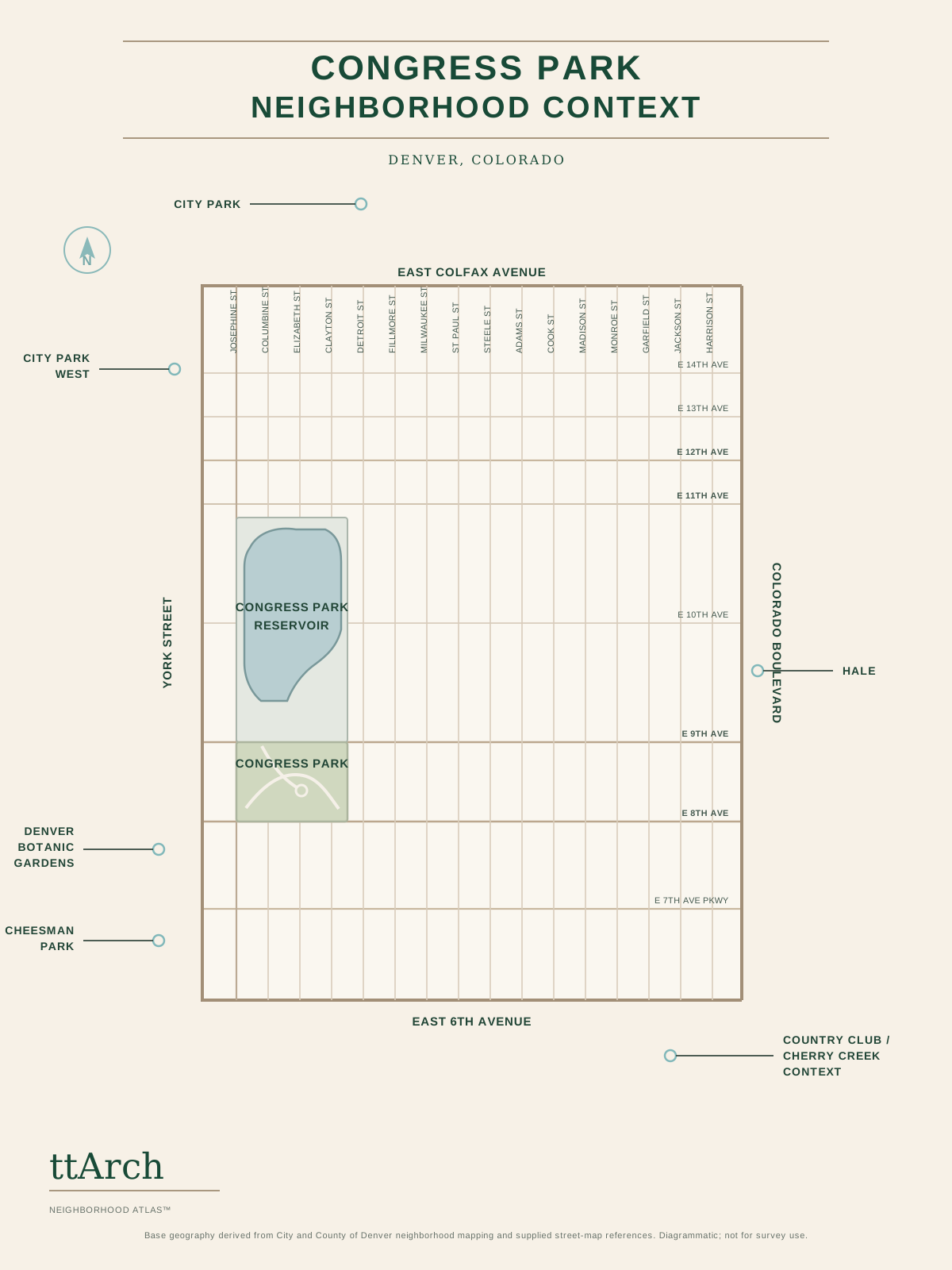
Official boundaries:
East Colfax Avenue
Colorado Boulevard
East 6th Avenue
York Street
The grid is compact, but street character and building type change considerably within those limits.
HOUSING CHARACTER
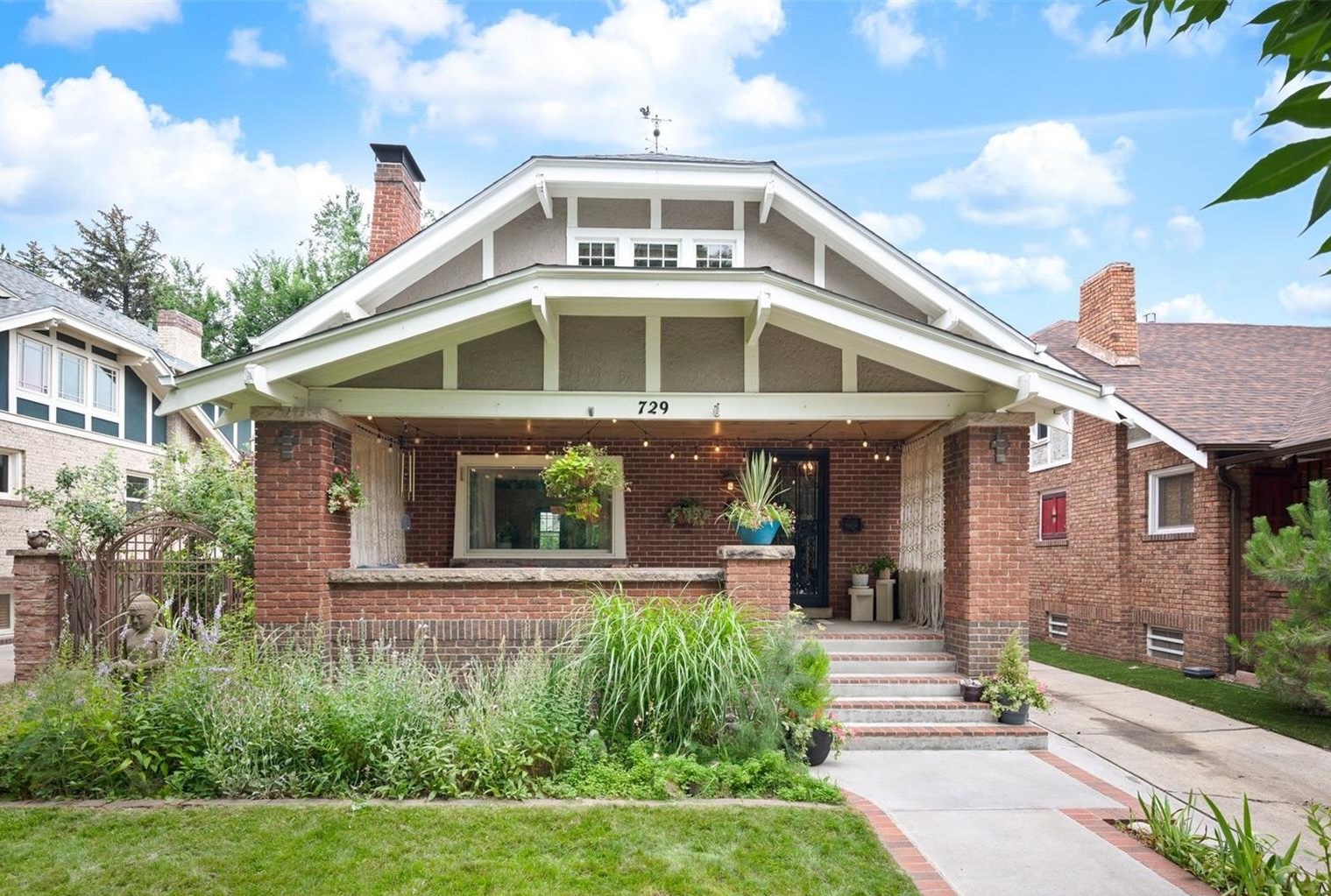
Detached homes include Denver Squares, bungalows, Tudor and other revival-era residences, alongside renovated and expanded properties.
Apartments, condominiums, and other attached housing create a second housing market with different ownership and pricing dynamics.
EVERYDAY LIFE
Congress Park combines neighborhood-scale activity along East 12th Avenue with the more urban Colfax edge and regional access along Colorado Boulevard.
Congress Park itself, Denver Botanic Gardens, Cheesman Park, and City Park all influence daily life from different parts of the neighborhood.
What Matters Most
For buyers and sellers, the neighborhood name is only the starting point. A property near Colfax can offer a very different daily experience from one near 7th Avenue Parkway. A historic single-family home presents a different ownership profile from a condominium. Proximity to Congress Park, the Botanic Gardens, schools, commercial corridors, parking, renovation quality, and block character can all influence fit and market position.
The practical question is not simply, “Do I like Congress Park?” It is, “Which version of Congress Park fits the way I want to live?”
Congress Park is best understood at the block and property level.
A map can define the neighborhood. It cannot tell you how a particular block feels, how a renovation was executed, how an older building functions, or how a specific property compares with its real competitive set. Those distinctions are where much of the decision-making value lives.
The Neighborhood Name Tells Only Part of the Story
Congress Park occupies a relatively compact part of central Denver, yet its internal geography matters. The official statistical neighborhood extends from East Colfax Avenue south to East 6th Avenue, and from York Street east to Colorado Boulevard. Within that boundary, however, the neighborhood shifts from park-adjacent residential blocks to neighborhood-serving commercial streets, apartment pockets, historic housing, major traffic corridors, and quieter interior streets.
Start With the Edges
East Colfax Avenue creates the neighborhood’s most urban northern edge, with transit, commercial uses, mixed building types, and a different street environment from the interior blocks.
Colorado Boulevard forms a major north–south regional corridor along the eastern boundary. Homes and buildings near it can experience a different traffic, access, and commercial context than properties deeper in the neighborhood.
East 6th Avenue and the 7th Avenue Parkway area create another distinct residential edge, including established homes and a strong connection to the broader central Denver street and parkway system.
York Street places the western edge beside some of central Denver’s most significant parks and cultural destinations, including Denver Botanic Gardens and nearby Cheesman Park.
THE RESIDENTIAL INTERIOR
Much of Congress Park’s identity comes from its interior residential blocks: mature streetscapes, historic detached homes, later renovations and additions, and a generally finer-grained urban fabric than Denver’s newer neighborhoods.
ATTACHED HOUSING MATTERS
Congress Park is not exclusively a detached-home neighborhood. Apartments and condominiums appear throughout portions of the neighborhood, creating different ownership, maintenance, parking, HOA, and pricing considerations.
MICRO-LOCATION MATTERS
Distance to Colfax, Colorado Boulevard, 12th Avenue activity, Congress Park, schools, transit, and nearby cultural destinations can materially change the practical experience of two otherwise similar properties.
Think in terms of environments, not just boundaries.
A neighborhood boundary is useful for orientation, but it is a blunt tool for understanding a home. In Congress Park, I would pay close attention to the specific street, neighboring building types, traffic exposure, nearby destinations, renovation history, parking, and the relationship between the house or unit and its immediate urban context.
The closer you get to the property, the more useful the analysis becomes.
A Neighborhood Shaped by Denver’s Eastward Growth
Congress Park developed during a period when Denver was expanding eastward from its older central neighborhoods. Streetcar access, subdivision activity, changing residential patterns, and the growth of nearby civic and cultural institutions all helped shape the neighborhood that exists today.
The result is not one architectural moment, but a layered urban fabric that includes early residential development, later apartment construction, historic districts, institutional uses, and decades of renovation and adaptation.
EARLY DEVELOPMENT
Parts of the western area are tied to the history of the former cemetery lands near today’s Cheesman Park. Congress Park as a whole should not be described as having been cemetery land.
STREETCAR-ERA GROWTH
Improved transportation helped Denver expand eastward. Residential construction accelerated through the late nineteenth and early twentieth centuries, producing many of the neighborhood’s recognizable historic houses and apartment buildings.
LAYERED NEIGHBORHOOD
Later apartment construction, institutional development, commercial change, renovation, additions, and infill created the mixed building history visible today. Preservation exists within that larger pattern rather than defining the entire neighborhood.
Preservation Is Part of the Context
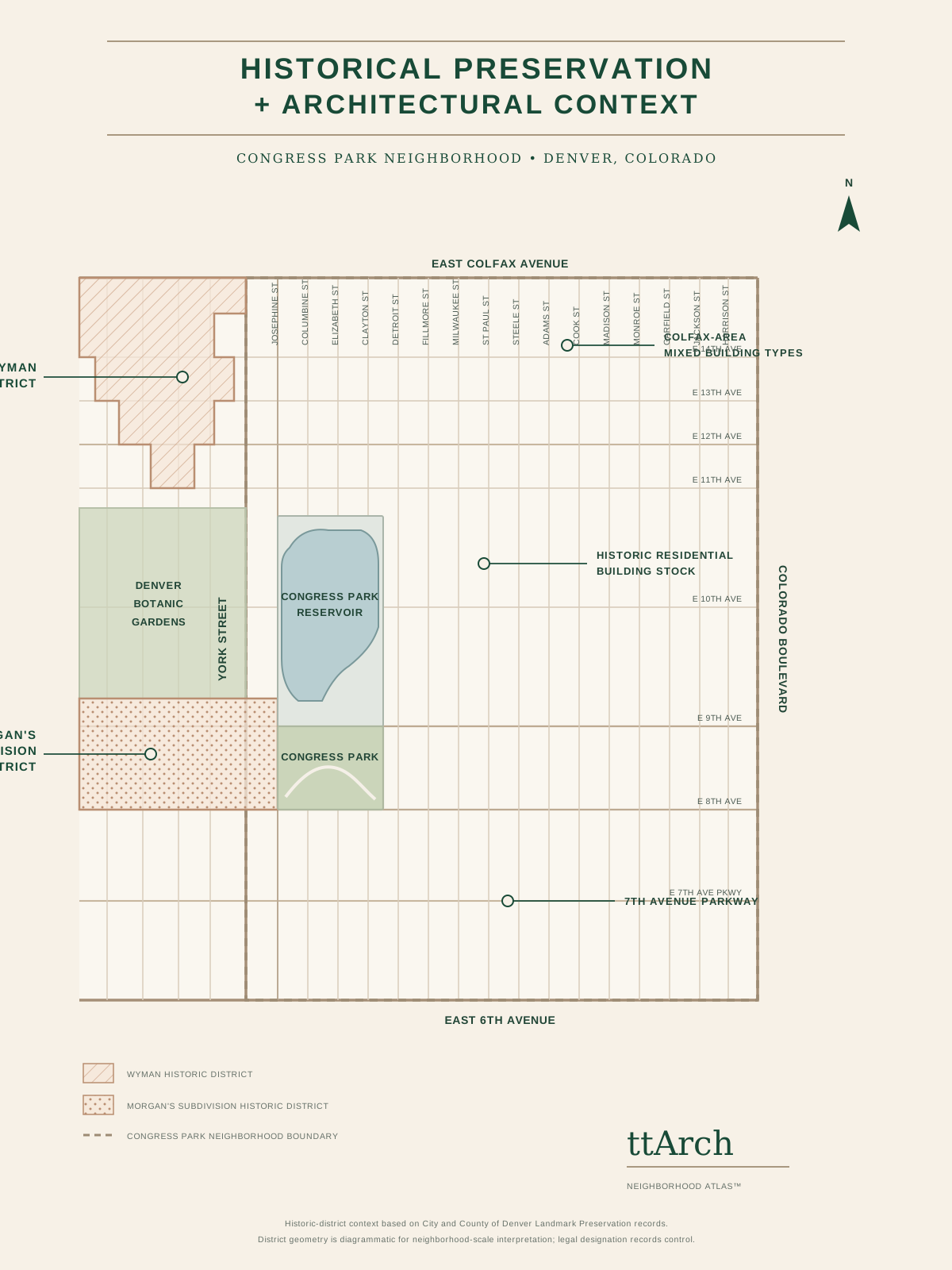
Congress Park sits beside and partially within a broader preservation landscape that includes the Wyman Historic District and Morgan’s Subdivision Historic District.
Historic designation does not mean that buildings are frozen in time. It does mean that qualifying exterior changes may be subject to design review and that the historic character of the district becomes part of the property’s regulatory and architectural context.
For buyers and sellers, the useful distinction is whether a specific property is actually within a designated district—not merely close to one.
Morgan’s Subdivision Historic District
Samuel P. Morgan acquired land from the Catholic Church in 1887, and much of the district’s housing was constructed during the early decades of the twentieth century.
The district includes examples of Classical Revival, Mediterranean Revival, Tudor, Denver Square and Craftsman-influenced architecture. The architectural record also includes work associated with prominent Denver architects and firms including Fisher & Fisher, Maurice Biscoe, Biscoe & Hewitt, and Burnham Hoyt.
Denver designated Morgan’s Subdivision as a historic district in 1978.
Wyman Historic District
The Wyman Historic District reflects a broader mix of residential, apartment, religious, and commercial development. That mix helps explain why the western and northwestern context around Congress Park does not read as a uniform detached-house district.
Denver designated the Wyman Historic District in 1993. Its actual legal geometry is irregular, so property-level verification matters when determining whether a particular parcel is within the district.
Historic Character Is More Than Style
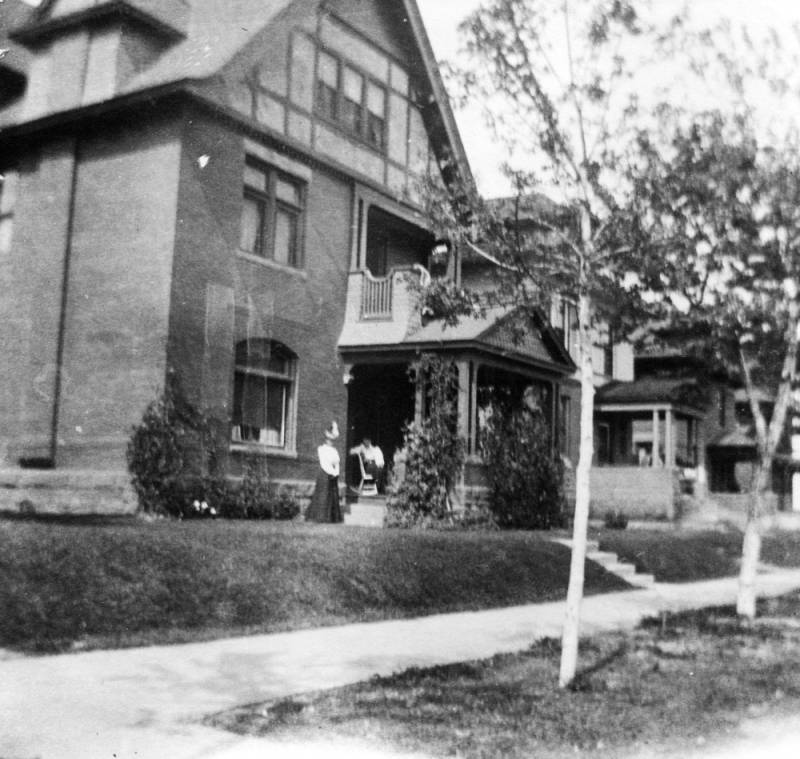
The architectural value of an older neighborhood is not limited to decorative style. Lot patterns, setbacks, porches, masonry, roof forms, mature landscaping, street width, building scale, and the relationship between neighboring structures all contribute to the experience of a block.
Renovations and additions can reinforce that character, reinterpret it, or significantly change it. That is why evaluating an individual property requires more than identifying its architectural label.
Preservation can add context without making every historic property the same.
Historic designation can influence the way exterior changes are evaluated, but it does not tell you whether a particular home has been sensitively renovated, poorly altered, carefully maintained, or substantially rebuilt inside.
For me, the more useful question is how the building’s history, current condition, alterations, and block context work together. Preservation status is one important piece of that larger architectural and real estate picture.
A Layered Housing Stock, Not a Single Architectural Type
Congress Park’s architectural identity comes from variety within a recognizable historic framework. Detached houses, early apartment buildings, later multifamily construction, renovations, additions, and infill all coexist within the neighborhood.
That mix means architectural character should be understood at both the neighborhood scale and the individual-property scale.
DENVER SQUARES + FOURSQUARES
Two-story masonry homes with efficient plans, broad porches, and relatively simple massing are a recurring part of Congress Park’s residential fabric.
BUNGALOWS + CRAFTSMAN INFLUENCE
Lower rooflines, broad porches, exposed structural expression, and compact plans appear throughout portions of the neighborhood, especially in early twentieth-century housing.
TUDOR + REVIVAL-ERA HOMES
Steeper roof forms, masonry detailing, asymmetrical compositions, and period revival references add another layer to the neighborhood’s architectural mix.
The Built Environment Changes Across the Neighborhood
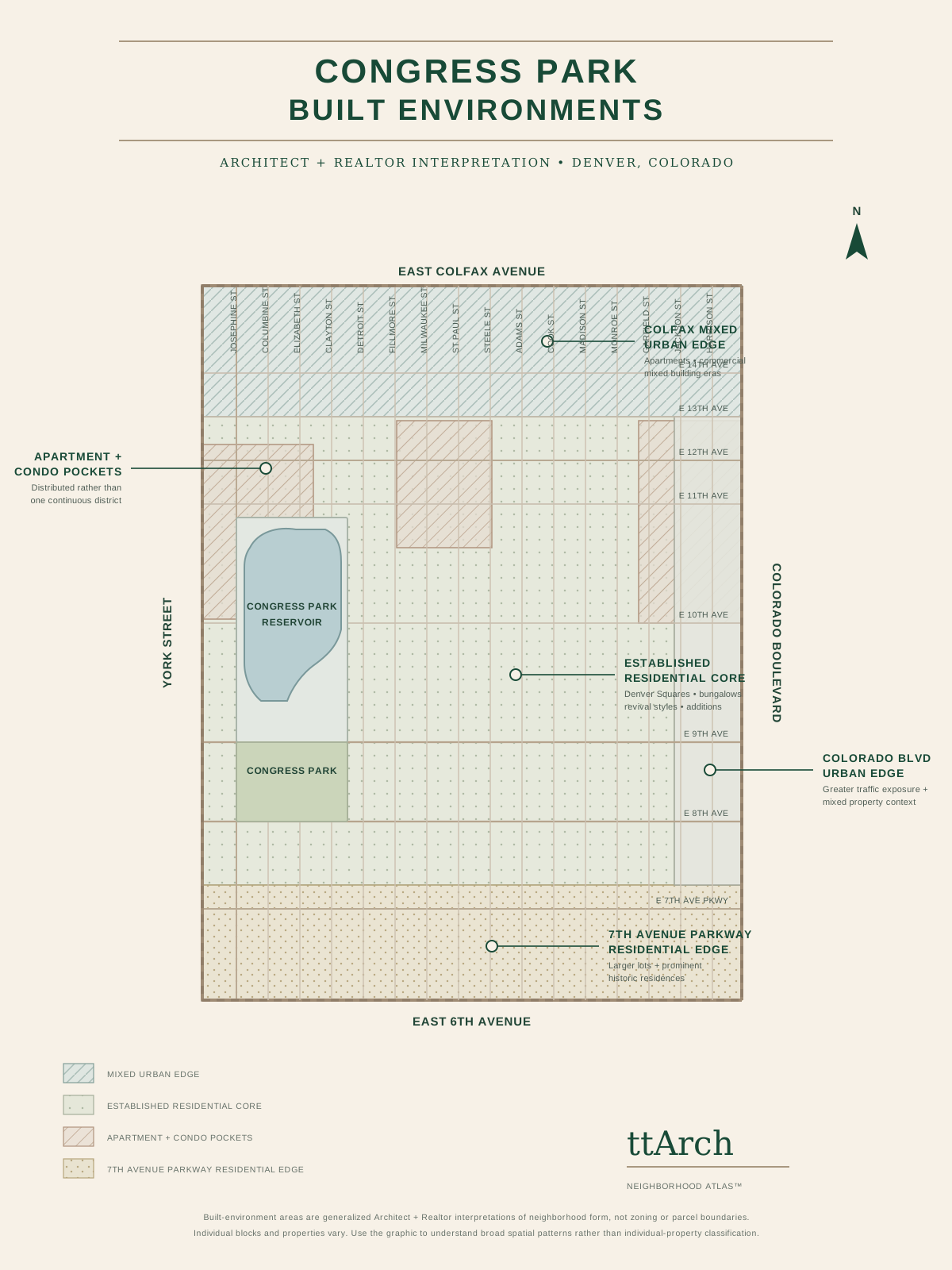
The interior residential blocks are only one part of Congress Park. Colfax introduces a more mixed urban edge. Apartment and condominium buildings appear in pockets rather than one continuous district. Colorado Boulevard changes the eastern context, while the 7th Avenue Parkway area has its own residential character.
The map is intentionally interpretive rather than regulatory. It is meant to help readers understand broad patterns in the built environment, not classify individual parcels.
Detached Homes
Detached housing ranges from relatively modest bungalows to larger historic residences. Some homes retain much of their original layout and material character; others have been extensively renovated, expanded, or reconfigured.
That variation can materially affect functional layout, natural light, storage, basement use, indoor-outdoor relationships, and the way a home competes within the market.
Apartments + Condominiums
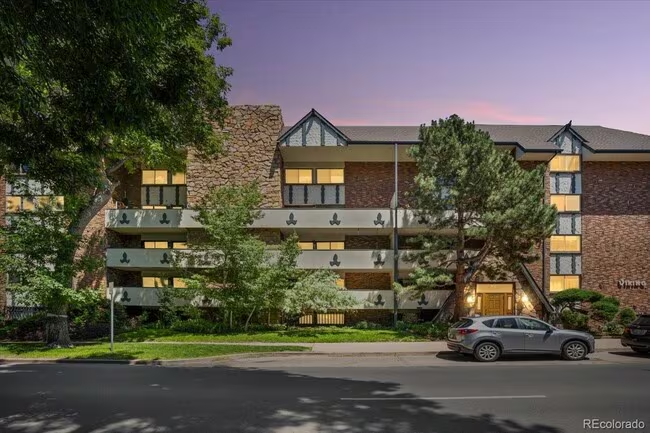
Historic apartment buildings, later multifamily buildings, and condominium conversions create a separate attached-housing environment within Congress Park.
For these properties, building condition, common systems, HOA structure, parking, storage, unit orientation, shared outdoor space, and the quality of prior renovations can be as important as the unit itself.
Age Creates Character — and Questions
Older does not automatically mean defective, and renovated does not automatically mean improved. In Congress Park, the age of the housing stock often makes it useful to understand how a property’s major systems and alterations evolved over time.
Common areas of architectural interest can include basements and foundations, masonry, windows, electrical systems, plumbing, heating and cooling, insulation, roof forms, garages, additions, and mature trees near structures.
The important issue is not whether a home is old. It is whether the current building works well, whether changes were thoughtfully integrated, and how the property compares with other homes of similar type and age.
Good architecture is not just about age or style.
I look at how a property actually functions: proportion, circulation, natural light, room relationships, additions, exterior transitions, structural logic, and how renovation decisions interact with the original building.
A beautifully preserved historic house can be a strong fit. So can a thoughtfully transformed one. The more important distinction is whether the architecture serves the way you want to live—and whether the property’s execution supports its market position.
Outdoor Life Is Defined by Both the Neighborhood and What Sits Beside It
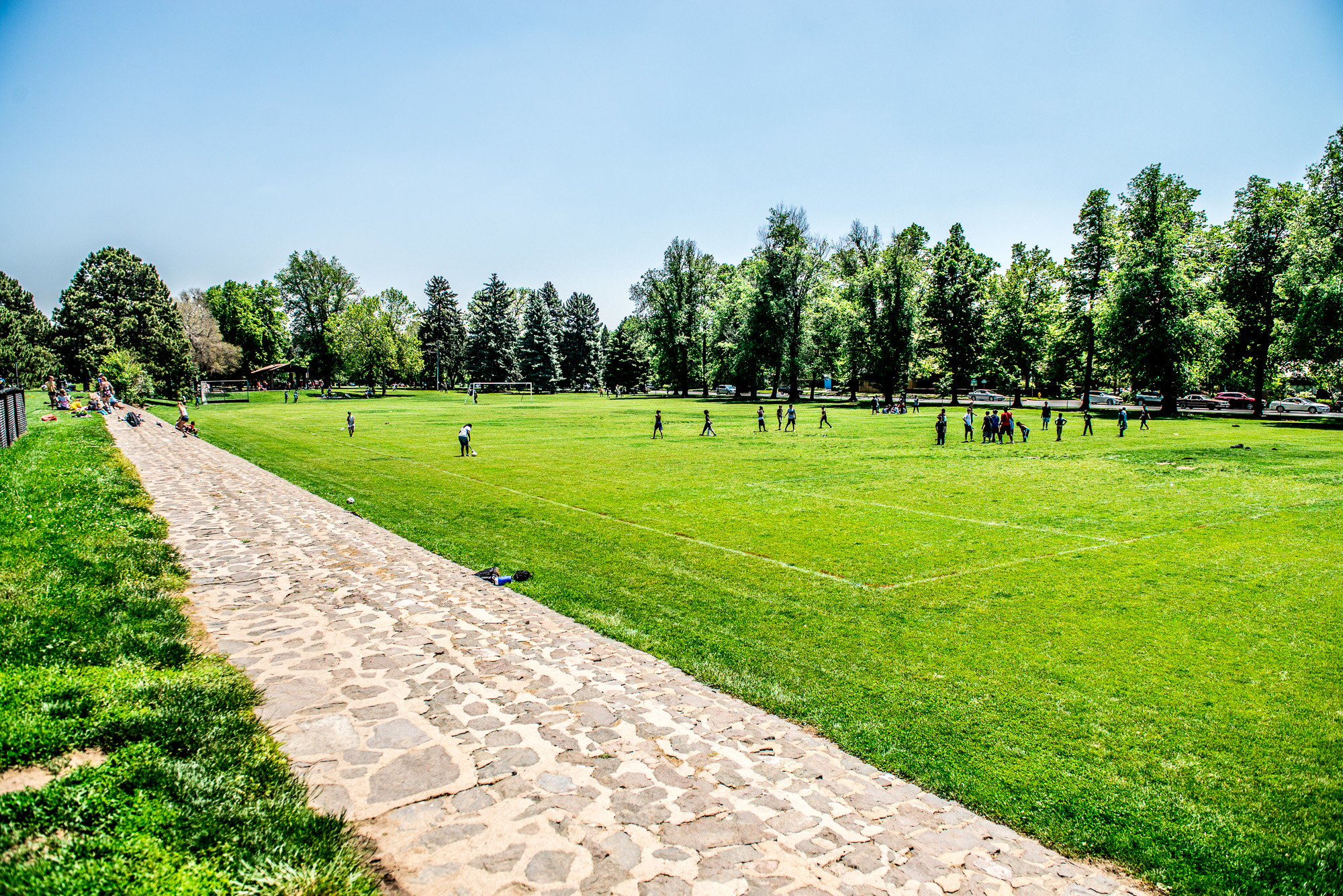
Congress Park’s outdoor experience is stronger than the neighborhood boundary alone suggests. Congress Park itself provides recreation within the neighborhood, while Denver Botanic Gardens, Cheesman Park, and City Park create a broader network of nearby green space, cultural destinations, paths, lawns, gardens, and recreation.
The practical value of these amenities depends heavily on where a property sits and how comfortably a resident can reach them.
Congress Park
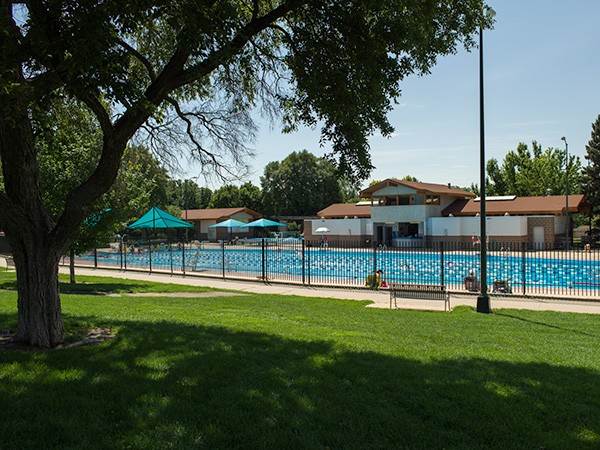
Congress Park is the neighborhood’s primary namesake recreational space, located along its western side near Josephine Street. The park and adjacent recreation facilities provide a local destination that is fundamentally different from the much larger park systems nearby.
For properties in the western part of the neighborhood, this can become part of everyday life rather than an occasional destination. For homes farther east, the practical experience changes because the same amenity may require a longer walk, bike ride, or drive.
DENVER BOTANIC GARDENS
Immediately west of the neighborhood, Denver Botanic Gardens adds a major cultural and landscape destination to the western Congress Park context. Its importance is not simply recreational; it also changes the character of the surrounding area and the kinds of destinations available nearby.
CHEESMAN PARK
Cheesman Park sits west of the Botanic Gardens and functions as a larger nearby open-space destination. Its broad lawns, paths, mature tree canopy, and central-city setting offer a different outdoor experience from the neighborhood-scale Congress Park facilities.
CITY PARK
City Park lies north of Congress Park across the Colfax corridor. It adds another major recreation and cultural destination to the broader area, but the route and crossing experience matter when evaluating how accessible it feels from a specific property.
Access Is More Useful Than a Generic Walkability Claim
It is tempting to summarize Congress Park as simply “walkable to parks,” but that can obscure the practical differences between properties.
A home near York or Josephine may have a very different relationship to Congress Park, the Botanic Gardens, and Cheesman Park than a home near Colorado Boulevard. City Park may feel close on a map while still requiring a significant Colfax crossing.
For a useful decision, look at the actual route, distance, intersection conditions, transportation mode, and destination—not just the neighborhood’s overall reputation.
The value of open space is personal and highly location-specific.
Some buyers will value being able to walk to Congress Park or the Botanic Gardens in a few minutes. Others may care more about a quieter block, larger home, easier parking, or quicker access to another part of the city.
I would not treat park proximity as automatically better. I would treat it as one part of the lifestyle and market equation, weighed against the characteristics of the specific property.
Daily Life Is Organized Around Corridors, Not a Single Town Center
Congress Park does not function around one concentrated commercial district. Instead, shops, restaurants, services, and gathering places are distributed across several different corridors. East 12th Avenue provides the strongest neighborhood-scale cluster, East Colfax Avenue creates a more urban commercial edge, and East 6th Avenue and Colorado Boulevard connect residents to additional businesses and regional destinations.
That pattern is important because everyday convenience can vary noticeably from one part of the neighborhood to another.
EAST 12TH AVENUE
This is the neighborhood’s clearest local-serving commercial spine. Restaurants, food businesses, small shops, and services are integrated into a predominantly residential setting, giving portions of 12th Avenue a distinctly neighborhood-scale feel.
EAST COLFAX AVENUE
Colfax is a more urban environment: a major transportation corridor with restaurants, retail, nightlife, services, and a broader mix of building types. Its convenience comes with a different traffic, noise, and pedestrian context than interior Congress Park streets.
6TH AVENUE + COLORADO
The southern and eastern edges connect Congress Park to additional retail and services beyond the neighborhood’s interior commercial pockets. These corridors can be useful for regional access, but they do not feel like extensions of the quieter residential grid.
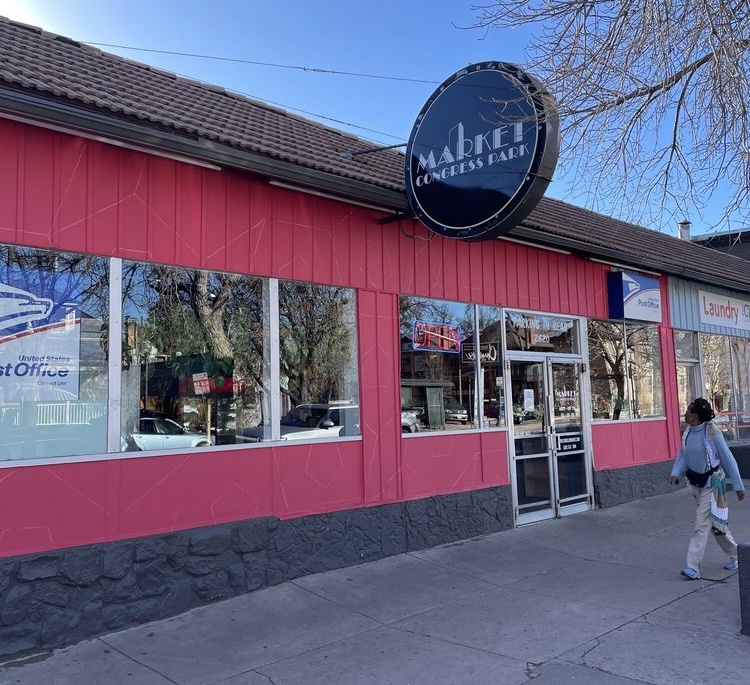
East 12th Avenue Is the Best Example of Neighborhood-Scale Daily Life
Rather than a large retail district, Congress Park’s 12th Avenue activity is woven into the neighborhood. That scale can make restaurants and small businesses feel like part of the residential fabric rather than a separate commercial destination.
For some buyers, being a few blocks from this activity is a major advantage. Others may prefer being farther from restaurant traffic, deliveries, evening activity, or commercial parking demand.
A Few Useful Neighborhood Examples
These are examples of how the neighborhood’s commercial geography works—not a “best restaurants” ranking or a complete directory. Businesses change, so operating status should be rechecked before publication updates.
Chef Zorba’s
2626 E. 12th Ave.
A longstanding neighborhood diner and a useful example of the local-serving character along East 12th Avenue.
Blue Pan Pizza
3509 E. 12th Ave.
Its Congress Park location reinforces 12th Avenue as a restaurant and neighborhood-gathering corridor.
Congress Park Market
2620 E. 12th Ave.
A small neighborhood market illustrating how convenience retail is embedded within the 12th Avenue corridor.
Cerebral Brewing
1477 Monroe St.
A neighborhood brewery near the Colfax edge, illustrating the more urban commercial and social environment in the northern part of Congress Park.
Businesses Change Faster Than Neighborhood Form
A neighborhood guide can become outdated quickly if it treats a restaurant list as permanent. Individual businesses open, close, relocate, or change ownership much faster than the underlying street pattern.
For the Atlas, the more durable insight is where commercial activity occurs, what scale it takes, and how it affects nearby residential blocks. Business examples should be refreshed during regular guide maintenance.
Convenience and quiet are often two sides of the same location decision.
I would not reduce Congress Park to a generic walkability score. The more useful question is what you personally want nearby and what trade-offs come with that proximity.
A house two blocks from restaurants may be ideal for someone who values spontaneous neighborhood activity. Another buyer may prefer a quieter interior block and be perfectly comfortable traveling a little farther for the same destinations.
School Access Is an Address-Specific Question
Schools are often discussed as though every home in a neighborhood shares one fixed assignment. In Congress Park, that is not a reliable assumption. Denver Public Schools uses a combination of enrollment zones, proximity priorities, attendance boundaries, and SchoolChoice, and those systems can change over time.
For buyers, the useful question is therefore not simply, “What schools serve Congress Park?” It is, “What options apply to this specific address for the school year that matters to my family?”
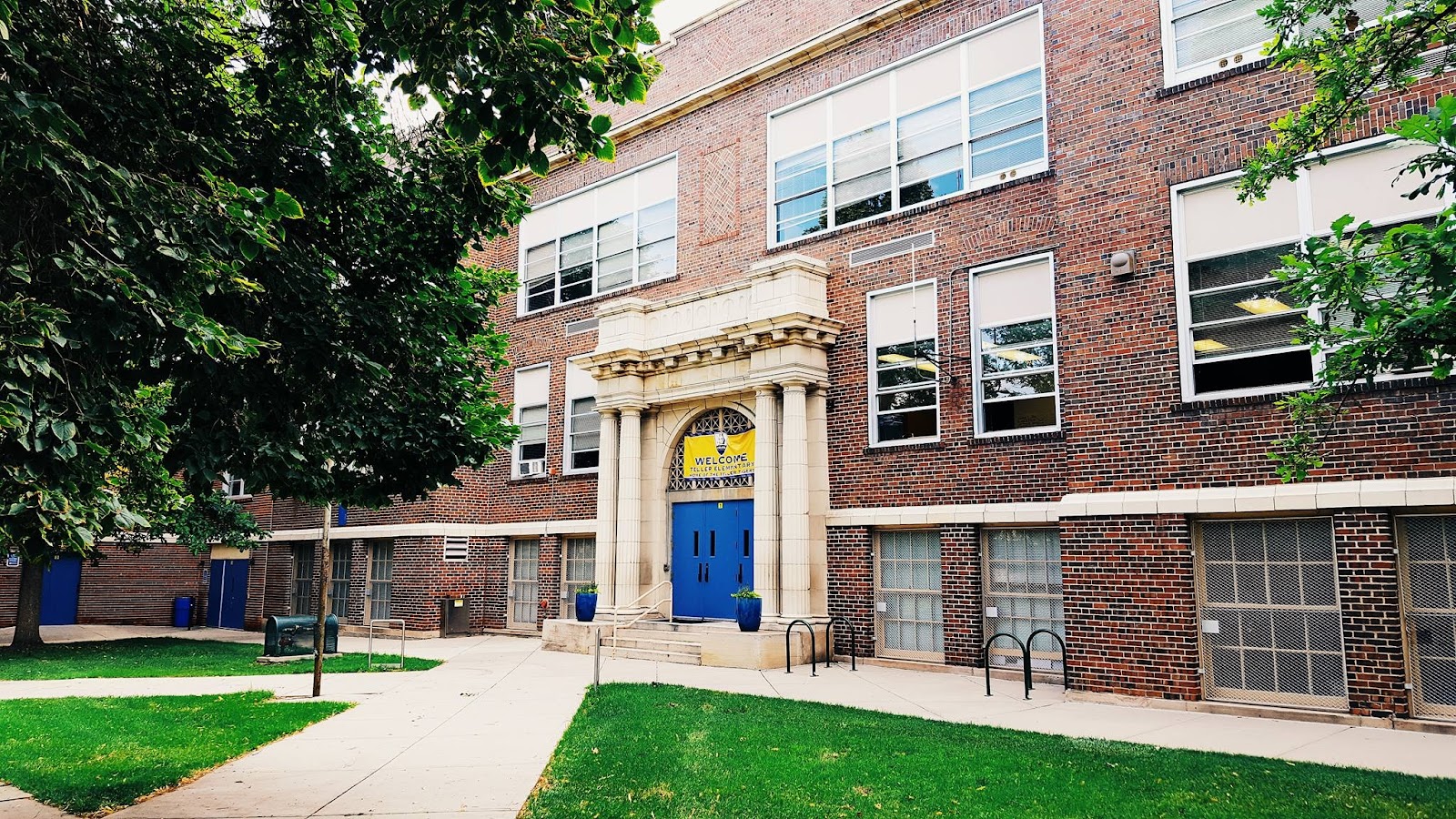
Teller Elementary
1150 Garfield Street
ECE 4 through Grade 5
Teller sits within Congress Park and is part of the Central East Denver Elementary Enrollment Zone for the 2026–27 school year. The school also operates as an integrated Gifted and Talented Magnet school.
Its physical presence in the neighborhood can make Teller feel like the obvious elementary school reference point, but enrollment should still be understood through the current DPS zone and SchoolChoice system rather than proximity alone.
Elementary Options Within the Current Zone
Teller Elementary
Steck Elementary
Carson Elementary
Montclair School of Academics & Enrichment
Lowry Elementary
Denver Green School Southeast
How the zone works: Families living in an enrollment zone are guaranteed a seat at one of the schools in that zone, not automatically at one specific school. Elementary proximity zones provide higher admission priority to students living nearer a particular zone school. Families use DPS SchoolChoice to rank preferences.
Morey Middle School
840 East 14th Avenue
Morey is located west of Congress Park and is an important nearby DPS middle-school option. Middle-school eligibility and enrollment should be confirmed for the specific property through the current DPS School Finder and SchoolChoice materials.
East High School
1600 City Park Esplanade
East High School sits north of Congress Park beside City Park. As with middle school, the correct high-school assignment and available choice options should be verified for the individual address and applicable school year.
The Elementary Enrollment Geography Recently Changed
Palmer Elementary closed as a K–5 school after the 2024–25 school year. DPS subsequently created the Central East Elementary Enrollment Zone that now includes Teller, Steck, Carson, Montclair, Lowry, and Denver Green School Southeast.
This is a good example of why school information should be treated as time-sensitive. DPS states that the current boundary and proximity maps apply to the 2026–27 school year and that 2027–28 maps will be released later in 2026.
How to Use School Information When Evaluating a Home
School information can affect both lifestyle fit and real estate demand, but broad neighborhood labels are not enough.
Verify the property address, student grade, applicable school year, enrollment zone or attendance boundary, proximity priority, and SchoolChoice rules directly with Denver Public Schools.
A nearby school is not necessarily an assigned school, and a current assignment should not be assumed to remain unchanged indefinitely.
For any property under consideration:
1. Enter the exact address into the DPS School Finder.
2. Confirm the school year and grade level.
3. Determine whether the address has a boundary school or enrollment zone.
4. Review proximity priorities and SchoolChoice requirements.
5. Reconfirm the information before making a housing decision based on school access.
I would never value a home based on a school assumption.
Schools can be an important part of a buyer’s decision, but the analysis needs to begin with verified information rather than reputation, rankings, or what someone remembers from a previous year.
For Congress Park, I would confirm the exact address first and then evaluate the available school options alongside the many other factors that determine whether the property is a good long-term fit.
Sources: Denver Public Schools — Teller Elementary; DPS SchoolChoice District & Boundary Maps; DPS Boundary Schools and Enrollment Zones; Denver Schools Thrive Initiative; Morey Middle School; East High School. Information verified: August 12, 2026. School assignments, enrollment zones, programs, and SchoolChoice rules may change. Always verify the exact property address and applicable school year directly with Denver Public Schools.
Connected to Central Denver, With Meaningful Differences by Street
Congress Park sits within Denver’s established street grid and is connected to several major east–west and north–south corridors. That creates useful access to downtown, nearby neighborhoods, regional roads, transit, parks, and commercial districts.
But connectivity is not experienced uniformly. A house on a quiet interior street and a condominium near Colfax may share the same neighborhood name while offering very different transportation choices, traffic exposure, parking conditions, and pedestrian environments.
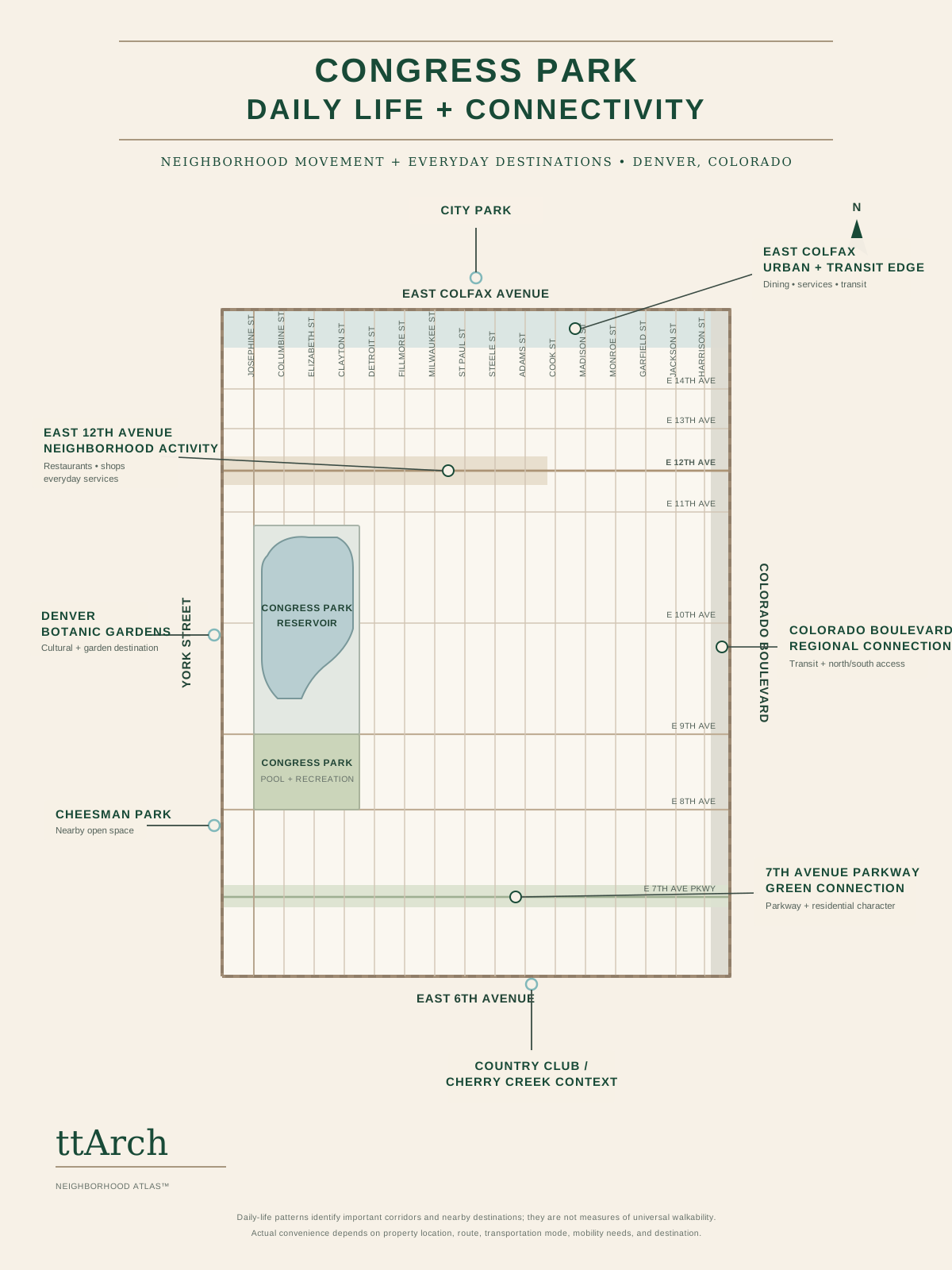
Think in Terms of Routes and Connections
The neighborhood’s street grid provides multiple ways to move east, west, north, and south, but several corridors carry very different roles.
Colfax is both an urban commercial edge and an important transit corridor. Colorado Boulevard provides regional north–south movement. 6th Avenue provides another major east–west connection, while 7th Avenue Parkway creates a more residential parkway experience.
The most useful mobility analysis therefore starts with the actual property location and the destinations a resident uses regularly.
EAST COLFAX AVENUE
Colfax carries frequent bus service and connects Congress Park west toward central Denver and east toward Aurora. It is also the location of the East Colfax Bus Rapid Transit project, making the corridor both a current transportation asset and an active construction environment.
COLORADO BOULEVARD
Colorado Boulevard is the neighborhood’s principal north–south regional edge and carries RTD Route 40. It improves access to destinations along the corridor, while properties close to Colorado should also be evaluated in relation to traffic, turning movements, noise, and pedestrian crossings.
INTERIOR STREET GRID
The connected grid gives residents many route choices for local travel. Interior streets can feel substantially calmer than the major boundary corridors, which is why distance from Colfax, Colorado Boulevard, and other higher-volume streets can influence both lifestyle fit and market perception.
A Major Corridor Change Is Underway
The East Colfax Bus Rapid Transit project is actively reshaping the Colfax corridor. Current Denver construction notices show work proceeding along the central Denver portion of the project, with RTD Route 15 and 15L service maintained during construction through temporary stops and service adjustments as necessary.
For Congress Park, this matters in two different time frames. During construction, residents and businesses may experience changing lane configurations, temporary stops, parking restrictions, and construction activity. Longer term, the project is intended to create a higher-capacity transit corridor along Colfax.
Because construction staging and service conditions can change, current project information should be checked rather than relying on a static neighborhood guide for exact closures or stop locations.
How Different Modes Work in Congress Park
WALKING
The connected grid and nearby destinations support many local walking trips, but actual convenience depends on the property, destination, intersections, weather, and mobility needs.
BIKING
The grid creates multiple route choices, but comfort can vary substantially between calmer neighborhood streets and higher-volume corridors. Route selection matters as much as straight-line distance.
TRANSIT
RTD service on Colfax and Colorado Boulevard provides useful regional connections. During BRT construction, temporary stop locations and service conditions should be verified directly with RTD.
DRIVING + PARKING
Major surrounding corridors provide convenient regional access, while parking conditions vary by block and property type. Detached garages, off-street spaces, condominium parking, and street parking should be evaluated separately.
What Does This Location Make Easier — and What Does It Expose You To?
A transportation advantage can also create a location trade-off. Being close to Colfax can improve transit and restaurant access while increasing exposure to a busier corridor. Being near Colorado Boulevard can shorten some regional trips while adding traffic and noise considerations.
Conversely, a quieter interior block may provide a calmer residential experience while adding a few minutes to everyday destinations.
The right answer depends on how you actually move through the city.
Transportation is part of micro-location, not a separate score.
I would evaluate transportation the same way I evaluate architecture or block character: in relation to the specific property and the person considering it.
For one buyer, being close to Colfax transit may be a major advantage. For another, separation from a busy corridor may matter more. The useful analysis is not whether Congress Park is broadly “connected.” It is whether this particular location connects you to the places you actually need to go in the way you prefer to travel.
Sources: Regional Transportation District — current Route 15 / East Colfax and Route 40 / Colorado Boulevard schedules; City and County of Denver Department of Transportation & Infrastructure — East Colfax Bus Rapid Transit project and 2026 construction notices. Information verified: August 12, 2026. Transit schedules, temporary stops, construction phases, lane configurations, and project timing can change; verify current conditions with RTD and the City of Denver before relying on them.
One Neighborhood, Two Meaningfully Different Housing Markets
A single median price does not describe Congress Park very well. The neighborhood contains both a substantial single-family market and a smaller but important condominium + attached-home market. Those property types compete at different price levels, attract different buyer pools, and involve different ownership considerations.
For that reason, the Atlas analyzes them separately rather than blending them into one neighborhood statistic.
Single-Family Homes
Public-data sample • 2026 year-to-date through August 12, 2026
| Metric | 2026 YTD Sample |
|---|---|
| Usable Closed Sales | 34 |
| Median Sale Price | $952,500 |
| Average Sale Price | $1,047,634 |
| Lowest Observed Sale | $515,000 |
| Highest Observed Sale | $1,850,000 |
WHAT THIS MEANS FOR BUYERS
The spread from roughly $515,000 to $1.85 million demonstrates how little a neighborhood-wide median says about an individual house. Size, block, lot, architectural character, renovation quality, parking, condition, and proximity to major corridors can produce very different values.
A home below the neighborhood median is not automatically a bargain, and a home above it is not automatically overpriced.
WHAT THIS MEANS FOR SELLERS
The relevant competitive set is usually much narrower than “all Congress Park homes.” A renovated Denver Square should not necessarily be positioned against an unrenovated bungalow simply because both are detached properties in the same neighborhood.
Pricing should reflect the property’s actual architectural, functional, locational, and condition-based competition.
Condominiums + Attached Homes
Public-data sample • 2026 year-to-date through August 12, 2026
| Metric | 2026 YTD Sample |
|---|---|
| Usable Closed Sales | 10 |
| Median Sale Price | $469,000 |
| Average Sale Price | $513,100 |
| Lowest Observed Sale | $169,000 |
| Highest Observed Sale | $925,000 |
WHAT THIS MEANS FOR BUYERS
Attached housing provides a substantially different entry point into Congress Park than the detached-home market. But the wide price range also shows why “condo” is too broad a category by itself.
Unit size, building type, parking, HOA structure, condition, outdoor space, location, and whether the property is a condominium, townhome, or other attached form can materially change value.
WHAT THIS MEANS FOR SELLERS
Comparable sales should usually come from properties with similar ownership structures and building characteristics. A small vintage condominium and a large contemporary attached residence may be geographically close but economically poor comparables.
HOA condition, monthly obligations, parking, common elements, unit updates, and building reputation can all influence buyer response.
What Can Move Value Within Congress Park?
MICRO-LOCATION
Interior block, park proximity, commercial access, Colfax exposure, Colorado Boulevard exposure, and neighboring building types can all affect buyer perception.
ARCHITECTURE + CONDITION
Original character, renovation quality, additions, floor plan, natural light, major systems, and the relationship between old and new can materially affect value.
LOT + PARKING
Lot usability, garage capacity, off-street parking, alley access, outdoor space, and future flexibility can distinguish otherwise similar properties.
PROPERTY TYPE
Detached houses, townhomes, vintage condominiums, and larger attached residences should not automatically share the same comparable-sale pool.
Neighborhood statistics establish context. Comparable properties establish value.
The most common mistake in neighborhood market analysis is treating a median as though it were a valuation formula. Congress Park is too architecturally and geographically varied for that.
I would use these numbers to understand the overall market, then narrow the analysis to the property’s actual competitive set: similar housing type, scale, condition, renovation quality, lot, parking, block character, and location.
The closer the comparable property resembles the subject property, the more useful the comparison becomes.
Market methodology: 2026 year-to-date publicly visible closed-sale records through August 12, 2026 were reviewed for properties identified within Congress Park. Detached single-family sales were analyzed separately from condominium and attached sales. Duplicate records and properties with unclear classifications were excluded. Because this is not a direct full-MLS export, the results should be interpreted as a transparent public-data sample rather than a definitive accounting of every transaction. Days on market and sale-to-original-list-price metrics are intentionally omitted because public data were not sufficiently complete and consistent across the sample. Sources: Redfin and Realtor.com property records drawing from REColorado / MLS Grid data. Data reviewed August 12, 2026.
Choose the Version of Congress Park That Fits You
Congress Park offers more variety than the neighborhood name suggests. A buyer can choose between quieter residential blocks, homes near neighborhood-scale restaurants, properties close to parks and cultural destinations, apartments near Colfax, larger historic residences, smaller bungalows, extensively renovated homes, and attached properties with very different ownership structures.
The strongest buying decision therefore starts by identifying which combination of location, housing type, architecture, lifestyle, and price makes sense for you.
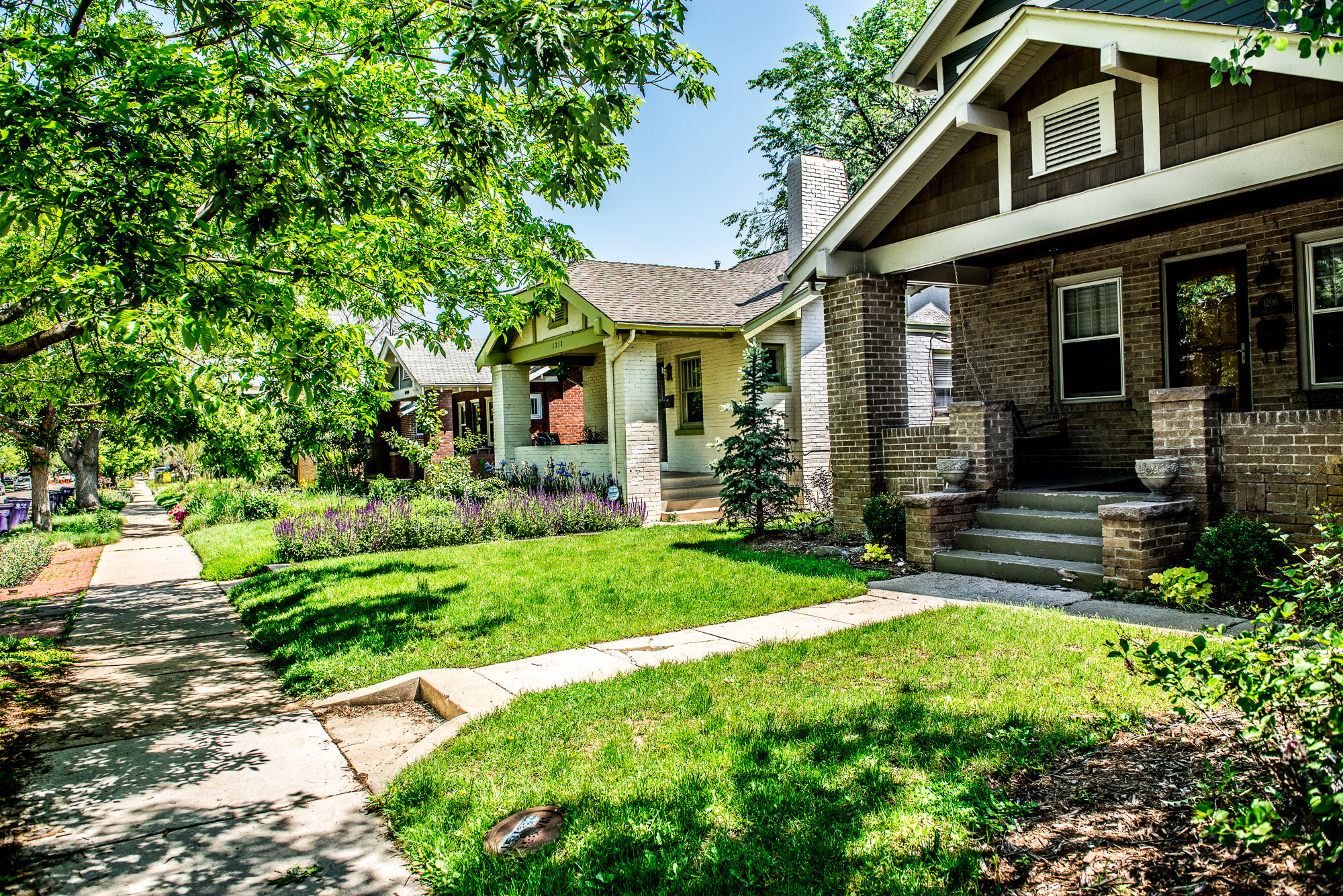
Start With Fit Before You Start With Features
Buyers often begin with bedrooms, bathrooms, square footage, and price. Those are important, but in Congress Park they should come after a more fundamental question: what kind of neighborhood experience do you want?
A property near Colfax may offer easier transit and commercial access. A home near York may place parks and the Botanic Gardens closer to everyday life. An interior block may feel quieter. A condominium may provide a very different ownership experience from a detached historic home.
The best fit is the combination that supports both your daily life and your longer-term priorities.
The Decisions That Matter Most
1 — MICRO-LOCATION
The specific block can matter as much as the neighborhood. Consider the relationship to Colfax, Colorado Boulevard, 12th Avenue, Congress Park, the Botanic Gardens, schools, commercial activity, and neighboring building types.
2 — HOUSING TYPE
Detached homes, townhomes, vintage condominiums, and larger attached residences offer very different ownership experiences. Decide which property type fits your maintenance preferences, space needs, budget, parking expectations, and long-term plans.
3 — ORIGINAL VS. RENOVATED
Congress Park includes everything from relatively intact historic homes to extensively reworked properties. Decide how much you value original character, modernized function, additional square footage, and the quality of how old and new have been integrated.
4 — PARKING + LOT
Garages, alley access, off-street parking, lot depth, usable outdoor space, and existing additions can meaningfully change how a property works. These characteristics are often more important in daily life than a small difference in interior square footage.
5 — PARKS + DAILY LIFE
Think about the destinations you would actually use: Congress Park, Denver Botanic Gardens, Cheesman Park, City Park, restaurants, groceries, transit, and services. Their value depends on your habits and the route from the specific property.
6 — SCHOOLS
School access should be evaluated for the exact address, applicable school year, grade level, and current DPS enrollment structure. Do not assume that a nearby school is automatically the assigned or guaranteed school.
7 — MOBILITY
Evaluate transportation from the property rather than from the neighborhood as a whole. Consider your regular destinations, preferred mode of travel, transit access, major-street exposure, and how often you expect to drive.
8 — MARKET POSITION
A property should be compared with homes that buyers would realistically consider instead. Price alone is not enough. Housing type, block, architecture, renovation quality, lot, parking, condition, and functional layout all help define the real competitive set.
9 — LONG-TERM FIT
Think beyond the immediate purchase. Consider whether the home, unit, lot, location, and ownership structure still make sense if your household, work pattern, transportation habits, or space needs change over time.
A Beautiful House Can Still Be the Wrong House
Historic character can be compelling, but the lived experience depends on more than curb appeal. A home may have beautiful masonry and original details while still offering a floor plan, room proportions, natural-light pattern, basement configuration, or addition that does not work for your needs.
Likewise, a heavily renovated property may look contemporary while still containing awkward transitions or compromises created by earlier alterations.
The question is not whether the home is historically intact or recently updated. It is whether the architecture works well for you and whether the price reflects what the property actually delivers.
Congress Park May Be a Strong Fit If…
You value an established central-Denver neighborhood with historic residential character, multiple housing types, nearby parks and cultural destinations, neighborhood-scale restaurants and shops, and several transportation options—and you are comfortable evaluating the trade-offs that come with older housing, varied building types, and proximity to major urban corridors.
It may be less compelling if your priorities depend on newer housing, highly uniform streets, large suburban lots, abundant private parking, or a neighborhood where most homes share similar age, design, and condition.
The right Congress Park property should make sense on three levels.
The neighborhood should fit. You should value the location, surrounding amenities, and urban context.
The block should fit. The traffic, neighboring buildings, parking, street character, and nearby destinations should support the way you want to live.
The property should fit. Its architecture, condition, layout, ownership structure, price, and long-term flexibility should make sense on their own merits.
When all three align, Congress Park can be a compelling choice. When one does not, the neighborhood’s reputation should not override what the property is telling you.
Evaluate the Block, Home, and Market Together
If you are considering buying a Congress Park property, I help you evaluate the block, architecture, condition, renovation quality, lot, parking, ownership structure, market position, value, offer strategy, and due diligence together before you commit.
Position the Property, Not Just the Neighborhood
Congress Park has strong neighborhood recognition, but that recognition does not determine the value of an individual property. Buyers compare homes based on much more specific characteristics: housing type, architecture, renovation quality, block, parking, lot, floor plan, condition, nearby amenities, and exposure to major corridors.
The most effective selling strategy is therefore to identify what is genuinely distinctive about the property, who is most likely to value it, and which homes represent its real competition.
The Competitive Set Is Usually Smaller Than Congress Park
A seller may own a Congress Park home, but buyers are rarely comparing it with every other home in Congress Park.
A renovated Denver Square may compete most directly with other renovated two-story homes on similar interior blocks. A vintage condominium may compete with similar units in buildings offering comparable parking, HOA costs, and location. A house near Colfax may attract a different buyer profile from one near 7th Avenue Parkway.
Pricing becomes more accurate when the competitive set reflects the property buyers are actually choosing between.
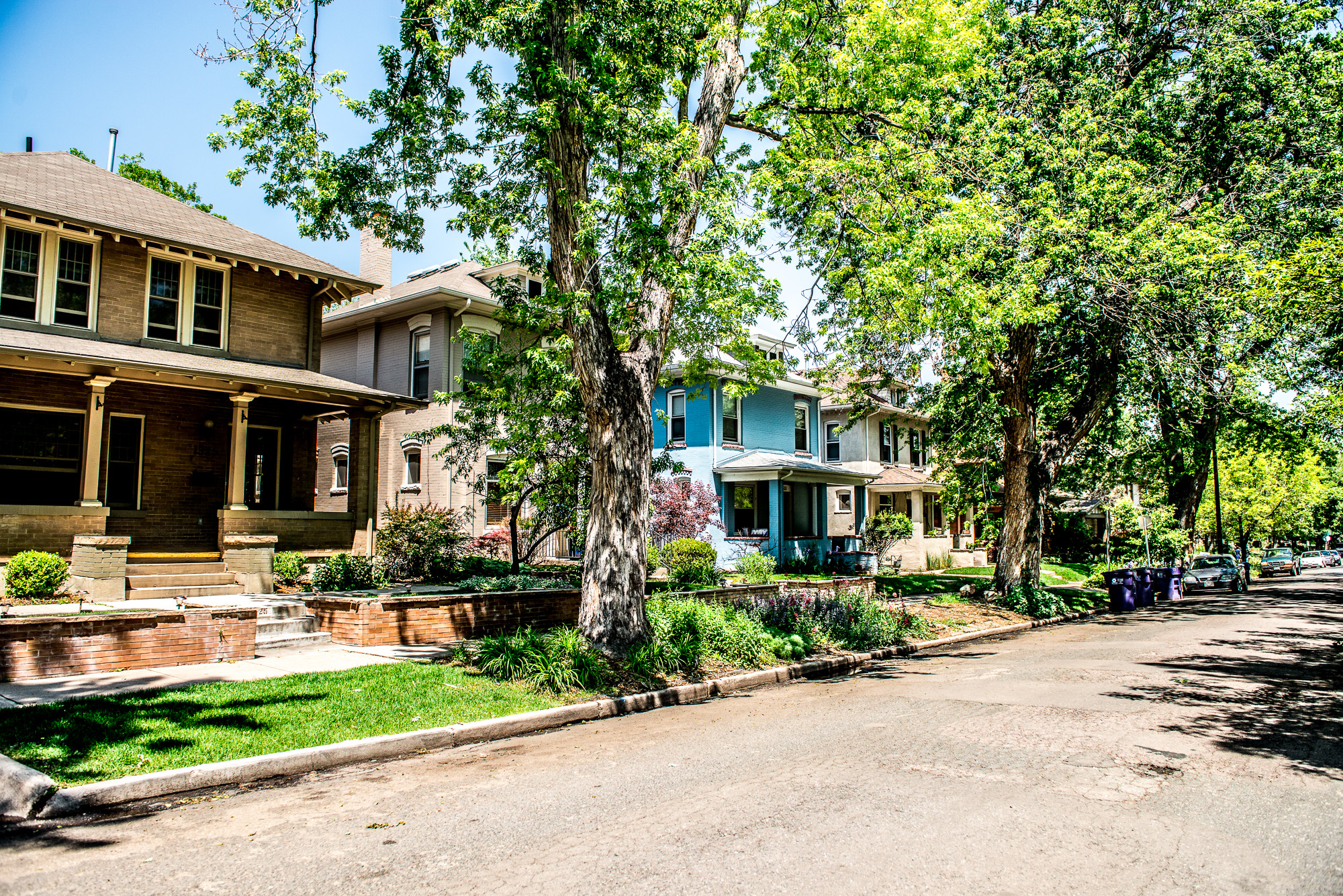
What Should Shape the Selling Strategy?
1 — ARCHITECTURE
Identify what the property is architecturally rather than relying on a generic “historic charm” description. Building type, era, proportions, materials, additions, and original details can help distinguish the home from its competition.
2 — RENOVATION QUALITY
Updates should be presented in terms of what they actually improve: layout, light, storage, function, systems, connection to outdoor space, or architectural coherence. Cosmetic recency alone does not guarantee stronger buyer response.
3 — MICRO-LOCATION
Distance to parks, 12th Avenue, Colfax, Colorado Boulevard, schools, and transit can help define the likely buyer. Location advantages should be communicated clearly, while unavoidable trade-offs should be reflected realistically in pricing.
4 — PROPERTY TYPE
Detached houses and attached properties should be positioned within their own relevant markets. For condominiums and townhomes, HOA structure, parking, storage, shared amenities, and building condition become part of the value story.
5 — PARKING + OUTDOOR SPACE
Garage capacity, off-street parking, alley access, private outdoor space, lot usability, patios, gardens, and mature landscaping can all help separate one property from nearby alternatives.
6 — CURRENT MARKET POSITION
The strongest launch strategy reflects both recent comparable sales and the homes buyers can choose today. Active competition can shape buyer expectations just as much as closed-sale history.
Help Buyers Understand the House
Congress Park homes often benefit from presentation that explains architecture and spatial relationships rather than relying only on attractive photographs.
Professional photography should communicate light, proportion, materials, and indoor-outdoor relationships. Floor plans can help buyers understand older layouts, additions, finished basements, and circulation. Staging should clarify room function rather than disguising architectural limitations.
For distinctive historic or renovated properties, thoughtful property descriptions can also explain design decisions, additions, original features, and the relationship of the home to its block and neighborhood context.
The Goal Is Not the Highest List Price
The goal is to establish a price that accurately positions the property against its competition and gives buyers a reason to engage.
Overpricing can be particularly costly in a neighborhood with varied housing stock because buyers can quickly reject an imperfect comparison. Underpricing is not automatically strategic either.
The strongest price is the one supported by the property’s real competitive position and the current market environment.
“The neighborhood creates interest. The property still has to justify the price.”
The Building Is Part of the Property
For an attached property, buyers are evaluating both the individual unit and the larger ownership structure. HOA obligations, reserves, insurance, shared maintenance, parking, storage, common areas, building condition, rental policies, and upcoming capital projects can all influence buyer confidence and financing.
A well-presented unit cannot completely separate itself from the condition and governance of the building around it. That is why the competitive analysis should compare not only unit finishes and square footage, but also the quality of the overall ownership environment.
The strongest marketing makes the property easier to understand.
My goal would not be to make every Congress Park property sound exceptional in the same way. Buyers recognize generic marketing quickly.
I would identify what is genuinely good about the architecture, block, renovation, lot, parking, location, or ownership structure—and make those strengths clear. I would also price the property with an understanding of the characteristics buyers may see as compromises.
Good positioning is not about exaggerating the house. It is about understanding it accurately and communicating that understanding well.
Turn Neighborhood Knowledge Into a Property-Specific Strategy
If you are considering selling a Congress Park property, I bring the architecture, property condition, renovation quality, competitive knowledge, preparation, pricing, marketing, and negotiation together into a strategy for the individual home.
Congress Park Rewards Property-Level Thinking
Congress Park is a good example of why neighborhood guides should create context rather than shortcuts. The neighborhood has a recognizable identity, but the homes, blocks, building types, street environments, and ownership experiences within it are too varied for a single label to tell you whether a particular property is a good choice.
My view is that the most useful analysis moves progressively closer to the property.
Understand the Neighborhood
Start with the broader context: location in central Denver, historic development, parks, commercial corridors, housing mix, schools, transportation, and general market structure.
This tells you what kind of neighborhood Congress Park is—but not whether a particular home is right for you.
Understand the Block
Then narrow the analysis. Is the property near Colfax, Colorado Boulevard, 12th Avenue, Congress Park, the Botanic Gardens, or 7th Avenue Parkway?
What are the neighboring building types? How does the street feel? What is the parking pattern? What destinations are realistically convenient?
Understand the Property
Finally, evaluate the building itself: architecture, layout, light, condition, renovation quality, additions, parking, lot, ownership structure, and market position.
This is where the decision becomes personal. A good neighborhood cannot compensate for a property that does not fit your needs or make sense at its price.
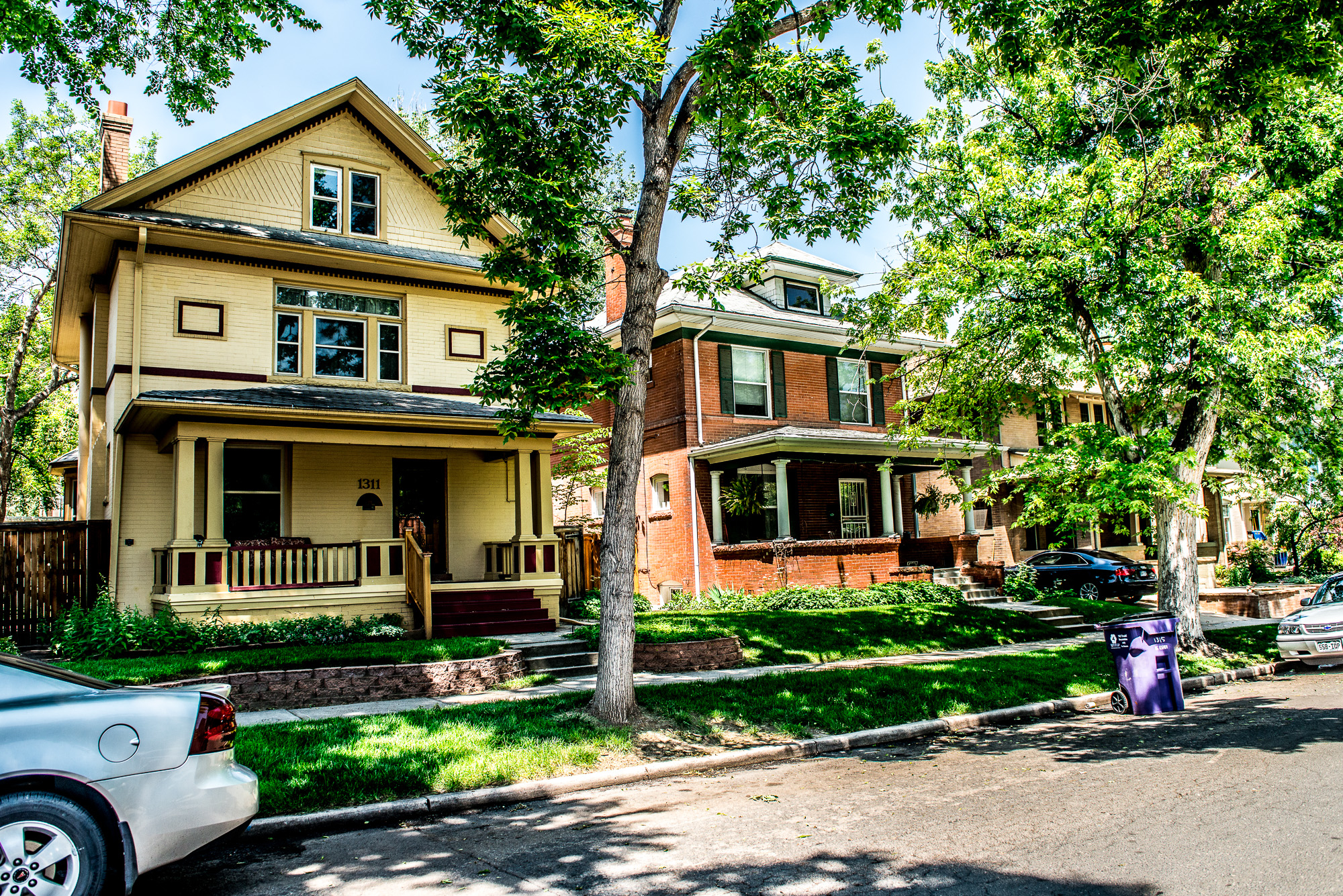
Character and Function Are Not the Same Thing
Congress Park’s older architecture is one of its strengths, but age and style alone do not determine whether a building works well.
I look at circulation, room relationships, proportion, natural light, structure, additions, renovations, connections to outdoor space, and how the building has changed over time.
A beautifully preserved house may be less functional for a particular buyer than a thoughtfully renovated one. A recently remodeled property may photograph well while containing awkward planning or poorly integrated additions.
Value Comes From the Competitive Set
The market data reinforces the same principle. Congress Park contains detached homes and attached properties that operate at very different price levels, and there is meaningful variation even within each category.
A neighborhood median is useful for orientation. It is not a substitute for understanding the specific competitive set.
For buyers, that means evaluating whether a property’s price is supported by comparable alternatives. For sellers, it means positioning the home against the properties buyers are actually choosing between.
The neighborhood establishes context. The competitive set establishes market position.
“The neighborhood provides the context. The block shapes the experience. The property determines the fit.”
Common Questions About Living in Congress Park
Congress Park is easy to summarize broadly and harder to understand well. These questions focus on the distinctions that tend to matter most when evaluating the neighborhood, a specific block, or an individual property.
What are the boundaries of Congress Park?
Denver’s statistical-neighborhood geography places Congress Park between East Colfax Avenue on the north, Colorado Boulevard on the east, East 6th Avenue on the south, and York Street on the west.
Those boundaries are useful for orientation, but they do not mean every block within them has the same character. Colfax, Colorado Boulevard, the 12th Avenue commercial area, 7th Avenue Parkway, and the western park-and-cultural edge all create different environments within the same neighborhood.
What types of homes are common in Congress Park?
Congress Park includes a broad mix of housing. Detached homes include Denver Squares and Foursquares, bungalows, Craftsman-influenced houses, Tudor and other revival-era homes, and larger historic residences. The neighborhood also contains historic apartment buildings, later multifamily buildings, condominiums, and other attached housing.
Renovation history varies widely, so two homes of similar age and exterior style can function very differently inside.
Is Congress Park a historic district?
Congress Park as a whole is not one single historic district. The neighborhood sits within a broader preservation landscape that includes the Wyman Historic District and Morgan’s Subdivision Historic District in and around portions of the western area.
Whether historic-design-review requirements apply depends on the specific property. Proximity to a historic district is not the same as being within one.
Is Congress Park mostly single-family homes?
No. Detached homes are a major part of the neighborhood, but apartments, condominiums, and other attached properties are also meaningful parts of Congress Park’s housing stock.
This matters for both lifestyle and market analysis because detached and attached properties have different ownership structures, maintenance responsibilities, pricing patterns, parking considerations, and competitive sets.
How much do homes cost in Congress Park?
There is no single price that accurately describes Congress Park. In the Atlas public-data sample of 2026 year-to-date closed sales through August 12, detached single-family homes produced a median sale price of approximately $952,500, while condominium and attached-property sales produced a median of approximately $469,000.
The observed ranges were wide in both groups. Individual property value depends heavily on housing type, block, architecture, condition, renovation quality, size, lot, parking, ownership structure, and current competition. These figures are a transparent public-data sample rather than a complete MLS statistical report.
Does micro-location really matter within Congress Park?
Yes. Micro-location is one of the most important distinctions in the neighborhood.
A property near Colfax can offer different transit and commercial access—and different traffic and noise exposure—than a house on an interior block. Western properties may have easier access to Congress Park, Denver Botanic Gardens, and Cheesman Park. Properties near Colorado Boulevard have a different regional-access and traffic context. Proximity to 12th Avenue activity can also change the day-to-day experience.
Is Congress Park walkable?
Many parts of Congress Park support useful local walking trips because of the connected street grid and proximity to parks, restaurants, shops, schools, and transit. But a single walkability label can be misleading.
Actual convenience depends on the specific address, the destination, route, intersections, mobility needs, and whether major corridors need to be crossed. A property near 12th Avenue or York may provide a very different walking experience from one near the eastern edge of the neighborhood.
What parks and outdoor amenities are nearby?
Congress Park itself provides neighborhood-scale recreation along the western side of the neighborhood. Denver Botanic Gardens sits immediately to the west, Cheesman Park is nearby beyond the Gardens, and City Park is north across the Colfax corridor.
Together, these create a strong concentration of nearby outdoor and cultural amenities, although practical access varies by property location.
What is the restaurant and shopping scene like?
Congress Park does not have one large town-center-style commercial district. Instead, commercial activity is distributed among several corridors.
East 12th Avenue has the clearest neighborhood-scale restaurant and small-business concentration. East Colfax Avenue provides a more urban mix of restaurants, retail, services, nightlife, and transit. East 6th Avenue and Colorado Boulevard connect the neighborhood to additional retail and regional destinations.
What schools serve Congress Park?
School access should be verified for the exact property address and applicable school year rather than assumed from the neighborhood name.
For 2026–27, Teller Elementary is part of the Central East Denver Elementary Enrollment Zone, which also includes Steck, Carson, Montclair School of Academics & Enrichment, Lowry, and Denver Green School Southeast. Morey Middle School and East High School are important nearby secondary-school references, but current DPS eligibility, boundaries, enrollment zones, proximity priorities, and SchoolChoice rules should always be verified directly with Denver Public Schools.
How does the East Colfax BRT project affect Congress Park?
The East Colfax Bus Rapid Transit project is reshaping the neighborhood’s northern transportation corridor. During construction, residents and businesses may experience temporary bus stops, changing lane configurations, parking restrictions, and construction activity.
Longer term, the project is intended to improve transit capacity along Colfax. Exact construction phases, temporary stops, traffic conditions, and opening schedules are time-sensitive and should be checked with the City of Denver and RTD.
Are older Congress Park homes expensive to maintain?
Age alone does not determine maintenance cost. Some older homes have been carefully updated over decades; others retain older systems or contain renovations of varying quality.
From an architectural standpoint, it is more useful to understand how the particular building has evolved—its masonry, foundation, roof, windows, electrical and plumbing systems, heating and cooling, insulation, additions, garage, and other major components—than to assume every older home has the same condition or maintenance profile.
Are renovated homes automatically worth more?
Not necessarily. Renovation can add significant functional and market value when it improves layout, light, systems, storage, indoor-outdoor relationships, and architectural coherence.
But renovation quality matters. A recently remodeled property can still contain awkward circulation, poorly integrated additions, inconsistent materials, or choices that do not justify the asking price. Buyers should evaluate what the renovation actually accomplished rather than simply when it occurred.
Are condos a good way to buy into Congress Park?
Attached housing can provide a significantly different price entry point into the neighborhood than detached homes, but condominium ownership should be evaluated as both a unit and a building.
HOA structure, reserves, insurance, shared maintenance, parking, storage, common elements, building condition, rental policies, and potential capital projects can be important parts of the ownership experience and market value.
What should sellers understand about pricing a Congress Park home?
The relevant competitive set is usually narrower than the entire neighborhood. A renovated Denver Square, an original bungalow, a vintage condo, and a large attached residence may all be located in Congress Park but should not automatically be compared with one another.
Strong pricing reflects housing type, architecture, renovation quality, block, condition, lot, parking, current competition, and the specific alternatives buyers can choose instead.
Is Congress Park the right neighborhood for everyone?
No—and that is an important part of evaluating it honestly.
Congress Park can be a strong fit for people who value established architecture, central-Denver access, mature streetscapes, nearby parks and cultural destinations, neighborhood businesses, and a mix of housing types.
It may be less compelling for someone prioritizing newer construction, highly uniform streets, larger suburban lots, abundant private parking, or greater separation from major urban corridors.
What is the most important question to ask when considering Congress Park?
Which version of Congress Park fits the way I want to live?
The neighborhood name creates the starting point. The better decision comes from understanding the block, housing type, architecture, nearby destinations, transportation, market position, and individual property together.
Which version of Congress Park fits the way I want to live?
That question is more useful than asking whether Congress Park is broadly “good” or “bad.” The answer depends on the block, the property, and the way you want to live.
Architecture + Real Estate, Applied to the Same Decision
My work combines the perspective of a licensed architect with the market experience of a Denver residential real-estate broker.
If you are considering a Congress Park property, I can help you evaluate the building, site, market position, ownership structure, and likely tradeoffs together—before reducing the decision to price alone.