Cherry Creek Neighborhood Guide
An architect- and real estate-informed guide to Cherry Creek—covering its different residential environments, architecture, Cherry Creek North, the greenway, shops and restaurants, schools, transportation, market conditions, ownership considerations, and the property-level differences that matter.
Explore the Guide
Use this guide as a decision framework rather than a directory. Start with the neighborhood, then move into the housing, ownership, market, and property-level questions that matter most to you.
Cherry Creek at a Glance
Cherry Creek is simultaneously a residential neighborhood, a major shopping and dining destination, an employment center, and a gateway to one of Denver’s most important recreational corridors.
That combination creates a neighborhood with unusually different ownership experiences within a compact area. A detached home several blocks north of the commercial core can feel very different from a townhome near First Avenue or a condominium embedded directly within Cherry Creek North.
For that reason, the neighborhood name is only the starting point.
University Boulevard → Colorado Boulevard
A broad range of ownership products within one neighborhood.
Quiet residential blocks sit close to a major commercial district.
Two distinct commercial environments with different urban forms.
Strong access to central Denver and a regional greenway corridor.
Detached homes, attached residences, and condominiums should be analyzed separately.
Why Cherry Creek Changes Block by Block
THE GEOGRAPHY
One Name, Several Meanings
But several related names are often used interchangeably in everyday conversation:
- Cherry Creek — the broader Denver neighborhood.
- Cherry Creek North — the mixed-use commercial district north of First Avenue.
- Cherry Creek North BID — the managed 16-block business district.
- Cherry Creek Shopping Center — the regional retail destination south of First Avenue.
- Cherry Creek — the waterway itself.
- Cherry Creek School District — a separate school district and not the same thing as Denver’s Cherry Creek neighborhood.
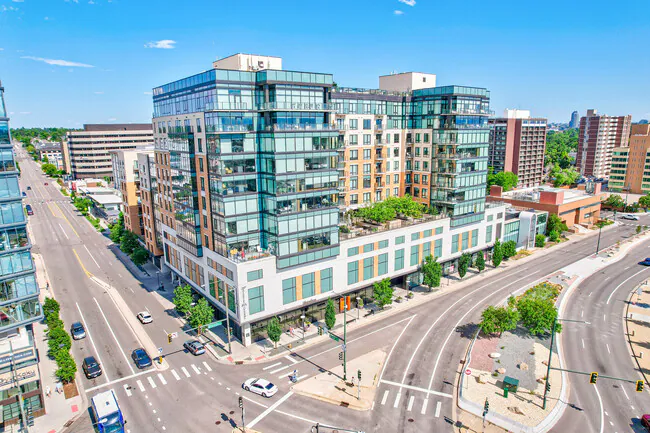
Cherry Creek does not transition gradually from one uniform condition to another. Instead, several distinct environments sit very close together.
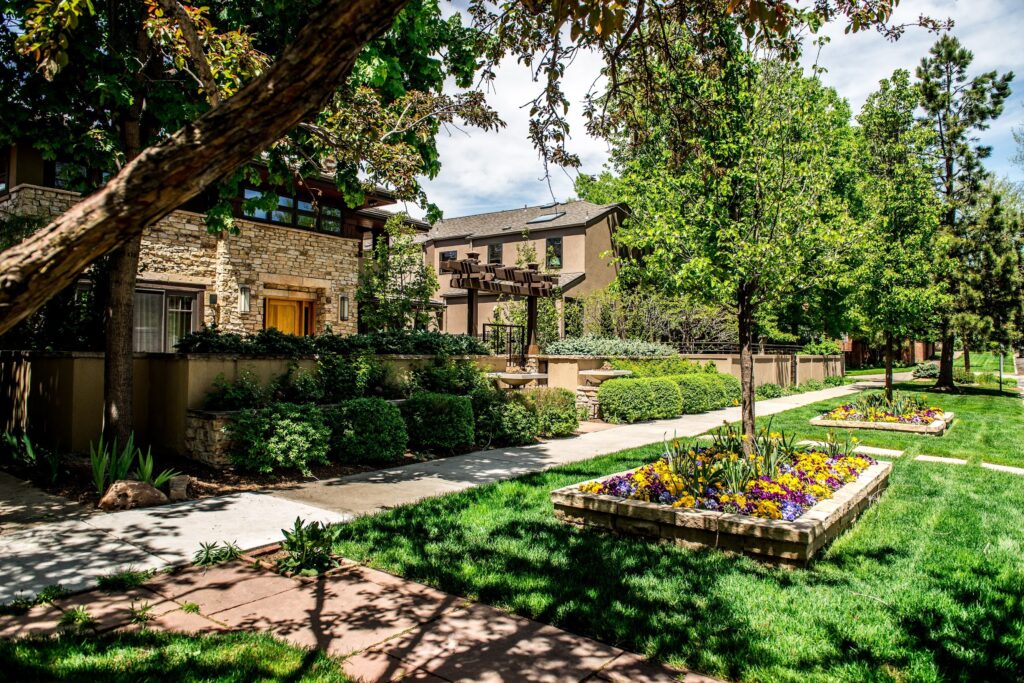
Residential streets north of the commercial core can contain older detached houses, newer replacement homes, duplexes, and townhomes. Cherry Creek North introduces storefronts, restaurants, hotels, offices, condominiums, and heavier pedestrian activity. First Avenue and the shopping center create a more regionally oriented edge, while the creek and trail introduce an entirely different landscape and transportation condition along the south.
This close overlap is one reason property-level analysis matters so much here.
Cherry Creek is mature, but it is not static. Older houses continue to sit beside replacement homes. Attached housing and condominium buildings represent different development generations. Commercial and mixed-use properties continue to evolve around the core.
The useful question is not whether Cherry Creek is changing. It is how sensitive a particular property is to the change occurring around it.
Evaluate Cherry Creek in the Right Sequence
That sequence helps separate broad neighborhood reputation from the physical and ownership conditions that actually shape day-to-day life and long-term value.
One Neighborhood. Several Distinct Living Environments.
Cherry Creek is better understood as a series of overlapping living environments than as a collection of formal sub-neighborhoods.
These environments are analytical categories rather than official boundaries. They reflect differences in housing type, street character, commercial intensity, building scale, traffic, open space, and redevelopment context.
A buyer may move only a few blocks and experience a noticeably different version of the neighborhood.
Residential Streets + Mixed Housing Generations
Older detached houses, replacement homes, paired residences, townhomes, and smaller multifamily buildings coexist within a more residential street pattern.
Cherry Creek North
Retail, restaurants, offices, hotels, services, and residential buildings create the neighborhood’s most urban and pedestrian-oriented environment.
Residential Character + Corridor Influence
Residential blocks remain important, while proximity to Colorado Boulevard and larger-scale development introduces a different level of transportation and redevelopment influence.
Regional Activity Meets Residential Ownership
Large-format retail, structured parking, hospitality, offices, larger buildings, and vehicle activity make this one of Cherry Creek’s most active interfaces.
Landscape + Regional Connectivity
The creek, trail, vegetation, crossings, and open-space relationships create a distinct environment along the southern edge of the neighborhood.
These categories are intentionally not hard-edged geographic districts. A property may sit near the boundary between two conditions and experience characteristics of both.
That is more useful than pretending Cherry Creek can be divided into perfectly uniform sub-neighborhoods.
A Better Way to Evaluate Location
What exactly are you buying?
What happens directly outside the property?
How much urban activity do you want nearby?
What surrounds the property now—and what could surround it later?
Are the routes you expect to use actually comfortable?
The closest sale is not necessarily the best comparable sale.
Architecture is relational. A building is affected by what sits across the street, behind it, beside it, and along the route a resident uses every day.
The same principle applies to market analysis. In Cherry Creek, two properties can be geographically close while occupying very different competitive environments because of housing type, building scale, commercial exposure, ownership structure, or street context.
- What is directly across the street and behind the property?
- How do garage, loading, alley, or service areas affect daily use?
- What is the actual walking route to Cherry Creek North or the trail?
- What nearby sites could plausibly redevelop?
- How would privacy change if surrounding buildings became larger?
- For a condominium, which direction does the unit actually face?
From Residential Edge to Mixed-Use District
Cherry Creek’s present-day mix of detached houses, townhomes, condominiums, offices, hotels, restaurants, retail, and regional shopping is the result of several overlapping development periods.
That history matters because each period created a different kind of property, ownership structure, building scale, and relationship to the street.
Rather than treating the neighborhood as a single architectural era, it is more useful to understand Cherry Creek as a place of repeated reinvention.
Residential Growth Beyond Denver’s Core
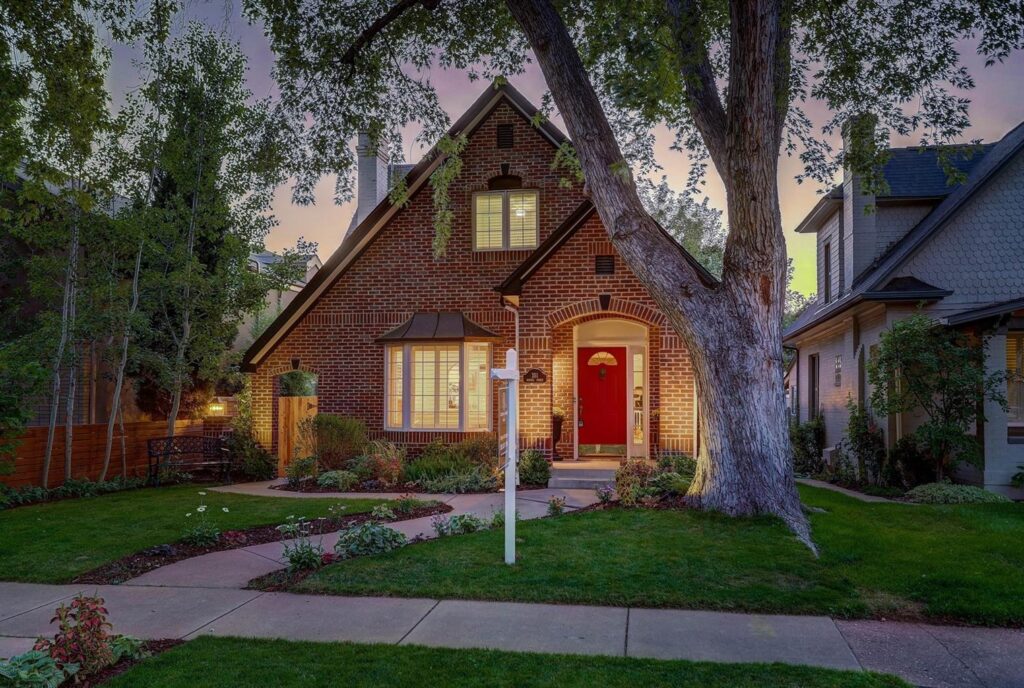
Cherry Creek began as a lower-intensity residential area with smaller-scale development, a traditional street grid, alleys, and detached housing.
What remains: older houses, smaller lots, traditional block patterns, and residential streets that now sit beside later generations of redevelopment.
A Residential Neighborhood Takes Shape
Detached houses and smaller residential buildings established much of the early neighborhood fabric.
Today, these properties range from relatively intact older homes to substantially altered, expanded, or remodeled buildings surrounded by newer construction.
Retail Becomes a Defining Part of Cherry Creek
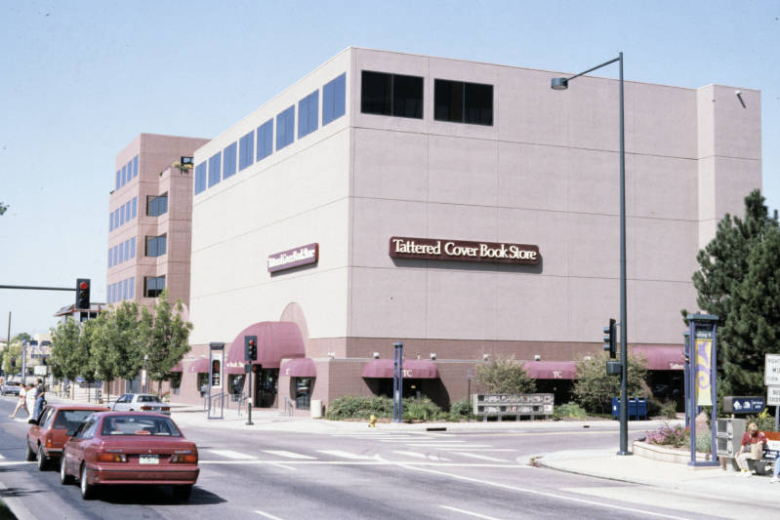
The emergence of the Cherry Creek Shopping Center shifted the area from primarily residential toward a regional shopping destination.
The shopping center and Cherry Creek North would ultimately create two very different commercial environments: one built around larger parcels and concentrated retail, and the other around public streets, storefronts, and a pedestrian district.
Cherry Creek North Becomes a Deliberately Designed District
Planning, streetscape investment, the Business Improvement District, and design standards helped reinforce Cherry Creek North as a coordinated mixed-use shopping and pedestrian district.
This period matters because the public realm—sidewalks, landscaping, lighting, storefront relationships, parking, and plazas—became part of the district’s identity.
Residential Development Intensifies
Townhomes, paired residences, condominiums, larger custom houses, and mixed-use residential projects added new ownership types and building scales.
The important question from this period is not simply style—it is what kind of ownership product each development generation created.
Another Major Public-Realm Investment
Cherry Creek North received additional streetscape and public-realm improvements, reinforcing the district’s pedestrian identity and mixed-use character.
An Increasingly Intensive Mixed-Use Neighborhood
More residential density, hotels, offices, restaurants, condominiums, and larger mixed-use projects have continued to reshape Cherry Creek.
The neighborhood is mature, but it continues to evolve through infill and redevelopment.
What History Means for Today’s Properties
Look beyond age alone. Review systems, additions, structure, maintenance history, drainage, and surrounding redevelopment context.
Newer construction shifts due diligence toward building envelope, flat roofs, roof decks, glazing, below-grade construction, and water management.
Ownership documents, shared systems, party walls, roof relationships, drainage, insurance, and HOA structure become more important.
Loading, parking, restaurants, common systems, HOA obligations, unit orientation, and commercial relationships become part of the ownership experience.
Architecture Is a Record of Land Value
Cherry Creek’s redevelopment patterns are visible evidence of the relationship among land value, development capacity, housing demand, and building form.
Older houses may remain because they still function well, because owners prefer them, or because redevelopment has not yet occurred. Other properties are replaced by larger homes, attached housing, or multifamily buildings where the economics support a different use of the site.
The result is a neighborhood where architectural age often tells less than development type, site utilization, ownership structure, and surrounding context.
Chronological age is not the same thing as market relevance.
Redevelopment can alter daylight, privacy, views, landscaping, alley activity, drainage relationships, parking, and the apparent scale of a block.
From a market perspective, two properties built in different periods may still compete closely if they serve the same buyer. Conversely, two houses of similar age may belong to very different competitive sets because of condition, ownership structure, design, or site value.
History is useful when it helps explain how the property was created and what that means for ownership today.
Housing Type Matters as Much as Architectural Style
Cherry Creek contains a broad range of residential architecture, but architectural style alone is not the most useful way to understand the housing stock.
For buyers and owners, the more important questions are:
What type of building is it? How is it owned? What is shared? How does it meet the ground? And what does its construction era imply for maintenance?
In Cherry Creek, those questions often reveal more than whether a property is traditional, transitional, or contemporary.
Six Housing Types to Understand
A NEIGHBORHOOD OF REPLACEMENT + REINVENTION
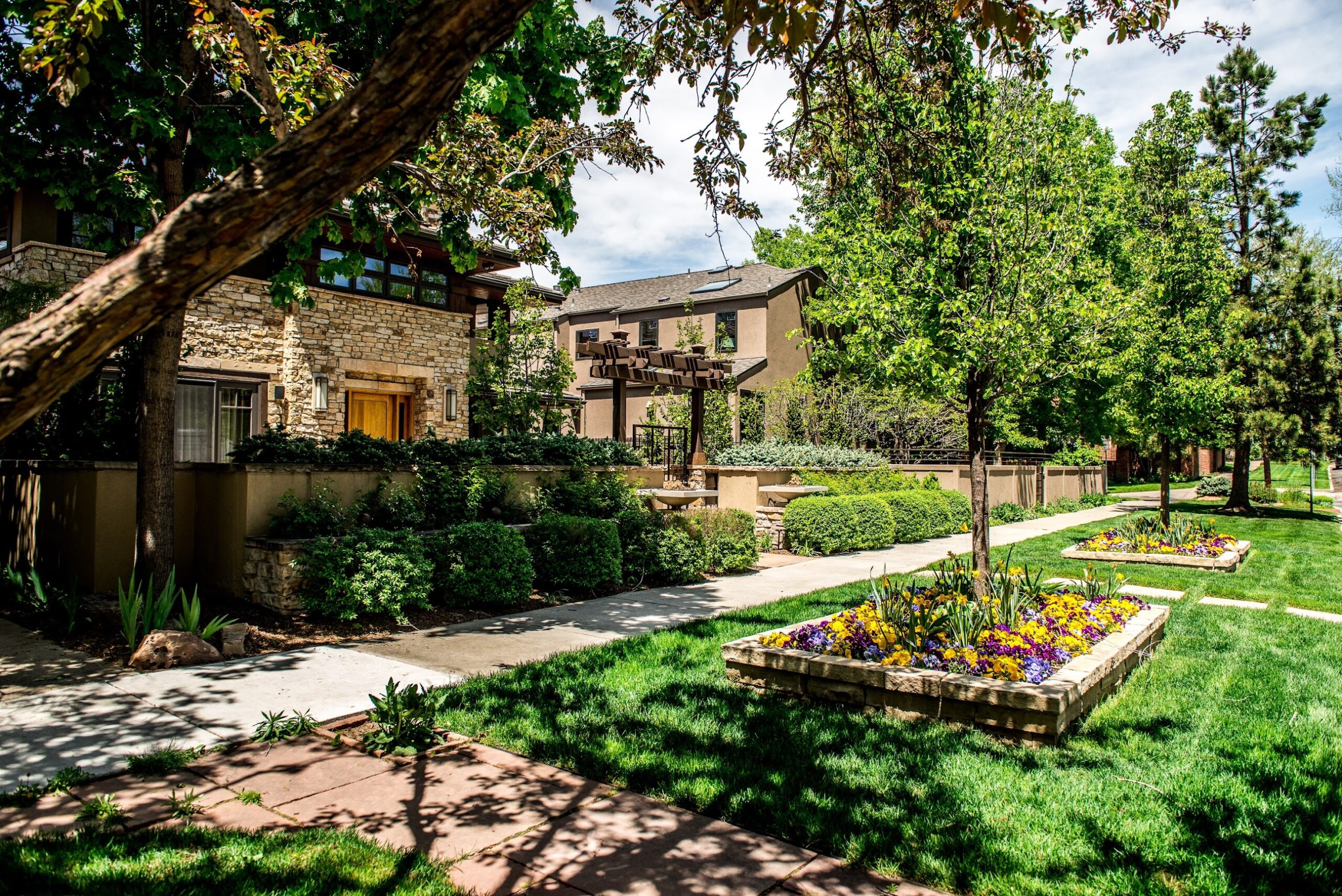
Different Development Generations Often Sit Side by Side
An older detached house may sit beside a larger contemporary residence, paired home, townhome, or condominium building.
That variety affects more than appearance. It can influence daylight, privacy, views, landscaping, alley activity, drainage, parking, and the perceived scale of the street.
Understanding the housing type is therefore the first step toward understanding the property.
Older Detached Houses
Older Cherry Creek houses often combine conventional masonry or wood-frame construction, pitched roofs, smaller original footprints, detached or alley garages, mature landscaping, and multiple generations of alteration.
Investigatefoundation + structure · electrical + plumbing · additions · drainage · insulation + windows · lot value · redevelopment context
Contemporary Detached Houses
Newer replacement houses often introduce flat or low-slope roofs, large glazing, roof terraces, deep basements, integrated garages, large structural openings, and tighter relationships to adjacent properties.
Investigateflat-roof drainage · roof decks · glazing · envelope transitions · below-grade construction · integrated garages
Duplexes + Paired Homes
Paired residences may involve separate lots, zero-lot-line conditions, shared party walls, drainage relationships, reciprocal access, or limited common maintenance obligations.
Investigateparty wall · ownership lines · roof relationship · drainage · exterior maintenance · insurance · easements
Townhomes
Townhomes often combine private entrances, garages, multiple levels, roof decks or terraces, and relatively low exterior-maintenance responsibility.
Investigatestairs · natural light · party walls · roof + roof deck · drainage · garage configuration · HOA structure
Boutique Condominiums
Smaller condominium buildings may provide elevators, structured parking, more intimate common areas, and larger unit plans while still creating meaningful shared financial and physical obligations.
InvestigateHOA finances · reserves · assessments · insurance · envelope · elevator · parking rights · storage · unit position
Larger Luxury Condominiums
In larger luxury buildings, staffing, amenities, elevators, parking, common spaces, mechanical systems, terraces, and building operations become a significant part of the ownership experience.
InvestigateHOA cost + services · reserves · mechanical systems · staffing · insurance · views · adjacent development · unit position

foundation · envelope · roof · utilities · drainage · additions · land
party wall · ownership lines · drainage · roof relationship · easements
stairs · party walls · roof decks · garage · drainage · HOA
HOA · reserves · envelope · elevator · parking · insurance
staffing · amenities · capital planning · views · services · unit position
As housing becomes more shared, due diligence shifts increasingly from the private residence toward the building, governing documents, finances, and common systems.
Style Still Matters—But Differently
Cherry Creek includes traditional, transitional, contemporary, modernist-influenced, masonry-focused urban residential, and glass-and-metal mixed-use architecture.
Style affects buyer appeal, interior planning, window placement, roof configuration, maintenance, material durability, and the relationship between a building and its neighbors.
But style should not replace a more fundamental question:
How is this building actually constructed, maintained, altered, and owned?
Newer buildings can shift due diligence toward flat roofs, roof decks, balconies, large windows, façade transitions, waterproofing, below-grade construction, garages, sophisticated mechanical systems, and landscape over structure.
Every construction era creates its own maintenance priorities.
A Better Way to Evaluate Architecture
Detached, paired, townhome, boutique condo, or larger condominium?
Walls, roof, drainage, utilities, garage, exterior, or common systems?
How are the structure, envelope, windows, roof, and water-management systems assembled?
What has been changed, repaired, deferred, or replaced?
What will the owner or association eventually need to maintain or replace?
Visual appeal and building performance are not the same thing.
Sophisticated buildings can contain technically demanding roof, waterproofing, glazing, structural, and mechanical systems. Older buildings may sometimes rely on simpler, more straightforward construction.
The housing type also defines the competitive market. Detached homes should usually be compared with detached homes. Townhomes compete most directly with similar attached products. Luxury condominium comparability may depend heavily on building reputation, services, HOA structure, views, floor level, parking, finishes, and unit position.
Price per square foot alone can be particularly misleading in Cherry Creek.
Evaluate the Purchase in Two Layers
layout · design · condition · natural light · storage · parking · outdoor space
shared walls · rules · common systems · reserves · insurance · exterior responsibilities · capital projects · approvals
The Commercial Core Is Part of the Residential Experience
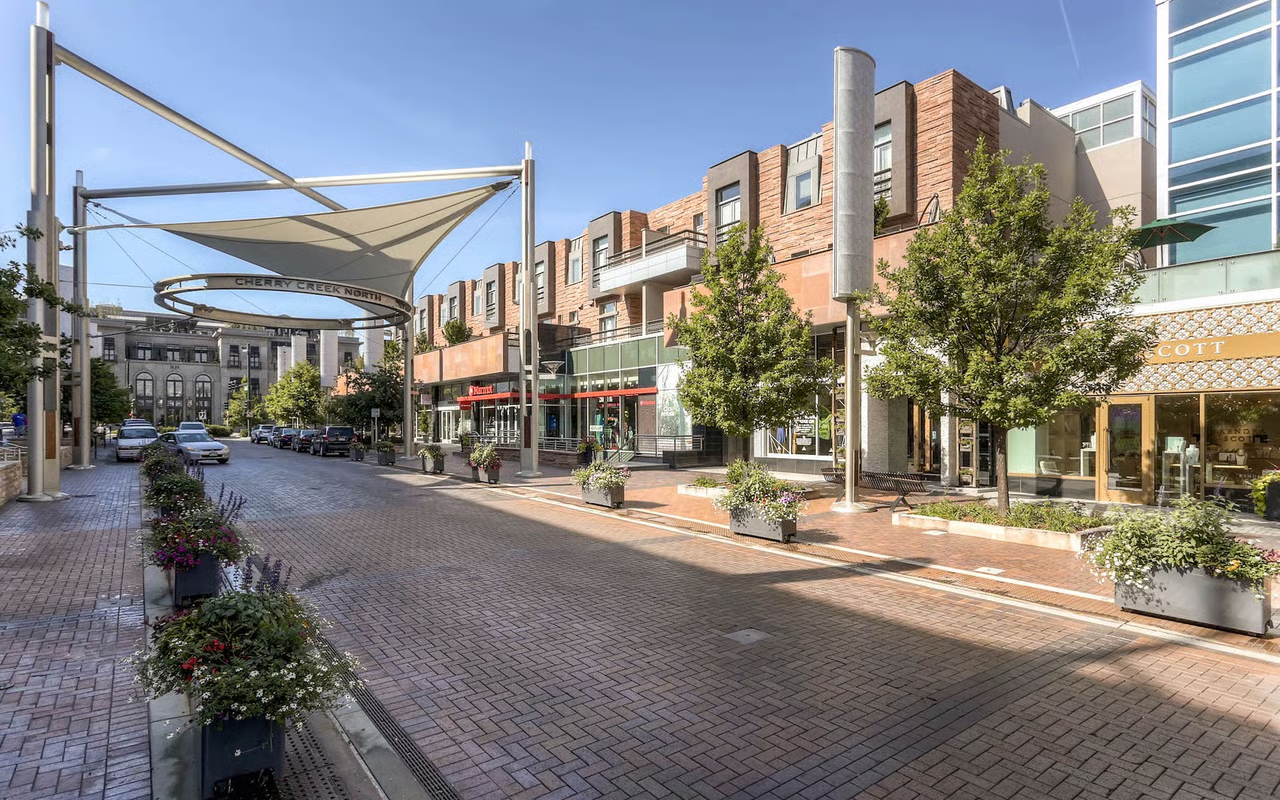
Cherry Creek North is not simply a collection of shops near the neighborhood. It is a compact mixed-use district embedded directly within Cherry Creek, where restaurants, retail, offices, hotels, services, public spaces, and residences overlap.
That creates several different ownership experiences. A resident living several blocks north of the district may use Cherry Creek North as a convenient neighborhood center. A condominium owner within the core may experience its restaurants, deliveries, events, parking, visitors, and pedestrian activity as part of everyday life.
Neither experience is inherently better. They simply offer different tradeoffs.
THE PUBLIC REALM IS PART OF THE PRODUCT
Living Near Cherry Creek North Means Living Near an Active District
The district’s public environment—sidewalks, landscaping, storefronts, plazas, patios, garage entrances, loading areas, and pedestrian crossings—directly influences the residential experience.
Those details can determine whether a property feels comfortably connected to activity or overly exposed to it.
For buyers, the most useful question is not whether the district is attractive. It is how the specific residence relates to the district physically.
How Close Do You Want to Be?
Embedded in the Core
Restaurants, shops, offices, hotels, services, and visitors may be immediately outside the building.
Potential advantagesvery short walks · strong pedestrian access · active streets · direct access to services
Potential considerationsrestaurants · deliveries · valet operations · garage entrances · street noise · events · construction
One or Two Blocks Away
This can provide a useful balance, but the experience still depends on street orientation, nearby uses, and building design.
Evaluateunit orientation · intervening development · parking access · patios · deliveries · nighttime activity
Several Residential Blocks Away
For some buyers, this distance preserves relatively easy access while creating a more residential everyday environment.
Often relevant for buyers prioritizingdetached housing · yard space · privacy · quieter residential streets · reduced commercial exposure
Neighborhood Edge
Properties closer to 6th Avenue, Colorado Boulevard, or other edges may experience less commercial-core activity but more influence from major transportation corridors.
Evaluatetraffic · intersections · noise · route quality · access to core · access outside neighborhood



What Everyday Life Actually Looks Like
Restaurants can make spontaneous dining remarkably easy.
Evaluate: closing hours · patios · deliveries · unit orientation · valet activityRetail ranges from businesses residents may use routinely to stores primarily attracting visitors.
Evaluate: actual usefulness to your routine, not simply the number of stores nearbyFitness, personal services, medical uses, and professional services can materially increase everyday convenience.
Evaluate: which services you would realistically use on footHotels and offices generate vehicle, delivery, employee, valet, and visitor movement on different schedules from residential uses.
Evaluate: adjacency · loading · garage entrances · street activityDistrict events can add energy and social opportunities while temporarily increasing visitor activity.
Evaluate: proximity · street impacts · personal preferenceTwo Units in the Same Building Can Experience Cherry Creek Differently
One unit may face a quieter side street or residential blocks. Another may face restaurants, patios, loading, a parking entrance, rooftop equipment, or an active commercial street.
For condominium buyers, unit orientation can be as important as the building address.
- primary window direction
- bedroom orientation
- balcony orientation
- garage ramps
- loading areas
- rooftop equipment
- neighboring development sites
Can I walk comfortably to what I actually use?
How much surrounding activity do I want?
Where does this residence face?
How do I enter, leave, park, and receive guests?
What around the property could reasonably redevelop?
Mixed-use quality depends on how competing activities are organized.
Residential entries, garages, loading areas, storefronts, patios, sidewalks, and common spaces all compete for limited urban space.
Good design can separate those uses effectively. Poor relationships among them can create friction even in an otherwise attractive building.
From a market perspective, commercial proximity should be treated as a property characteristic—not a universal premium.
The Creek Is Both Open Space and Infrastructure
Cherry Creek’s open-space story is different from neighborhoods organized around one major central park.
Here, the defining landscape feature is linear: the creek itself, the trail system that follows it, the crossings that connect to it, and the sequence of public spaces and recreational routes extending beyond the neighborhood.
That makes the creek simultaneously a landscape, a neighborhood edge, a recreational corridor, and part of Denver’s transportation network.

Access Matters More Than Distance
Direct Connection
The route from the property to the trail or greenway is short, intuitive, and comfortable.
What this can meanfrequent recreational use · easier cycling · stronger everyday connection to open space
Close, Across a Major Street
The distance may be short, but the crossing becomes part of the experience.
Evaluatesignal timing · intersection comfort · bike access · pedestrian crossings · traffic
Close, but Indirect
A property may appear near the creek on a map while requiring a less direct route because of street configuration, bridges, private development, or access points.
Evaluateactual route · travel time · crossings · stairs · grade · bike maneuvering
Visual Relationship Without Direct Access
A property may benefit from views, landscape, or a sense of openness without having particularly convenient access to the trail itself.
Evaluateorientation · view durability · intervening streets · adjacent development · privacy
Linear + Connected
The creek corridor can support walking, running, cycling, recreation, and longer-distance movement through Denver.
- regional connectivity
- continuous movement
- cycling + running
- landscape experience
- transportation value
Local + Concentrated
Neighborhood-scale parks offer a different type of public space: shorter visits, play, gathering, informal recreation, and local green relief.
- play areas
- informal recreation
- short-duration use
- neighborhood gathering
- localized open space
NEIGHBORHOOD-SCALE OPEN SPACE
Pulaski Park
Pulaski Park provides a different kind of open-space experience from the Cherry Creek greenway: more localized, more park-like, and less oriented toward long-distance movement.
For buyers, its relevance depends less on whether the park exists and more on how conveniently a specific property connects to it and whether its amenities fit the household’s actual routine.

Living Near Open Space Still Requires Property-Level Analysis
Proximity to the creek can influence views, landscape character, recreational access, pedestrian activity, cycling activity, traffic at crossings, and the way a building meets its southern edge.
For condominiums and attached housing, orientation can make a major difference. One unit may face the greenway while another faces a street, garage, neighboring building, or service area.
For detached properties, the more relevant questions may involve actual route access, street crossings, surrounding development, and how often the owner expects to use the corridor.
A Better Way to Evaluate Open-Space Access
How do I actually reach the creek, trail, or park?
What would I realistically use it for?
Are crossings and connections comfortable?
Does the property face, connect to, or turn away from the open space?
What activity, traffic, privacy, or property-specific conditions come with that access?
Cherry Creek’s open-space value comes from connectivity as much as landscape.
When evaluating a property, access is often more informative than distance alone.
A Major Destination District That Also Functions as a Neighborhood
Cherry Creek is unusual because neighborhood-serving businesses and regional destinations sit very close together.
Cherry Creek North offers a street-oriented mix of restaurants, shops, professional services, fitness, wellness, hotels, and offices. The Cherry Creek Shopping Center provides a separate, more concentrated regional retail environment.
For residents, the more useful question is not simply how many destinations exist nearby. It is which places are realistically useful in everyday life, and what living near them actually feels like.

Cherry Creek North + Cherry Creek Shopping Center
Cherry Creek North is organized around public streets, storefronts, sidewalks, patios, and a mixed-use pedestrian environment.
Cherry Creek Shopping Center is a regional retail destination with larger parcels, structured parking, concentrated retail, and a different relationship to surrounding streets.
Both contribute to Cherry Creek’s identity, but they create very different residential contexts.
Five Ways Destinations Matter
Everyday Destinations
Coffee, groceries, pharmacy, services, fitness, and other places that can become part of a resident’s weekly routine.
Dining + Social
Restaurants, cafés, bars, and gathering places that increase convenience while also adding evening activity.
Shopping
A combination of neighborhood-oriented retail and destination shopping serving a much larger regional audience.
Wellness + Services
Fitness, salons, spas, medical, professional, and personal services that can materially affect day-to-day convenience.
Hotels + Hospitality
Hotels add guest services, visitors, meetings, restaurants, valet activity, and a different pattern of daily movement.
Representative Destinations
Dining + Social
Cherry Creek Grill · Blue Island Oyster Bar & Seafood · Alteño · Uchiko · Fortune Wok to Table
Dining variety makes spontaneous meals and social plans unusually easy, while patios and evening hours also contribute to surrounding activity.
Shopping
A Line Boutique · Andrisen Morton · Lawrence Covell · Tecovas · Cherry Creek Shopping Center
Local boutiques, national brands, and the regional shopping center give Cherry Creek a retail role far beyond what most Denver neighborhoods provide.
Wellness + Services
Barry’s · Lagree Luxe Fitness · Club Pilates · Pure Barre · A Skin Boutique
Fitness studios, salons, spas, and personal services can turn the district into part of a resident’s weekly routine rather than simply a shopping destination.
Hotels + Hospitality
Hotel Clio · Halcyon · The Jacquard · Clayton Hotel & Members Club · Moxy Cherry Creek
Five boutique hotels add visitors, restaurants, rooftops, events, meeting activity, valet operations, and hospitality services to the district.
Everyday Convenience
Whole Foods Market · Town Pump Provisions · Aviano Coffee · Every Little Thing · FedEx Office
Groceries, coffee, casual food, and practical services determine whether Cherry Creek is merely pleasant to walk around or genuinely useful for everyday errands.
Restaurant Proximity Is a Property-Level Question
A nearby restaurant may be a major convenience—or a source of activity that matters more than expected.
Evaluate hours, outdoor seating, deliveries, exhaust, refuse areas, valet or rideshare activity, and the orientation of bedrooms and balconies.
Regional Retail Creates a Different Kind of Adjacency
Living near the shopping center is different from living near smaller neighborhood storefronts.
Regional retail can generate larger traffic volumes, structured parking activity, visitors from outside the neighborhood, loading, and peak shopping periods.
A Better Way to Evaluate Nearby Destinations
Would I actually use this place weekly?
Is the walk comfortable and direct?
When is activity highest?
Does the residence directly face the activity?
Is the convenience worth the surrounding activity?
Cherry Creek’s destinations are valuable when they support the way you actually live.
The right relationship is not maximum proximity. It is the balance between everyday convenience and surrounding activity that fits your priorities.
Schools Relevant to Cherry Creek Buyers
School research in Cherry Creek requires an important distinction: the Denver neighborhood called Cherry Creek is not the same thing as the Cherry Creek School District.
Properties within Denver’s Cherry Creek neighborhood are served through Denver Public Schools, and school assignment should be verified using the exact property address and the current school year.
“Cherry Creek” Does Not Mean “Cherry Creek School District”
The Cherry Creek neighborhood discussed in this guide is within Denver. Buyers should verify the exact assigned school or enrollment zone for a property through Denver Public Schools rather than assuming a Cherry Creek neighborhood address is served by Cherry Creek School District.
School boundaries, enrollment zones, and choice options can change. Verify again at the time of a real estate decision.
Schools to Know in the Broader Cherry Creek Context
Bromwell Elementary
2500 E 4th Avenue
Located near the north side of the neighborhood and relevant to some Cherry Creek buyers.
Verify assignment by exact address.
Steck Elementary
450 Albion Street
Located east / northeast of Cherry Creek and relevant in the broader school context.
Nearby does not necessarily mean assigned.
Hill Campus of Arts & Sciences
451 Clermont Street
Grades 6–8.
Relevant to Cherry Creek families, but current assignment should be verified through DPS.
East High School
A major Denver Public Schools comprehensive high school relevant to the broader Cherry Creek context.
Do not infer assignment from neighborhood name alone.
Nearby Is Not the Same as Assigned
A school assigned to a specific geographic attendance boundary for the relevant grade level and school year.
An area in which students may have access to more than one designated school depending on the district’s current enrollment system.
A separate application process that may allow families to request schools beyond the assigned boundary or enrollment-zone options, subject to district rules and availability.
How Buyers Should Verify Schools
Exact Address
Start with the specific property—not the neighborhood name.
Correct Grade
Elementary, middle, and high-school assignments may use different systems.
Assignment Type
Determine whether it is a boundary school, enrollment zone, or another arrangement.
School Year
Use the map and rules for the year in which the student will attend.
SchoolChoice
Research choice opportunities separately from the assigned-school question.
Consider the Broader Central Denver Context
Families considering private or independent schools should evaluate those options separately based on grade levels, admissions, transportation, tuition, educational approach, and the individual student’s needs.
In Cherry Creek, address-specific school verification is more useful than neighborhood assumptions.
Start with the exact property, verify the current DPS assignment or enrollment zone, then evaluate school fit and other available options separately.
Cherry Creek Is Highly Connected—But Not Equally by Every Mode
Cherry Creek benefits from a central Denver location, a major commercial district, access to the Cherry Creek Trail, and several important arterial streets.
That creates strong connectivity overall—but the experience varies significantly depending on whether a resident is walking, cycling, using transit, driving, or parking.
The most useful way to evaluate transportation here is not to ask whether Cherry Creek is “walkable” or “well connected” in the abstract. It is to test the routes and modes you would actually use.

Strong Access Can Coexist With Friction
Cherry Creek can offer strong pedestrian access to shops and restaurants while still experiencing substantial automobile activity.
It can provide access to a regional bike trail while some major-street crossings remain less comfortable.
It can offer transit service without having a rail station inside the neighborhood.
These conditions are not contradictions to solve. They are tradeoffs to evaluate.
Five Modes to Evaluate
Walking
Short distances do not automatically create comfortable walks.
Evaluate crossings, sidewalk continuity, traffic, shade, winter conditions, and the exact route to destinations you would use.
Cycling
The Cherry Creek Trail can materially improve bike connectivity.
The key property-level question is how comfortably you can reach the trail from the residence and how the first and last mile work.
Transit
Cherry Creek is served primarily by bus transit rather than rail within the neighborhood itself.
Route usefulness depends on destination, frequency, transfers, stop location, and current RTD service.
Driving
Cherry Creek has strong access to central Denver and major streets, but destination traffic can affect travel times and intersections.
First Avenue is especially important to understand because it functions as a major east-west spine through the district.
Parking
Parking is both a neighborhood condition and a property feature.
Garage configuration, guest parking, curb demand, loading, valet activity, and parking ownership can all affect convenience and resale.
A Major Street That Shapes Everyday Movement
First Avenue plays an important transportation and urban-design role between Cherry Creek North and the shopping center.
For nearby properties, its influence can include vehicle movement, crossings, garage access, transit, and the quality of pedestrian connections between the north and south sides of the district.
Any planned or current redesign work should be described separately from existing conditions and verified before publication.
A Transportation Edge With Broader Corridor Influence
Colorado Boulevard forms the eastern edge of the neighborhood and carries substantially more regional traffic than interior residential streets.
Properties closer to the corridor should be evaluated for traffic, crossings, noise, access, nearby redevelopment, and route convenience.
Future transportation or planning changes should be discussed as current planning conditions—not as predictions of property value.
A Better Way to Evaluate Walkability
Try the Neighborhood the Way You Would Actually Use It
Walk it. Test the routes to coffee, dinner, groceries, parks, and the trail.
Drive it. Enter and leave the neighborhood during the times you expect to travel.
Park it. Test the actual garage, guest parking, curb conditions, and building access.
Bike it. If the trail matters, ride the first and last mile.
Try transit. If you expect to use RTD, test the real route rather than relying only on a map.
Cherry Creek’s transportation strength is choice, not perfection.
The neighborhood provides multiple ways to move through Denver, but the quality of those options varies by block, destination, and property.
For buyers, the most useful test is simple: evaluate the routes you expect to use in the way you expect to use them.
Cherry Creek Is Not One Real Estate Market
Cherry Creek contains three major residential markets that should be analyzed separately: detached single-family homes, townhouses and attached residences, and condominiums.
The differences are not merely price differences. Each sector has its own ownership structure, building characteristics, buyer pool, maintenance responsibilities and competitive dynamics.
$2.095M
Median single-family sale price
$1.307M
Median townhouse price
$779,700
Median condominium price
The tables below intentionally differ by sector. We include the strongest publicly available property-type data rather than forcing every table to contain identical metrics. Sale statistics and current inventory statistics are identified separately.
01 — Single-Family Detached
This sector includes older detached houses, extensively renovated homes and contemporary replacement residences. In Cherry Creek, lot characteristics and redevelopment context can matter almost as much as the house itself.
Median Single-Family Sale Price
$2,095,000
Sale metric
Current Detached Houses for Sale
23
Current inventory
Current Asking-Price Range
$749K–$5.595M
Current inventory
Source: Homes.com, Cherry Creek single-family homes and neighborhood housing trends. Accessed August 2026.
How to read this market: Detached Cherry Creek homes span a wide range because land value, age, renovation quality and replacement construction vary substantially. The $2.095M sector median is a useful starting point—not a substitute for property-level comparison.
02 — Townhouse + Attached Residential
Townhouses and attached residences are a major part of Cherry Creek’s housing stock. Bedroom count is more informative here than in many neighborhoods because size, vertical living, garage configuration and outdoor space often scale meaningfully with bedroom count.
All Townhouses
$1,306,540
2-Bedroom Townhouse
$895,000
3-Bedroom Townhouse
$1,262,500
4-Bedroom Townhouse
$1,649,999
18
$799K–$4.25M
Source: Homes.com, Cherry Creek townhomes. Accessed August 2026. Inventory figures represent current asking inventory; median figures are market-price metrics reported by the source.
How to read this market: Bedroom count helps explain part of the townhouse price spectrum, but it does not capture the entire value story. Width, stairs, garage arrangement, outdoor space, roof deck, natural light, shared obligations and proximity to Cherry Creek North can materially change what buyers will consider comparable.
03 — Condominium
The condominium sector has the broadest internal range. Smaller units in established buildings coexist with large luxury residences in newer full-service buildings, making building-level competition especially important.
$779,700
31
$269K–$16M
49 Days
Source: Homes.com, Cherry Creek condominium market and current inventory pages. Accessed August 2026.
“Condo” Describes Ownership—Not One Housing Product
The current public inventory spans roughly $269,000 to $16 million. That range reflects radically different buildings, unit sizes, amenities, services, floor levels, views, parking arrangements and buyer pools.
The Building May Be the Most Important Comparable Geography
For many Cherry Creek condominiums, recent sales in the same building or directly competing buildings can be more informative than a physically closer sale in a different condominium product.
Neighborhood-Wide Market Context
$1.362M
69
5 Months
Balanced
Housing type changes the valuation problem.
A detached home places more emphasis on land, site conditions and redevelopment context. A townhouse introduces shared-wall, access and maintenance questions. A condominium adds the financial and physical condition of an entire building.
Those differences help explain why apparently similar Cherry Creek properties can produce very different market outcomes.
Market data methodology: Public market information shown above is from Homes.com Cherry Creek neighborhood and property-type pages and was verified in August 2026. Sector-specific data is used where the source explicitly publishes it. Current inventory statistics describe active asking inventory and should not be confused with closed-sale statistics. Market conditions change, and these figures are intended for neighborhood context rather than valuation of an individual property.
Start With the Ownership Experience You Want
Buying in Cherry Creek is less about deciding whether you like the neighborhood in general and more about identifying the version of Cherry Creek that fits your priorities.
The biggest differences often come from housing type, ownership structure, block context, proximity to activity, building condition, parking, shared obligations, and the property’s relationship to surrounding development.
A strong buying process should narrow those variables deliberately before price becomes the primary focus.
Decide how close you want to be to Cherry Creek North, First Avenue, the shopping center, major streets, or the greenway.
Detached house, paired residence, townhome, boutique condominium, or larger luxury condominium?
Look past surface materials to structure, envelope, roof, windows, drainage, mechanical systems, alterations, and maintenance history.
Identify party walls, roof responsibilities, exterior maintenance, drainage, insurance, utilities, common systems, and HOA obligations.
Look across the street, behind the property, along the alley, toward major roads, and at surrounding sites that could reasonably change.
Use actual competitive alternatives rather than relying on neighborhood medians or the closest geographic sales.
Walk it, drive it, park it, listen, look out the windows, and use the stairs before deciding how well the property fits.
Due Diligence Changes With the Property Type
structure · additions · utilities · drainage · roof · permits · maintenance · land value · redevelopment context
building envelope · flat roofs · roof decks · glazing · waterproofing · below-grade construction · drainage · garage · construction quality
party wall · legal boundaries · easements · roof relationship · drainage · shared maintenance · insurance · access
The Building Is Part of the Purchase
Financial: budget, reserves, assessments, delinquencies, capital planning, insurance.
Physical: roof, envelope, windows, elevators, garage, mechanical systems, balconies, common areas.
Governance: declarations, bylaws, rules, meeting minutes, rental restrictions, pet rules, project approvals.
Do Not Assume “Fee Simple” Means “Independent”
A townhome may have separate ownership while still sharing party walls, roof relationships, drainage, access, exterior elements, insurance arrangements, or common maintenance.
The important question is not simply whether an HOA exists. It is what obligations remain shared even if the HOA is limited.
A Property-Level Decision Framework
Design features are also systems and obligations.
A roof deck is not only outdoor space; it is also waterproofing, drainage, structure, guardrails, access, and future maintenance.
Large windows are not only a design feature; they are part of the building envelope and affect heat gain, privacy, views, replacement cost, and performance.
The strongest due diligence connects the architectural feature to the ownership obligation behind it.
Understand the Property and the Ownership Behind It
If you are considering buying a Cherry Creek property, I help you evaluate the housing type, building or site, architecture, condition, ownership structure, HOA, parking, micro-location, redevelopment context, value, offer strategy, and due diligence together before you commit.
Position the Property Within Its Actual Competitive Market
Selling a Cherry Creek property well begins with one question: what is the buyer actually comparing this property against?
The answer is rarely every nearby sale. A detached house may compete primarily with other detached homes of similar scale and site quality. A townhouse may compete with attached residences several blocks away. A condominium may compete most directly with units in the same building or a small group of comparable luxury buildings.
Strong positioning starts by defining that competitive set correctly.
The Competitive Set Is Not Simply “Cherry Creek”
The neighborhood name provides context. The property type, ownership structure, micro-location, condition, building quality and likely buyer pool determine the real competition.
Three Different Selling Problems
Explain the House and the Site
Buyers may be evaluating not only the residence, but also lot value, renovation quality, garage configuration, outdoor space, neighboring redevelopment and future flexibility.
Reduce Uncertainty Around Shared Conditions
Buyers want clarity about party walls, roof responsibilities, insurance, drainage, exterior maintenance, easements, parking and any HOA or shared agreements.
Sell the Residence and the Building
Unit condition matters, but buyers also evaluate building reputation, HOA finances, services, amenities, reserves, insurance, parking, views, assessments and competing inventory.
A Seven-Step Selling Framework
Classify the Property
Identify the actual housing and ownership type before selecting comparable sales.
Define the Likely Buyer
Understand what the probable buyer values and which tradeoffs are likely to matter most.
Define the Competition
Use comparable alternatives that reflect how real buyers are likely to shop.
Explain the Property
Document design, improvements, condition, ownership structure and relevant building or site characteristics.
Reduce Uncertainty
Organize records, permits, HOA information, invoices, warranties and other documentation before buyers have to ask.
Price With Context
Use the relevant competitive set, current inventory and buyer alternatives rather than one neighborhood median.
Present the Tradeoffs
Do not rely on marketing language to hide conditions buyers are likely to discover during due diligence.
Transparency Can Be Part of the Marketing Strategy
A buyer may already notice the stairs, street activity, neighboring building, HOA fee, limited guest parking or older building systems.
Trying to obscure those conditions can create mistrust. A stronger approach is to explain the tradeoff accurately and show why the property may still be a good fit for the right buyer.
Pricing Hierarchy
When possible, pricing evidence should be narrowed in roughly this order:
Property Type
Ownership
Micro-Location
Size + Condition
Buyer Pool
Current Competition
Document the Work—Do Not Just Advertise It
“Recently renovated” tells a buyer very little.
Whenever possible, provide dates, scope, permits, contractors, warranties, appliance information and major-system documentation. Buyers can then distinguish cosmetic updates from more meaningful building improvements.
Clarity Can Improve Buyer Confidence
For condominiums, townhouses and paired homes, organize governing documents and shared-responsibility information early.
When buyers understand what they own, what they share and what future obligations may exist, they can evaluate the property with less uncertainty.
The strongest property story explains why the design matters.
A seller should not merely identify high-end materials or architectural features.
Explain what those decisions do: better natural light, improved circulation, acoustic separation, useful outdoor space, privacy, storage, efficient parking, durable materials or a stronger relationship to the site.
Good architecture is easier to value when buyers understand how it improves everyday use.
Build the Listing Strategy Around the Property’s Real Competitive Market
If you are considering selling a Cherry Creek property, I bring the housing type, ownership structure, architecture, condition, micro-location, competitive set, preparation, pricing, marketing, and negotiation together into a strategy for the individual property.
Cherry Creek Questions Buyers, Sellers + Owners Commonly Ask
Cherry Creek is easy to recognize by name, but many of the most important real estate questions are property-specific. Housing type, ownership structure, block context, building condition and proximity to the commercial core can materially change the answer.
The questions below address the issues that tend to matter most when evaluating a Cherry Creek property.
Neighborhood + Daily Life
Officially, Cherry Creek is a Denver statistical neighborhood. In practice, the residential experience changes significantly within it. A home on a quieter northern residential block can feel very different from a condominium in the Cherry Creek North mixed-use core, a residence near First Avenue, or a property along the creek and greenway.
For real estate decisions, it is more useful to think in terms of neighborhood → environment → block → building type → specific property.
Cherry Creek is the broader Denver neighborhood. Cherry Creek North commonly refers to the mixed-use district north of First Avenue, including a concentrated area of shops, restaurants, offices, hotels and residences.
The names overlap in everyday conversation, but they should not be treated as interchangeable when discussing a specific property.
Many parts of Cherry Creek offer strong access to restaurants, shopping and services on foot, particularly around Cherry Creek North. But walkability varies by property.
Distance alone does not describe sidewalk quality, major-street crossings, traffic, winter conditions or the route to the destinations you actually expect to use. Testing the specific route is more useful than relying only on a neighborhood walkability score.
That depends on the lifestyle you want. Being embedded in the commercial core can make restaurants, shopping and services exceptionally convenient, but it can also mean more visitors, deliveries, valet activity, events and evening activity.
A few residential blocks of separation may provide a different balance of convenience and quiet.
The Cherry Creek greenway and regional trail are important recreational and transportation assets along the neighborhood’s southern edge. However, the practical value of that proximity depends on the route from the property to an actual access point.
A property can be geographically close to the trail while requiring a less direct or less comfortable crossing to reach it.
Parking conditions vary considerably. Properties with private garages may function very differently from buildings that depend more heavily on shared, guest or curb parking.
Buyers should evaluate garage dimensions, assigned spaces, guest parking, curb demand, loading activity and the way parking works during busy periods—not simply whether a listing says that parking is included.
It can. Restaurants, hotels and retail uses may generate pedestrians, outdoor dining, deliveries, rideshare activity, valet operations, service vehicles and evening activity.
The effect depends heavily on distance, building orientation, window location, floor level and the specific business environment around the property.
Property + Ownership
Cherry Creek includes older detached houses, newer replacement homes, duplexes and paired residences, townhomes, boutique condominiums and larger luxury condominium buildings.
The housing type often matters more to ownership experience and valuation than architectural style alone.
No. The neighborhood includes multiple generations of development. Older detached houses sit alongside substantial renovations, contemporary replacement homes, attached housing and condominium buildings of different ages.
That mix is one reason condition and construction type need to be evaluated property by property.
Not necessarily. Newer properties may avoid some age-related issues, but contemporary construction can introduce its own maintenance considerations, including large glazing systems, complex waterproofing, flat or low-slope roofs, roof decks, below-grade spaces and sophisticated mechanical systems.
Newer should not automatically be interpreted as maintenance-free.
In addition to the residence itself, understand party walls, roof relationships, drainage, insurance, easements, exterior responsibilities, access, shared maintenance and any HOA or private agreements.
A particularly useful question is: Where does my responsibility stop and my neighbor’s responsibility begin?
Evaluate the unit and the ownership system around it. Review HOA finances, reserves, insurance, governing documents, assessments, meeting minutes, major capital projects and rental or pet restrictions.
Also examine the building’s roof, envelope, windows, elevators, garage, mechanical systems and other common elements. In condominium ownership, the building is part of the purchase.
Condominium value can vary with building reputation, services, HOA structure, reserve strength, floor level, views, orientation, parking, storage, unit condition and competing inventory.
For some properties, a unit elsewhere in the same building may be a better comparable than another condominium located one block away.
Yes—but only with context. Price per square foot can be useful after the competitive set is defined correctly.
It does not independently account for land value, building quality, condition, views, floor level, parking, outdoor space, HOA structure, renovation quality or micro-location. Those differences can be substantial in Cherry Creek.
Buying + Selling
No. The Denver neighborhood of Cherry Creek should not be confused with Cherry Creek School District.
Properties in Denver’s Cherry Creek neighborhood are served through Denver Public Schools. Buyers should verify the current school assignment or enrollment zone using the exact property address, grade level and applicable school year.
No. Detached homes, townhouses and condominiums behave differently and should generally be analyzed as separate competitive markets.
Even within those categories, building quality, ownership structure, micro-location and condition can create additional submarkets.
Start with properties that share the same basic housing and ownership type. Then narrow by size, age, condition, micro-location, parking, outdoor space, building quality and buyer pool.
The closest sale is not necessarily the best comparable sale.
Future development should be evaluated, but not predicted as certainty. A useful approach is to understand the current surrounding sites, zoning and development context and ask whether the property depends heavily on existing views, privacy, sunlight, parking conditions or neighboring scale.
The goal is to understand exposure to change—not speculate about future property values.
In addition to presentation and condition, clarify the ownership structure and shared responsibilities. Buyers tend to respond better when party walls, roof responsibilities, insurance, exterior maintenance, parking and any HOA or private agreements are understandable before due diligence becomes confusing.
The seller is effectively presenting both the residence and the building. Unit condition, floor level, views, parking and finishes matter, but so do HOA finances, services, reserves, assessments, insurance, building condition and current competing inventory.
No. Renovations can improve function, condition and buyer appeal, but the market does not necessarily reimburse every dollar spent.
Quality, design, permits, relevance to the buyer pool, construction execution and the property’s overall competitive position all matter. Documented improvements are generally easier for buyers to understand than improvements described only with marketing language.
Begin with the correct property type and ownership structure, then consider micro-location, size, condition, building or site quality, likely buyer pool and current competing inventory.
A neighborhood-wide median can provide context, but it should not determine the asking price for an individual property.
Cherry Creek Rewards Property-Level Analysis
Cherry Creek is a neighborhood where broad labels can become less useful the closer you get to an actual real estate decision.
The neighborhood may be desirable for many reasons—location, amenities, architecture, convenience and access—but none of those automatically make a particular property a good decision.
The more useful question is:
Which version of Cherry Creek fits the way you want to live and own property?
A Better Evaluation Sequence
When I evaluate a Cherry Creek property, I would move through the decision in this order:
Neighborhood
Does Cherry Creek’s overall location, character and amenity base fit your priorities?
Environment
Do you want to be embedded in the mixed-use core, several blocks away, or closer to the neighborhood edge or greenway?
Housing Type
Does detached, attached or condominium ownership fit how you want to live and maintain the property?
Building + Site
Does the physical property actually work—light, layout, parking, outdoor space, condition, structure and site?
Ownership Structure
Do you understand what is privately owned, what is shared, and what obligations may exist?
Micro-Location
How do traffic, activity, orientation, nearby uses, crossings and surrounding development affect the property?
Value
Does the price make sense relative to the property’s true competitive alternatives and known tradeoffs?
A Good Cherry Creek Decision Usually Means Several Things Are True at the Same Time
LOCATION FIT
The neighborhood and specific environment fit your daily life.
OWNERSHIP FIT
The housing and ownership type match how you want to own.
PROPERTY WORKS
The layout, site, condition and building actually support your needs.
OBLIGATIONS
You understand maintenance, HOA or shared-property responsibilities.
TRADEOFFS
The property’s limitations are known and acceptable to you.
VALUE
The price makes sense relative to the actual competitive market.
The physical property and the real estate decision should be analyzed together.
Architecture affects more than appearance. It influences light, privacy, circulation, maintenance, durability, flexibility and the relationship between the residence and its surroundings.
Real estate analysis adds another layer: ownership structure, market competition, location, future obligations and price.
I find Cherry Creek particularly interesting because those two forms of analysis often intersect very clearly here.
NEXT STEPS
Considering a Home in Cherry Creek?
If you are evaluating a home, townhouse or condominium in Cherry Creek, the next useful step is to compare the specific property against its physical condition, ownership structure, micro-location and real competitive market.
No pressure and no obligation—just a focused conversation about your home, your goals, and the decisions that deserve attention before you move forward.