Belcaro Neighborhood Guide
An architect- and real estate-informed guide to Belcaro—covering its homes, architecture, large lots, mature landscapes, schools, nearby dining, market conditions, ownership considerations, and the property-level trade-offs that matter when making a decision.
Explore the Belcaro Neighborhood Guide
Belcaro rewards a closer look. Use this guide to explore the neighborhood from its history and architecture to schools, daily life, market conditions, and the practical considerations of buying or selling here.
Start with the characteristics, geography, and history that shaped Belcaro.
Understand the homes, land, amenities, schools, transportation, and ownership experience.
Ownership, Covenants & Property Constraints →
Parks, Trails & Outdoor Life →
Go beyond headline prices to understand how Belcaro properties actually compete.
Consider what may change, what is likely to endure, and whether Belcaro’s ownership model fits your priorities.
A Low-Density Residential Neighborhood in the Middle of the City
Belcaro occupies an unusual position in central Denver. It sits close to Cherry Creek, Washington Park, Glendale, major commercial corridors, and the Cherry Creek Trail, yet much of its residential interior feels distinctly removed from those more active surroundings.
Large residential sites, mature landscaping, substantial setbacks, and architectural variety create an ownership experience that can differ considerably from many of Denver’s denser historic neighborhoods.
Large Lots
In key parts of Belcaro, the land can be as important to value and ownership experience as the house itself.
Mature Landscape
Established trees, deeper setbacks, and private outdoor space help define the neighborhood’s residential character.
Architectural Variety
Postwar ranches, major renovations, custom homes, replacement construction, and estate-scale properties coexist here.
Central Access
Cherry Creek, Washington Park, Glendale, major corridors, and regional trail connections are all nearby.
What Defines Belcaro?
- Large residential sites in important portions of the neighborhood
- Postwar ranch and mid-century housing
- Custom homes and substantial architectural reinvestment
- Mature tree canopy and meaningful private landscape
- A predominantly residential interior
- Commercial and recreational access concentrated around its edges
- Significant property-to-property variation
The Central Belcaro Trade-Off
Belcaro offers something increasingly difficult to find in central Denver: relatively low-density residential living on substantial sites without moving to an outer suburban location.
That space can provide privacy, outdoor living, architectural flexibility, and mature landscape—but it can also mean greater maintenance, older building systems, more complex renovation decisions, and less immediate commercial walkability.
The useful question is not simply whether Belcaro is desirable.
What kind of property and ownership experience does a particular Belcaro home actually provide?
One Neighborhood Name, Several Residential Environments
One of the first challenges in understanding Belcaro is terminology. Belcaro can refer broadly to the City and County of Denver statistical neighborhood, while Belcaro Park and Polo Club describe more specific residential environments within the broader geography.
Those distinctions can affect architecture, street pattern, lot relationships, private restrictions, ownership responsibilities, and which comparable sales are actually relevant to a property.
Belcaro
The broader neighborhood.
The broader Belcaro statistical neighborhood contains more than one residential environment and more than one housing type. Detached homes, distinctive enclaves, larger residential properties, and some attached or multifamily housing can all fall within the larger geography.
That matters when interpreting market statistics. A neighborhood-wide median may combine properties that would never be considered direct substitutes by the same buyer.
Belcaro Park
The historic residential core.
Belcaro Park is closely connected to the history of the Phipps estate and later postwar residential development. Large lots, generous setbacks, mature landscaping, and lower-density streets contribute to a distinctive physical environment.
Private covenants associated with multiple filings can also create an additional layer of ownership due diligence for renovation or redevelopment.
Polo Club
A different subdivision and ownership environment.
Polo Club has a different relationship between homes, private drives, landscaping, and neighboring properties than more conventional public-street portions of Belcaro.
Buyers should investigate the specific governing documents, private infrastructure responsibilities, access arrangements, and architectural restrictions that apply to the property.
Geography
A property near a major edge can function differently from one deep inside a residential enclave.
Ownership
Covenants, private drives, association responsibilities, and architectural review can vary by property.
Market
The nearest sale is not always the best comparable when property type, lot, architecture, and enclave differ.
Why this matters: A home deep within Belcaro Park, a Polo Club property, a residence near Colorado Boulevard, and an attached property elsewhere within the broader neighborhood can all carry a Belcaro address while offering very different ownership experiences and competing for different buyers.
Neighborhood names are useful for orientation. Property analysis requires more precision.
A Better Way to Evaluate a Belcaro Property
Location → Enclave → Ownership Structure → Lot → Architecture → Condition → Comparable Market
That sequence helps prevent a broad neighborhood label from obscuring the characteristics that actually determine ownership experience and value.
From Private Estate to Residential Neighborhood
Belcaro’s name begins with a private estate rather than a commercial district or early streetcar subdivision. In the early 1930s, Lawrence C. Phipps and his wife Margaret developed an estate known as Belcaro, centered on the residence now known as the Phipps Mansion.
The estate’s coordinated relationship between architecture, landscape, gardens, approach, and open space established an idea that still helps explain the neighborhood today: the building and the land should be understood together.
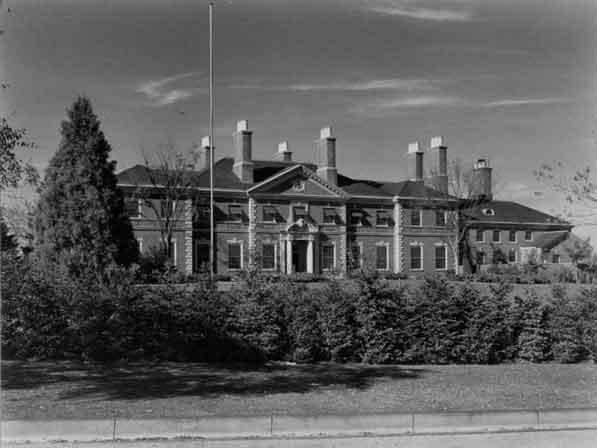
The Phipps Mansion
The Phipps Mansion at 3400 Belcaro Drive is listed in the National Register of Historic Places. Historical documentation associates the residence with Denver architects Fisher & Fisher, with involvement from architect Charles A. Platt, while landscape architect Annette Hoyt Flanders contributed to the estate landscape.
The significance of the property extends beyond the house itself. Architecture, landscape, approach, gardens, and open space were conceived as a coordinated composition.
That relationship between building and site remains one of the most useful ways to understand Belcaro today.
How Belcaro Evolved
The Belcaro Estate
The Phipps residence and estate establish the name and early architectural-landscape identity of Belcaro.
Postwar Residential Development
Large residential sites, ranch houses, automobile-oriented planning, and stronger indoor/outdoor relationships begin defining Belcaro Park.
Renovation & Expansion
Original homes begin to diverge as some remain intact while others receive substantial additions, remodels, and custom interventions.
Architectural Reinvention
Original ranches now coexist with major renovations, architect-designed homes, replacement construction, and estate-scale properties.
Why the Ranch House Fit Belcaro
Postwar Belcaro could accommodate a different residential ideal than Denver’s earlier narrow-lot neighborhoods.
Larger sites allowed homes to spread horizontally. Garages could be integrated into the house. Living spaces could connect directly to gardens and patios. Bedrooms and entertaining spaces could be separated without requiring multiple floors.
This helps explain why ranch architecture became such an important part of Belcaro’s identity.
It also explains why the lot remains fundamental to understanding the architecture today.
Architect + Realtor Perspective: Belcaro’s history is useful because it explains why the site should be evaluated before the finishes. A dated house may still have strong proportions, excellent orientation, mature landscape, and a relationship to the lot that would be expensive—or impossible—to recreate today.
Before deciding what should change, identify what is already difficult to replace.
The Phipps Legacy Today
The most enduring influence of the original Belcaro estate may not be one architectural style. It is the importance of space and landscape.
The Phipps Mansion expressed that principle at an estate scale. Postwar Belcaro Park translated it into large residential sites and horizontally organized homes. Contemporary owners now face the challenge of adapting those properties to modern expectations without unintentionally eliminating the qualities that made them distinctive.
How much should a property change, and what is worth preserving?
In Belcaro, the House Is Only Part of the Property
Belcaro requires a different way of evaluating residential real estate than many Denver neighborhoods. Square footage, bedroom count, condition, and recent sales still matter—but they can miss a substantial part of the property.
Here, the lot, landscape, architecture, and house should be evaluated together.
A smaller or less recently renovated home may occupy an exceptional site with mature trees, privacy, favorable orientation, and a strong relationship between indoor and outdoor space. Another property may contain considerably more finished area but use its site less successfully.
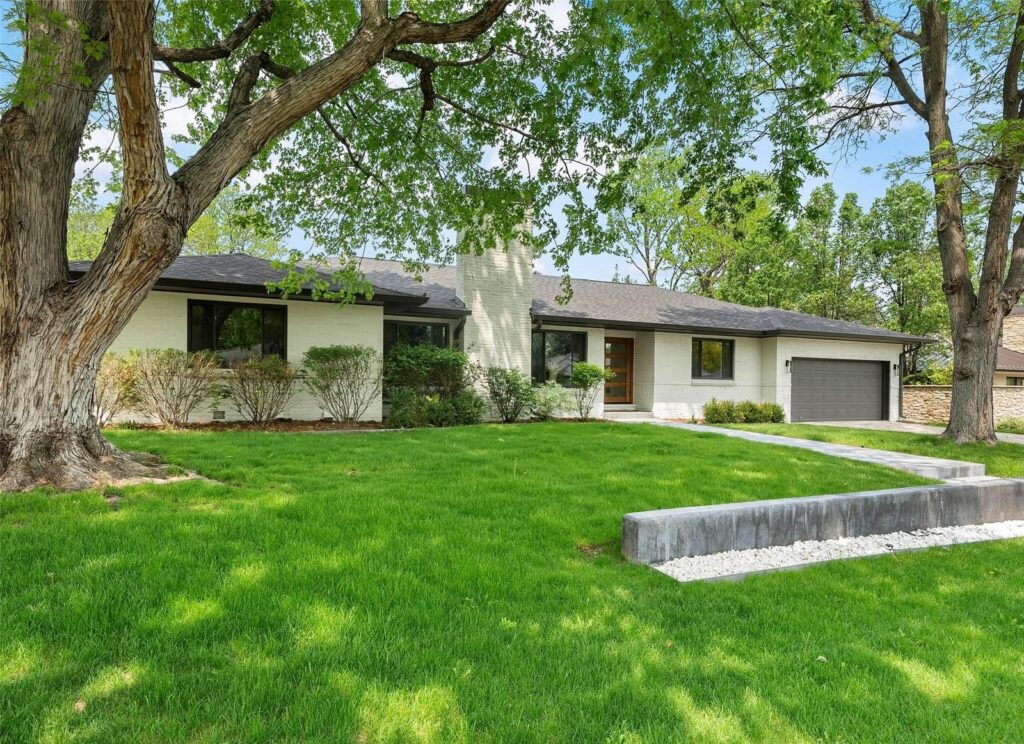
Postwar Ranch Homes
The ranch house is an important part of Belcaro’s residential identity. Larger sites allowed these homes to extend horizontally rather than concentrate living space vertically.
Common characteristics can include one-story living, low building forms, integrated garages, broad window openings, direct relationships to yards and patios, and relatively informal interior planning.
Why they can work well: strong examples often provide natural light, convenient one-level living, and excellent indoor/outdoor relationships even when their total square footage is modest compared with newer custom homes.
Buyer due diligence: Depending on renovation history, investigate electrical service, plumbing, sewer, HVAC, roof, windows, insulation, drainage, foundation conditions, previous additions, and available permit records.
Original Architecture: What Is Worth Preserving?
Potential Assets
Depending on the property, original value may exist in:
- masonry and woodwork;
- built-in cabinetry;
- fireplaces;
- large window compositions;
- terrazzo or period flooring;
- distinctive ceiling forms;
- original doors and hardware;
- room proportions; and
- the relationship between house and landscape.
Where Change May Be Needed
Originality can become a constraint when a property has:
- poorly functioning kitchens;
- inadequate bathrooms;
- obsolete mechanical systems;
- limited insulation;
- failing windows;
- awkward circulation;
- deferred maintenance; or
- spaces that no longer support modern use.
Preserve what contributes value. Improve what does not.
Four Ways Belcaro Homes Evolve
Original
Retains much of its initial architecture, materials, proportions, and spatial relationships.
Thoughtfully Renovated
Modernizes systems and functionality while preserving the qualities that made the original house worth improving.
Expanded
Adds substantial living area, bedrooms, garage space, or new program while attempting to integrate with the original structure.
Replaced
The original house gives way to new custom construction whose value depends on design, construction quality, site planning, and landscape.
Custom Homes & Architectural Quality
The term custom home should not automatically be interpreted as a measure of quality.
A house can be expensive, large, and highly customized without being particularly well designed. Conversely, a more restrained residence can demonstrate excellent architectural thinking.
Useful questions include:
- Does the building respond to the site?
- Are major rooms oriented toward useful views and outdoor spaces?
- Is natural light handled well?
- Is circulation intuitive?
- Are room proportions comfortable?
- Does the massing relate appropriately to the lot?
- Are materials used coherently?
- Does the landscape support the architecture?
Replacement Construction
Belcaro’s central location and valuable residential land naturally create redevelopment pressure. Some older houses will remain strong renovation candidates. Others may be too compromised, too altered, or too poorly suited to the site to justify major investment.
Replacement construction can provide contemporary systems, energy performance, accessibility, and a house designed specifically for the site—but bigger is not automatically better.
Potential Benefits
- modern building systems;
- energy performance;
- accessibility;
- contemporary layouts;
- purpose-designed garage and storage;
- better building-envelope performance; and
- a home designed specifically for the site.
Potential Trade-Offs
- loss of mature trees;
- reduced yard area;
- privacy conflicts;
- greater impervious surface;
- more complex drainage;
- larger visual mass; and
- a weaker relationship between house and landscape.
The appropriate measure of success is whether the complete property works better.
The Belcaro Lot
In Belcaro, site analysis deserves the same seriousness as house analysis. Two similarly sized lots can perform very differently depending on dimensions, orientation, trees, setbacks, topography, access, neighboring conditions, and the placement of the existing house.
Lot Form
Width, depth, irregularity, setbacks, usable rear yard, and building placement.
Orientation
Morning and afternoon sun, outdoor-space orientation, seasonal shade, and future daylight.
Landscape
Mature trees, irrigation, privacy, outdoor rooms, landscape condition, and root zones.
Constraints
Drainage, easements, access, utilities, neighboring development, and actual buildable area.
Mature Trees Are Part of the Property
Large established trees can provide shade, privacy, visual character, habitat, and spatial enclosure that new development takes decades to reproduce.
They can also create responsibilities involving health, pruning, irrigation, storm damage, roots, foundations, and construction conflicts.
A mature tree should not automatically prevent a project. But it should be treated as part of the site’s existing infrastructure rather than as an afterthought.
Belcaro Property Site Checklist
Site
- Lot size and dimensions
- Orientation
- Topography
- Drainage
- Easements
- Applicable setbacks
Landscape
- Mature trees
- Irrigation
- Privacy
- Outdoor living
- Landscape condition
- Root zones
Architecture
- Original design quality
- Previous additions
- Natural light
- Indoor/outdoor relationship
- Structural organization
- Building placement
Future Plans
- Renovation goals
- Expansion goals
- Garage needs
- Accessory structures
- Pool / outdoor program
- Replacement feasibility
Architect + Realtor Perspective — Renovate, Expand, or Replace?
I would begin by asking whether the site is exceptional, then identify what is architecturally valuable about the existing house, separate cosmetic problems from structural or system problems, and determine whether the current building can realistically support the desired program.
Only then would I compare the implications of renovation, addition, and replacement construction.
Starting with “How large a new house can I build?” skips too many important questions.
Decision Takeaway
Lot → Landscape → Architecture → Condition → Improvement Potential → Market Position → Price
A beautifully renovated house on a compromised site is not automatically superior to an older house on exceptional land. A new custom home is not automatically superior to a well-preserved ranch. And an original house is not automatically worth saving simply because it is old.
The goal is to understand what creates value in the complete property.
What You Can Do With a Property May Matter as Much as What You Are Buying
Belcaro’s larger lots and varied housing stock can make properties appear unusually flexible. But physical space does not necessarily equal development freedom.
A renovation, addition, garage, pool, accessory structure, or replacement home may be influenced by several overlapping layers: Denver zoning and building requirements, recorded easements, private covenants, subdivision-specific restrictions, existing site conditions, and potentially architectural review.
The important question is therefore not simply, “What would I like to do here?” It is “What is actually feasible on this particular property?”
Public Rules
Zoning, building codes, stormwater requirements, permits, and other governmental regulations.
Private Rules
Recorded covenants, subdivision restrictions, association documents, and architectural-review requirements where applicable.
Title & Site
Easements, utilities, access, drainage, lot geometry, trees, existing improvements, and neighboring conditions.
Project Reality
Design goals, construction cost, existing conditions, approval process, schedule, and market economics.
Private Covenants Deserve Separate Attention
One of the most important distinctions for a Belcaro buyer is the difference between public land-use regulation and private property restrictions.
A project that appears possible under Denver zoning may still require review against recorded private documents. Conversely, a covenant provision should not be assumed to describe everything required by current municipal regulations.
Belcaro Park
Belcaro Park developed through multiple filings, and private restrictions should be investigated at the property level rather than assumed from the neighborhood name alone.
For a buyer contemplating substantial exterior work, an addition, accessory structure, or replacement residence, relevant recorded documents should be obtained and reviewed during due diligence.
Do not assume that a nearby project establishes what another lot is permitted to do.
Polo Club
Polo Club should be evaluated as its own ownership environment rather than treated as simply another Belcaro street.
Buyers should investigate the documents applicable to the specific property, including any provisions involving private drives, access, common or shared responsibilities, architectural controls, landscaping, maintenance, or other property-specific obligations.
The applicable documents—not the neighborhood label—should control the analysis.
Important: Private covenants, association documents, title matters, and municipal regulations can change and may require legal or technical interpretation. This guide identifies issues worth investigating; it is not a substitute for reviewing the documents applicable to an individual property with the appropriate professionals.
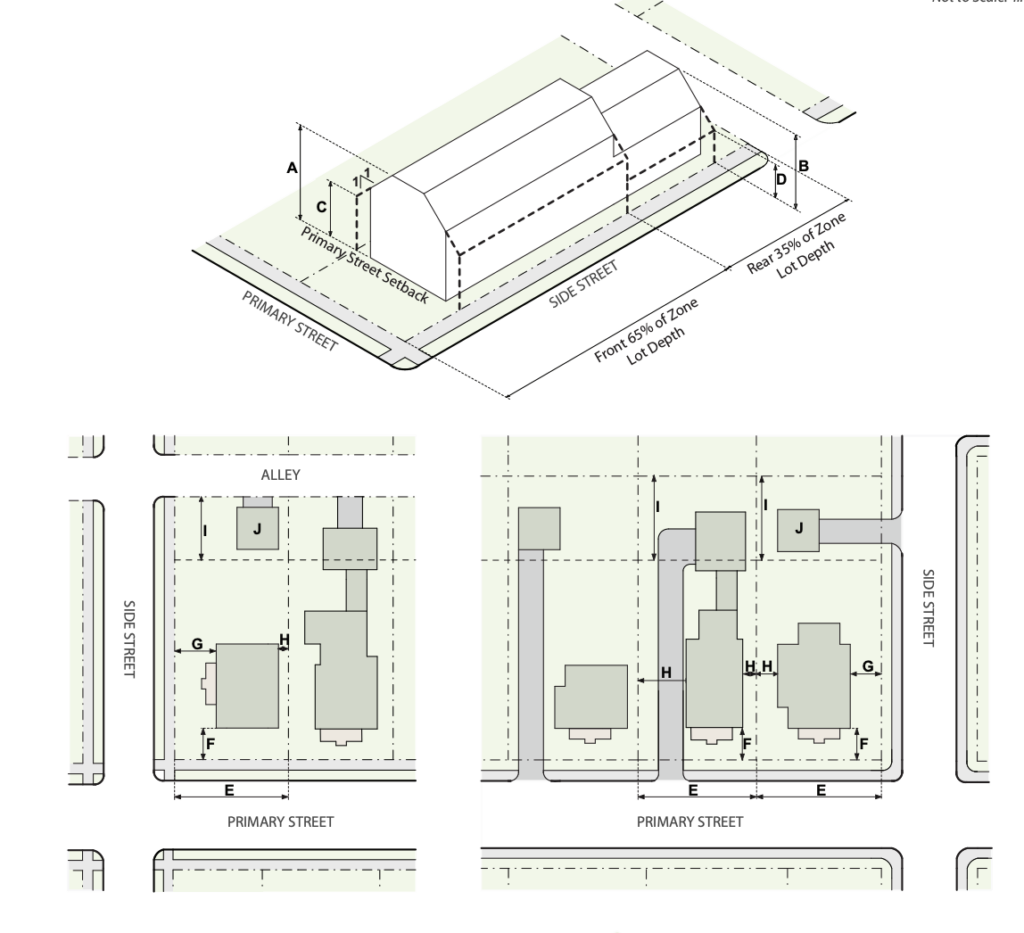
The Buildable Area Is Not the Same as the Lot Area
A large parcel can create an impression of nearly unlimited flexibility. In practice, the usable development envelope may be shaped by setbacks, easements, utility locations, existing trees, drainage, access, building placement, private restrictions, and the owner’s own goals for outdoor space and privacy.
Why This Matters Before You Buy
A buyer may assign substantial value to a property because it appears capable of supporting a future addition, new garage, pool, accessory structure, or replacement home.
If that assumption is important to the purchase decision, it deserves investigation before closing.
That does not necessarily require completing a full architectural design during a transaction. It does mean identifying obvious constraints and determining whether the buyer’s central assumptions appear reasonable enough to continue.
Property Due-Diligence Framework
1. Identify
Confirm the exact parcel, subdivision or filing, ownership structure, and applicable title documents.
2. Investigate
Review zoning, covenants, easements, surveys, permits, utilities, drainage, and site conditions relevant to your plans.
3. Test
Test important assumptions about renovation, expansion, replacement, garage needs, outdoor uses, or other future plans.
4. Decide
Evaluate whether the property’s opportunities, constraints, costs, and risks still support the purchase decision.
Architect + Realtor Perspective: The most expensive due-diligence mistake is often not discovering a defect. It is purchasing a property based on an important assumption that was never tested.
If the value you see in a Belcaro property depends on changing it later, that future potential should become part of the purchase analysis today.
Belcaro's Commercial Life Happens Around Its Edges
Belcaro does not function like a neighborhood built around a dense internal main street. Much of its residential interior remains intentionally residential, while restaurants, shopping, groceries, and everyday services are concentrated along nearby commercial areas.
The result is an important Belcaro trade-off: residential separation without geographic isolation.
For most residents, three surrounding commercial environments matter most: Bonnie Brae / South University, Cherry Creek, and Colorado Boulevard / Glendale.
Bonnie Brae / University
Best for neighborhood-scale dining, bakery stops, ice cream, and a smaller local commercial experience.
Cherry Creek
Best for the broadest concentration of restaurants, retail, specialty shopping, fitness, and professional services.
Colorado Blvd. / Glendale
Best for practical errands, everyday services, groceries, restaurants, and regional commercial access.
Bonnie Brae / South University
The Bonnie Brae commercial area along South University Boulevard provides the most neighborhood-scaled commercial environment immediately adjacent to Belcaro. It is compact rather than comprehensive, but its restaurants and longstanding local businesses give it a different character from Cherry Creek or the Colorado Boulevard corridor.
Ni Tuyo
Best for: Mexican dining and agave-focused cocktails.
Ni Tuyo operates at 730 South University Boulevard and describes its menu around generational Mexican cooking, molcajetes, tacos, appetizers, and agave-forward drinks.
Its location makes it particularly relevant to western Belcaro and the Bonnie Brae commercial node.
Katherine's French Bakery & Café
Best for: Bakery, breakfast, lunch, and pastries.
Katherine’s operates at 728 South University Boulevard as a family-owned European-style bakery and café.
This type of business is useful to Belcaro because it can become part of an everyday routine rather than only a destination meal.
Bonnie Brae Ice Cream
Best for: A longstanding neighborhood tradition.
Family-owned Bonnie Brae Ice Cream has operated at 799 South University Boulevard since 1986 and makes its ice cream in-house.
Its longevity helps give the small Bonnie Brae commercial district a recognizable neighborhood identity.
ttArch Take — Bonnie Brae: This is probably the most useful nearby commercial area for buyers who want some neighborhood-scale businesses without giving up Belcaro’s predominantly residential character. The practical difference is highly address-specific: a home near University Boulevard can interact with this node very differently from one deeper within Belcaro Park.
Cherry Creek
Cherry Creek dramatically expands the range of shopping and dining available near Belcaro.
Cherry Creek North and the Cherry Creek Shopping Center together form one of Denver’s largest concentrations of restaurants, cafés, retail, fitness, personal services, and professional businesses.
Current Visit Denver information describes the broader Cherry Creek shopping area as containing more than 300 places to shop, dine, or access services, including a substantial restaurant and café inventory.
The important distinction is geographic: Cherry Creek is a major nearby resource for Belcaro residents, but it is not Belcaro.
Examples of the Dining Range
Cherry Creek Grill
Matsuhisa
Blue Island Oyster Bar
North Italia
ttArch Take — Cherry Creek: The significance of Cherry Creek is breadth. Belcaro does not need to duplicate a major dining and retail district internally because one already exists nearby. The trade-off is that proximity does not mean every Belcaro address is conveniently walkable to it.
Colorado Boulevard & Glendale
The eastern side of Belcaro interacts with a much more automobile-oriented commercial environment. Colorado Boulevard and nearby Glendale provide a broad range of restaurants, services, retail, medical uses, fitness, and practical errands.
The streetscape is less intimate than Bonnie Brae, but the range of everyday uses is substantially greater.
Groceries
Multiple nearby commercial areas provide grocery choices rather than forcing residents to depend on one internal neighborhood store.
Services
Medical, fitness, household, professional, and personal services are widely available along nearby commercial corridors.
Restaurants
The corridor and Glendale add additional dining choices, although individual businesses change more frequently than Belcaro’s underlying neighborhood structure.
Regional Access
Colorado Boulevard’s commercial usefulness is reinforced by its role as a major north-south transportation corridor.
ttArch Take — Colorado Boulevard / Glendale: This area is strongest for practical range rather than intimate neighborhood character. It demonstrates an important distinction for Belcaro buyers: a neighborhood can have strong commercial access without being conventionally walkable.
Walkability Depends on the Address
A home close to University Boulevard may make Bonnie Brae businesses convenient on foot. A property deep within Belcaro Park may provide greater residential separation but require more frequent driving or cycling. A northern location may interact more naturally with Cherry Creek, while eastern properties can reach Colorado Boulevard services quickly but may experience more arterial exposure.
These are different ownership experiences—not simply different Walk Scores.
Decision Takeaway: Belcaro should not be chosen because it contains a large internal restaurant and retail scene. It doesn’t.
Its commercial advantage is different: Belcaro sits between several useful commercial environments while preserving a predominantly residential interior.
The important buyer question is whether you want commercial activity integrated directly into your residential environment—or whether you prefer living somewhat apart from it while keeping it nearby.
Business information changes more frequently than neighborhood geography. Examples in this section were reviewed in August 2026 and should be periodically reverified. Current sources include individual business websites and Visit Denver’s Cherry Creek directory.
Understanding the Schools That Serve Belcaro
School information is often reduced to a single rating. That can hide more than it reveals.
For Belcaro buyers, a better analysis considers school assignment, academic achievement, student growth, multi-year performance, program fit, and the alternatives available through Denver Public Schools SchoolChoice.
The commonly associated neighborhood pathway includes Cory Elementary School, Merrill Middle School, and Denver South High School—but assignment should always be verified for the specific property and school year.
Cory Elementary
2025 State Rating
Performance Plan
Achievement: Exceeds
Growth: Approaching
Merrill Middle
2025 State Rating
Performance Plan
Achievement: Meets
Growth: Meets
Denver South High
2025 State Rating
Performance Plan
Overall framework: 64.3%
Not on Performance Watch
How to read this: Colorado’s Performance Framework combines multiple measures. Achievement describes current academic performance relative to state expectations; growth evaluates how much progress students are making over time. A school can therefore show very high achievement while displaying more moderate growth, or vice versa.
Cory Elementary School
Grades: 1–5
2025 Colorado Rating: Performance Plan
Framework Score: 69.1%
Cory’s current data requires a little interpretation. The school continues to demonstrate very strong academic achievement: Colorado rated its 2025 Academic Achievement indicator Exceeds, with 90.4% of available achievement points earned.
Academic Growth, however, was rated Approaching in 2025, at 54.8% of available growth points.
That distinction matters. Cory’s students are performing at high levels overall, but the latest framework indicates that year-over-year growth was not as strong as its achievement profile.
Merrill Middle School
Grades: 6–8 | 2025 Colorado Rating: Performance Plan | Framework Score: 77.8%
Achievement
MEETS
76.4% of framework achievement points in 2025.
Growth
MEETS
78.6% of framework growth points in 2025.
Recent Trend
STABLE
77.0% in 2023
77.5% in 2024
77.8% in 2025
Merrill’s recent state performance is notable for its consistency. Its official framework score has remained near 77% for three consecutive years, and both achievement and growth currently meet state expectations.
The underlying data also show nuance. In the state’s informational three-year framework, Merrill’s overall students scored at the 92nd percentile in English Language Arts achievement and 91st percentile in math achievement, while outcomes for some student groups were materially lower. That is an important reminder that a school-wide rating does not describe every student’s experience.
Denver South High School
Grades: 9–12 | 2025 Enrollment: approximately 1,920 | 2025 Colorado Rating: Performance Plan
The Recent Trend
Denver South’s recent framework history is more complicated than a single rating suggests.
2023: Improvement Plan — 58.8%
2024: Performance Plan — 61.4%
2025: Performance Plan — 64.3%
The school has therefore moved upward in the state framework over the last three published years and is currently not on Performance Watch.
2025 Academic Snapshot
PSAT Reading & Writing:
Meets — 73rd percentile statewide achievement
PSAT Math:
Meets — 82nd percentile statewide achievement
CMAS Science:
Approaching — 48th percentile statewide achievement
These figures illustrate why looking below the overall framework rating matters: performance varies by subject and student group.
SchoolChoice Expands the Conversation
Buying in Belcaro does not necessarily mean choosing only among the schools most commonly associated with the neighborhood.
Denver Public Schools operates a district-wide SchoolChoice system that allows families to apply to other participating DPS schools, subject to space, enrollment priorities, and the district’s matching process.
Nearby alternatives and specialized programs can therefore be relevant—but they should be treated as options, not guarantees.
Nearby Choice Example
Creativity Challenge Community (C3) is an elementary innovation school located at the Merrill campus.
C3 states that it is an open-enrollment school with no entry requirements and participates in the standard DPS SchoolChoice process. If applications exceed available seats, enrollment priorities and a lottery determine matching.
This illustrates why buyers should distinguish between a boundary school and a choice opportunity.
For Buyers
If a particular school is central to the purchase decision:
1. Verify the property’s current boundary assignment.
2. Confirm the applicable school year.
3. Understand whether the desired school is boundary-based or choice-based.
4. Investigate programs and student fit, not merely ratings.
5. Do not purchase based solely on a listing’s school field.
A Better Way to Evaluate Schools
1. Assignment
Which school or enrollment zone actually serves this address?
2. Performance
What do achievement, growth, trends, and subgroup data actually show?
3. Fit
Do programs, culture, size, academics, activities, and support fit the student?
4. Options
What realistic SchoolChoice, charter, magnet, or private-school alternatives exist?
Decision Takeaway: School ratings are useful screening tools, but they are not substitutes for understanding the actual school.
For Belcaro, the data suggest three different stories: Cory combines very high achievement with weaker recent growth; Merrill currently shows a stable and balanced achievement-and-growth profile; and Denver South shows a more mixed but improving high-school trajectory.
The right question is not simply, “Are the schools good?” It is, “Which school would this address provide access to, and how well does that school fit this particular student?”
School boundaries, enrollment policies, programs, and performance data can change. Buyers should verify the current assignment for an individual property using Denver Public Schools’ School Finder and review current school information directly with DPS. Performance analysis above uses Colorado Department of Education 2025 School Performance Framework data.
Belcaro's Outdoor Experience Extends Beyond Its Boundaries
Belcaro is not organized around a major public park in the way Washington Park, City Park, or Sloan’s Lake are. Its outdoor character comes from something different: large residential lots, mature landscaping, quieter interior streets, and access to several significant recreation destinations nearby.
That distinction matters. Buyers should not confuse a green residential environment with having a large public park immediately outside the front door.
Within the Neighborhood
Leafy streets, mature trees, generous setbacks, private yards, and a low-density residential environment create much of Belcaro’s everyday outdoor character.
Nearby Recreation
Pulaski Park, Gates Tennis Center, Washington Park, and other nearby facilities broaden the range of organized recreation available to residents.
Regional Connections
The Cherry Creek Trail provides access to a much larger bicycle and pedestrian network extending beyond the immediate neighborhood.
The Neighborhood Itself Is Part of the Outdoor Experience
One of Belcaro’s defining physical characteristics is the amount of landscape incorporated into the residential fabric itself.
Many properties have larger lots than buyers encounter in Denver’s denser historic neighborhoods. Mature trees, broad lawns, landscaped setbacks, private patios, gardens, and backyards can make outdoor space an extension of the home rather than something residents must always seek in a public park.
This is especially relevant when comparing Belcaro with neighborhoods where smaller private lots are offset by immediate access to major public open space.
Belcaro often reverses that equation: more private outdoor space, but less public parkland embedded directly within the neighborhood.
Architect + Realtor Perspective: Landscape is not merely decorative in Belcaro. Lot width, setbacks, mature vegetation, building placement, and the relationship between indoor and outdoor rooms can materially affect how a property feels and functions. Two similarly sized houses can offer very different living experiences depending on how the site has been designed.
Nearby Parks & Recreation
Pulaski Park
Best for: Nearby neighborhood recreation.
Located north of Belcaro near Cherry Creek, Pulaski Park provides public green space and recreation close to the neighborhood’s northern side.
Its importance is greatest for residents who want a nearby public outdoor destination without necessarily traveling to one of Denver’s larger regional parks.
Gates Tennis Center
Best for: Dedicated racquet-sport access.
Gates Tennis Center sits beside Pulaski Park and is one of the area’s more specialized recreation amenities.
For households where tennis or related programming is part of everyday life, proximity can be considerably more meaningful than a generic park-distance metric suggests.
Washington Park
Best for: Large-scale park recreation.
Washington Park provides the type of extensive public park experience Belcaro itself does not contain: lakes, lawns, gardens, paths, sports facilities, and a broad range of recreational activity.
It is nearby enough to be a meaningful amenity, but living in Belcaro is not the same experience as living directly alongside Wash Park.
ttArch Take: Belcaro offers access to several different kinds of recreation rather than one dominant neighborhood amenity. That can be an advantage for households whose activities vary—but it is different from having a major park function as the neighborhood’s social and physical center.
Cherry Creek Trail
The Cherry Creek Trail adds a different dimension to Belcaro’s recreation story because it is not simply a destination—it is part of a larger transportation and recreation network.
The trail follows the Cherry Creek corridor and provides a separated route used for cycling, running, walking, and longer-distance connections through Denver.
For an active household, access to a regional trail can matter more than the number of acres in the nearest conventional park.
As with many Belcaro amenities, however, the convenience of reaching the trail depends on the property’s location within the neighborhood and the route used to get there.

Private Space vs. Public Recreation
What Belcaro Often Provides
• Larger private yards
• Mature residential landscaping
• Space for gardens and patios
• Strong indoor-outdoor relationships in some homes
• Quieter interior streets
• Multiple recreation destinations within the surrounding area
What Belcaro Does Not Replicate
• A major public park at the neighborhood’s center
• Immediate park frontage for most properties
• A single recreation destination that organizes neighborhood life
• Uniform walkability to public recreation
• The social activity created by living directly beside a heavily used urban park
The Property's Location Still Matters
As with Belcaro’s shopping and dining access, recreation should be evaluated at the property level rather than only the neighborhood level.
A northern Belcaro property may interact more naturally with the Cherry Creek corridor and Pulaski Park. A home farther south may make Washington Park or other south-central Denver destinations comparatively convenient. Interior properties can offer greater residential separation while requiring a longer walk or ride before reaching regional trails and public recreation.
The difference may appear small on a map but can materially change an everyday routine.
Decision Takeaway: Belcaro’s outdoor appeal is not primarily about having a landmark park inside the neighborhood. It is about the combination of private landscape, mature residential character, quieter streets, and access to a network of nearby recreation.
For some buyers, that combination may be preferable to living beside a busy public park. For others, the ability to walk directly from home into a major park may be more important.
The useful question is therefore not simply, “Does Belcaro have good parks?” It is: “Does Belcaro’s balance of private outdoor space and nearby public recreation match how I actually want to live?”
Park facilities, trail conditions, programming, access points, and recreation amenities can change. Buyers should verify amenities that are important to their decision with the applicable park, recreation, or facility operator.
Central Without Being Transit- or Walkability-Dependent
Belcaro occupies an unusual transportation position. It is centrally located near several major Denver corridors, yet much of its interior retains the character of a lower-density residential neighborhood.
For many households, the neighborhood works through a combination of driving + cycling + selective walking + bus transit rather than dependence on one mode.
The practical experience changes significantly by address. A property near University Boulevard, Colorado Boulevard, Alameda Avenue, or the Cherry Creek corridor can function differently from a home deeper inside Belcaro Park.
Driving
Strong
Multiple surrounding arterials provide direct access through central Denver.
Cycling
Notable Advantage
The Cherry Creek Trail creates valuable regional bicycle connectivity.
Walking
Address-Dependent
Residential walking can be pleasant; destination walkability varies substantially.
Transit
Available on Edges
Bus service is more relevant along surrounding corridors than within the residential interior.
The Roads That Define Belcaro's Connectivity
University Boulevard
University Boulevard is one of the area’s most important north-south corridors.
It connects Belcaro toward Bonnie Brae, Washington Park-area destinations, Cherry Creek, the University of Denver area, and southeast Denver.
For western Belcaro properties, the corridor can provide both transportation convenience and closer access to neighborhood-scale businesses.
Colorado Boulevard
Colorado Boulevard is the area’s major north-south regional arterial.
It provides access toward Glendale, Cherry Creek-area destinations, Interstate 25 connections, medical and commercial areas, and a broad portion of east-central Denver.
Its transportation usefulness comes with the expected trade-offs of a major arterial: traffic, noise, turning movements, and less residential separation for nearby properties.
Alameda Avenue
Alameda provides an important east-west connection across central Denver.
From the Belcaro area it helps link Cherry Creek, Glendale, Washington Park-area neighborhoods, Broadway, and destinations farther west.
As with the other edge corridors, convenience and traffic exposure should be considered together when evaluating nearby properties.
Property-Level Trade-Off: The locations that provide the fastest access out of Belcaro can also experience more traffic, noise, headlights, and commercial activity. Properties deeper within the residential interior generally provide more separation—but add distance to those same corridors.
Cycling Changes the Connectivity Equation
Belcaro can appear more automobile-dependent if evaluated only through conventional destination walkability.
For a comfortable cyclist, the picture changes.
The Cherry Creek Trail provides a largely separated regional route connecting the broader area toward Cherry Creek, Downtown Denver, Glendale, and additional trail connections.
That means some destinations that are inconvenient on foot may still be practical by bicycle.
Belcaro may therefore be more bike-connected than its low-density residential pattern initially suggests.
Walking: Separate Recreation From Utility
Belcaro demonstrates why the word walkable needs more precision.
Many internal residential streets can be pleasant for an everyday walk because of mature landscaping, lower-density development, and residential separation.
That does not mean every home provides convenient walking access to groceries, coffee, restaurants, schools, or services.
Recreational Walking
Belcaro’s mature trees, landscaped properties, and quieter interior streets can create an attractive environment for walking within the neighborhood itself.
This is primarily about the quality of the residential environment.
Destination Walking
Commercial and service destinations are concentrated around Belcaro’s perimeter rather than throughout its interior.
This form of walkability is therefore much more property-specific.
Public Transit
Belcaro is served more by bus corridors around its edges than by transit running through the residential interior.
Current RTD routes in the surrounding area include service along University Boulevard, Colorado Boulevard, and Alameda Avenue. Belcaro does not contain a rail station within the neighborhood itself.
For someone expecting to depend heavily on transit, the meaningful questions are route frequency, walking distance to the stop, transfers, evening and weekend service, and whether the route actually serves the destinations used most often.
University Blvd.
Current RTD Route 24 corridor
Colorado Blvd.
Current RTD Route 40 corridor
Alameda Ave.
Current RTD Route 3 / 3L corridor
Decision Takeaway: Belcaro’s central location is a meaningful advantage, but its transportation profile is not uniformly urban.
The neighborhood generally works best for someone comfortable combining driving, cycling, selective walking, and available bus transit, while understanding that the usefulness of each mode changes by address.
The key question is not simply how close a property appears to destinations on a map. It is: “What does this specific location make easy—and what will still require a car, bicycle, bus trip, or longer walk?”
Transit routes, schedules, roadway conditions, bicycle infrastructure, and trail access can change. Current RTD route information should be reverified when transportation access is important to a property decision.
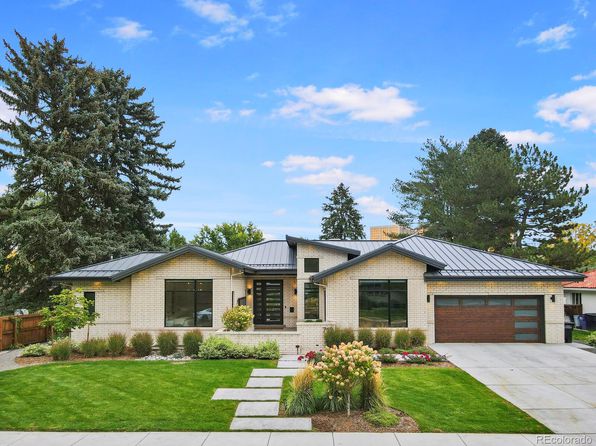
A Residential Lifestyle Built Around Space, Privacy & Responsibility
Belcaro’s appeal is not defined by one restaurant district, landmark park, architectural style, or housing type. It comes from a combination of central location, lower-density residential character, larger sites, mature landscape, architectural variety, and separation from more active commercial surroundings.
Those advantages come with responsibilities that are easy to overlook when focusing only on the neighborhood’s appearance.
Living in Belcaro often means owning more property—not simply more house.
Privacy
Larger setbacks and mature landscaping can create meaningful separation from neighboring homes.
Landscape
Trees, irrigation, lawns, gardens, fences, patios, and drainage become part of everyday ownership.
Stewardship
Older homes and established sites can reward thoughtful ownership but may require ongoing capital investment.
Central Access
Cherry Creek, Washington Park, Glendale, commercial corridors, and central Denver remain nearby.
Privacy Is One of Belcaro's Most Distinctive Qualities
Compared with many central Denver neighborhoods, parts of Belcaro can offer considerably more physical separation between houses.
That privacy may come from:
- larger setbacks;
- deeper yards;
- mature trees;
- hedges and landscape screening;
- lower-density street patterns; and
- careful building placement.
But privacy should still be evaluated property by property.
A large lot with poor orientation or little screening can feel less private than a smaller but more thoughtfully designed site. Future redevelopment on adjacent properties can also change privacy over time.
More Outdoor Space Means More Ownership Responsibility
Trees
Pruning, disease, storm damage, root conflicts, replacement, and long-term canopy stewardship.
Irrigation
Large landscaped sites can involve substantial irrigation infrastructure, maintenance, and water use.
Hardscape
Driveways, patios, walks, fences, walls, lighting, and drainage systems all eventually require care.
Seasonal Work
Leaves, snow, lawn care, planting, pruning, irrigation startup, and winterization become part of the ownership cycle.
Ownership Reality: A large, beautifully landscaped property can be one of Belcaro’s greatest advantages. It can also be one of its largest recurring responsibilities.
The right question is not simply whether you want a large yard. It is whether you want to own and maintain the complete landscape system that comes with it.
Older Homes Can Be Rewarding—and Demanding
Many Belcaro homes were built decades ago, and even beautifully maintained properties eventually require systems work.
Depending on the house, ownership may involve periodic investment in roofing, sewer, plumbing, electrical systems, HVAC, windows, insulation, drainage, masonry, exterior finishes, and previous additions.
This does not make older housing undesirable. It means buyers should distinguish architectural character from building condition.
Cosmetic
Paint, flooring, fixtures, cabinetry, finishes, and visual updates.
Functional
Layout, bathrooms, storage, circulation, room relationships, and indoor-outdoor connections.
Building Systems
Structure, roof, sewer, plumbing, electrical, HVAC, drainage, envelope, and other infrastructure.
Architect + Realtor Perspective: A dated property can be an excellent house. A newly renovated property can still contain old or poorly executed systems.
The ownership experience depends less on whether the photographs look current and more on whether the architecture, systems, site, and previous work are fundamentally sound.
Quiet and Convenience Exist in Tension
One of Belcaro’s defining advantages is that much of its residential interior is separated from heavy commercial activity.
The corresponding trade-off is that convenience is often located around the neighborhood rather than inside it.
A home close to University Boulevard, Alameda Avenue, Colorado Boulevard, or Cherry Creek may offer easier access to restaurants, shopping, transit, or trails—but potentially less separation from traffic and activity. A deeper interior property can feel more secluded while increasing reliance on driving or cycling.
Deeper Inside the Neighborhood
Potential advantages:
• stronger residential separation
• less arterial exposure
• quieter setting
• greater sense of privacy
Potential trade-off:
• greater distance to commercial, transit, and recreational destinations
Closer to the Edges
Potential advantages:
• easier access to corridors
• shorter trips to shops and restaurants
• better transit access in some locations
• easier trail or recreation access
Potential trade-off:
• more traffic, noise, headlights, and surrounding activity
Belcaro Can Reward Long-Term Ownership
Belcaro’s combination of one-story housing, substantial sites, mature landscape, and central location can make some properties particularly adaptable over a long ownership horizon.
A buyer thinking beyond the next few years may want to consider whether the property can accommodate:
One-Level Living
Flexible Rooms
Future Renovation
Changing Needs
Long-term flexibility is not guaranteed simply because a property is large. Architecture, structure, zoning, covenants, site constraints, maintenance requirements, and project economics still matter.
The best long-term property is usually one whose basic site and building characteristics remain useful even as the owner’s priorities change.
Who Tends to Appreciate This Ownership Model?
Belcaro May Fit Well If You Value...
• meaningful private outdoor space
• mature landscape
• greater residential separation
• architectural individuality
• central Denver access
• one-story living opportunities
• renovation potential
• long-term property stewardship
Belcaro May Fit Less Naturally If You Prefer...
• dense commercial walkability
• minimal landscape maintenance
• standardized newer housing
• very low-maintenance ownership
• limited exterior responsibilities
• guaranteed renovation flexibility
• a major park immediately outside the door
Decision Takeaway: The Belcaro lifestyle is not simply about having a larger house or larger lot.
It is an ownership model built around space, landscape, privacy, property stewardship, architectural variety, and central access.
Those characteristics can be unusually rewarding for someone who values them. They can also create unnecessary expense and responsibility for someone who does not.
The useful question is not, “Would I enjoy visiting Belcaro?”
It is: “Would I enjoy owning and maintaining this kind of property here?”
A High-Value Market Where the Property Matters as Much as the Neighborhood
Belcaro is a relatively small, high-value market with unusually diverse properties. Neighborhood statistics are useful for understanding direction and context, but they require more interpretation here than in a large market with relatively uniform housing.
An original ranch, a comprehensively renovated established home, a major addition, a newer custom residence, and a redevelopment-oriented property can all appear in the same neighborhood dataset while competing for very different buyers.
The market data should therefore orient the analysis—not replace property-level valuation.
Belcaro Market Report
Latest available neighborhood-level indicators reviewed August 9, 2026.
| MARKET METRIC | BELCARO | YOY / CONTEXT | PERIOD | SOURCE |
|---|---|---|---|---|
| Median Sale Price | $1,711,924 | +29.2% | 3 mos. ending May 2026 | Redfin |
| Homes Sold | 39 | +30.7% | May 2026 | Redfin |
| Median Days on Market | 9 | 8 days prior year | 3 mos. ending May 2026 | Redfin |
| Median Sale Price / SF | $580 | +9.7% | 3 mos. ending May 2026 | Redfin |
| Sale-to-List Ratio | 97.7% | −1.7 pts | 3 mos. ending May 2026 | Redfin |
| Sold Above List | 18.4% | −18.3 pts | 3 mos. ending May 2026 | Redfin |
| Listings With Price Drops | 24.4% | −5.7 pts | 3 mos. ending May 2026 | Redfin |
| Typical Home Value | $1,494,348 | +1.4% | June 30, 2026 | Zillow ZHVI |
| For-Sale Inventory | 42 | Current inventory | June 30, 2026 | Zillow |
| New Listings | 12 | Current month | June 30, 2026 | Zillow |
| Median List Price | $1,458,000 | Asking-price metric | June 30, 2026 | Zillow |
Modeled Home-Value Comparison
| AREA | TYPICAL HOME VALUE | 1-YEAR CHANGE | PERIOD |
|---|---|---|---|
| Belcaro | $1,494,348 | +1.4% | June 30, 2026 |
| Denver | $538,992 | −3.4% | June 30, 2026 |
How to Read the Data
The +29.2% median-sale-price change does not mean the typical Belcaro property appreciated approximately 29% in one year.
Redfin’s recent transaction-based median increased sharply, while Zillow’s modeled typical home value increased only 1.4% over the past year.
Those measurements use different methodologies, but the gap also highlights an important characteristic of Belcaro: a relatively small number of very different properties can substantially change the mix of homes sold from one period to another.
Small Transaction Pool
A relatively small number of transactions makes short-term medians more sensitive to which properties happened to sell.
Changing Sales Mix
A period containing more newer custom or comprehensively renovated homes can produce a much higher median than one dominated by original properties.
Property Diversity
Lot, architecture, age, condition, finished area, renovation quality, privacy, and redevelopment potential can differ dramatically.
Atlas Interpretation: The data suggest a high-value neighborhood with recent transaction strength, limited inventory, and relatively fast sales—but not a market where one headline percentage should be applied indiscriminately to individual homes.
The property mix matters too much.
One Market, Several Property Profiles
Belcaro is best treated as one neighborhood market with several important property profiles rather than rigid geographic price sectors.
These are analytical categories—not fixed price bands.
| PROPERTY PROFILE | WHAT TYPICALLY DEFINES IT | KEY VALUATION QUESTION |
|---|---|---|
| Original / Substantially Original | Older plan, finishes or systems; established site; varying maintenance history | How much value sits in the house versus the site and improvement potential? |
| Thoughtfully Renovated | Meaningful improvement to systems, layout, finishes or indoor-outdoor relationships | Did the renovation improve the asset or primarily update appearance? |
| Expanded / Reconfigured | Major additions or substantial reworking of original house | Was the expansion integrated architecturally and functionally? |
| Newer Custom | Replacement construction, contemporary systems and larger programs | Does design and construction quality justify the upper market position? |
| Site-Driven Opportunity | Land, privacy, orientation or redevelopment value outweighs existing improvements | What is the underlying site worth independently of the existing house? |
What Actually Drives Value in Belcaro?
| VALUE DRIVER | WHY IT MATTERS |
|---|---|
| Site | Lot dimensions, orientation, privacy, trees, setbacks, outdoor space, drainage and future flexibility. |
| Location Within Belcaro | Interior versus edge condition, traffic exposure, convenience, privacy and surrounding property context. |
| Architecture | Design quality, proportions, layout, natural light, materials, additions and the relationship between house and land. |
| Condition | Building systems, maintenance history, immediate capital needs and functional obsolescence. |
| Renovation Quality | Well-conceived work can improve the entire asset; superficial or poorly integrated work may not. |
| Size | Finished area matters, but the usefulness and quality of the space matter as well. |
| Outdoor Environment | Landscape, patios, pools, gardens, privacy and indoor-outdoor relationships can materially affect buyer perception. |
Site → Location → Architecture → Condition → Renovation Quality → Size → Outdoor Environment → Market Position
That hierarchy is generally more useful in Belcaro than beginning with price per square foot.
The Lot Can Have Independent Economic Value
Belcaro’s larger residential sites create an important market dynamic: buyers may evaluate the existing house and the underlying land separately.
A buyer may consider:
- the value of the existing house;
- the value of the underlying land;
- the cost and feasibility of renovation;
- the potential for an addition;
- the potential for replacement construction; and
- the value of mature trees, privacy, orientation, and landscape.
This helps explain why a modest existing house can remain expensive when the underlying site is difficult to reproduce.
Renovation Economics Matter
| PROJECT TYPE | WHAT CHANGES | PRIMARY ECONOMIC QUESTION |
|---|---|---|
| Cosmetic Update | Finishes and appearance | Does presentation improve enough to justify the cost? |
| Comprehensive Renovation | Systems, envelope, layout, finishes and functionality | Does the renovated asset justify acquisition + construction cost? |
| Expansion | Program and square footage | Can new area be integrated without compromising architecture or site? |
| Replacement | Entire building | Can land + construction + carrying cost support the intended market position? |
Architect + Realtor Perspective: Renovation cost and market value are related, but they are not the same thing.
A dollar spent correcting obsolete infrastructure may be necessary without producing a dollar-for-dollar premium. Conversely, a well-conceived architectural improvement can make the entire property more competitive because it improves layout, light, circulation, indoor-outdoor relationships, and buyer perception simultaneously.
The relevant question is not simply what the work cost. It is what the work changed about the asset.
Why Price Per Square Foot Can Mislead
Redfin currently reports a median Belcaro sale price per square foot of approximately $580. That is useful market context—but not a valuation formula.
Two homes can have similar finished square footage while differing dramatically in site quality, architecture, basement configuration, ceiling height, natural light, garage capacity, renovation quality, outdoor improvements, privacy, and condition.
In Belcaro, square footage is one characteristic of the asset—not the definition of the asset.
Better method: First identify properties that genuinely compete for the same buyer. Then use price per square foot as one secondary diagnostic within that comparable set.
If the properties are not truly comparable, the ratio creates false precision.
What the Market Means for Buyers & Sellers
For Buyers
Do not begin with the neighborhood median and work backward.
1. Identify what kind of property you are evaluating.
2. Separate site value from improvement value.
3. Compare renovation quality, not simply renovation date.
4. Investigate future-project assumptions.
5. Build a comparable set from properties that compete for the same buyer.
A seemingly expensive home may represent better value if its site, systems, design, and improvements would be difficult to reproduce.
For Sellers
The highest nearby sale is rarely a complete pricing strategy.
1. Identify the property’s strongest value drivers.
2. Understand which buyers are likely to compete for it.
3. Separate cosmetic appeal from meaningful capital improvements.
4. Account honestly for limitations and deferred work.
5. Position the property against the homes buyers will actually compare.
Overpricing can be particularly costly when a unique property lacks obvious direct comparables.
Architect + Realtor Perspective:
In Belcaro, I would spend less time asking what the average house is worth and more time determining exactly what kind of asset the individual property represents.
A buyer may be purchasing a renovated residence, an architectural project, an exceptional site, a redevelopment opportunity, or some combination of all four.
That is why I would evaluate Belcaro in layers: site first, then architecture, condition, improvement potential, market competition, and price.
The neighborhood matters. But in Belcaro, the individual property can matter just as much.
Methodology & Data Notes
Data reviewed: August 9, 2026.
Redfin: neighborhood calculations based on MLS and/or public-record data. Transaction figures referenced here primarily cover the three months ending May 2026.
Zillow: Zillow Home Value Index (ZHVI), a modeled property-level measure designed to track changes in typical home values. Belcaro and Denver ZHVI figures referenced here are through June 30, 2026.
Important: Median sale price and ZHVI measure different things and should not be expected to match. Likewise, list-price, inventory, sale-to-list, and transaction-volume metrics describe different portions of market behavior.
Atlas methodology: Neighborhood-wide statistics establish market context. Individual valuation should rely on property-level comparable analysis appropriate to the home’s site, architecture, condition, improvements, ownership environment, and buyer competition.
Buy the Property You Understand—not Just the House You Like
Buying well in Belcaro requires more than deciding whether you like the finishes, floor plan, or location.
The neighborhood’s diversity means two homes at similar prices can represent very different assets. One may offer an exceptional lot with an outdated house. Another may be beautifully renovated but occupy a more compromised site. A third may carry substantial future renovation or redevelopment potential.
The goal is to understand what you are actually buying—and what additional investment the property may require over time.
The Site
Lot dimensions, privacy, trees, orientation, drainage, easements, access, setbacks, and development flexibility.
The House
Architecture, layout, structure, systems, natural light, additions, condition, and renovation quality.
The Potential
Renovation, expansion, outdoor improvements, garage changes, or replacement construction—and what is realistically feasible.
The Economics
Purchase price plus immediate repairs, future capital needs, renovation cost, carrying cost, and likely resale position.
Start With the Lot
Many interior finishes can be changed. The lot cannot.
Before becoming overly focused on kitchens, bathrooms, or staging, understand the underlying site.
Orientation
Where does the sun fall? Which side contains the principal yard? How do major rooms relate to outdoor space?
Privacy
Study neighboring windows, setbacks, trees, future redevelopment potential, fencing, and landscape screening.
Constraints
Investigate easements, setbacks, utilities, drainage, access, existing trees, covenants, and practical buildable area.
Buyer Perspective: A dated home on an exceptional site may be more difficult to replace than a beautifully finished home on a mediocre site.
Finishes depreciate. Mature landscape, lot configuration, privacy, and orientation can take decades—or may never be possible—to reproduce.
Inspect Beyond the Finishes
Many Belcaro homes have decades of construction history behind them. Some remain substantially original. Others have been renovated or expanded several times.
The age of the original house tells only part of the story. The quality of everything that happened afterward can matter just as much.
Structure
Foundation conditions, framing, previous structural modifications, additions, settlement, and visible movement.
Systems
Electrical, plumbing, sewer, HVAC, water heating, roofing, insulation, windows, and other building infrastructure.
Water
Site drainage, grading, roof drainage, irrigation, basement moisture, exterior drainage systems, and sewer condition.
Previous Work
Permits, additions, remodels, structural changes, workmanship, system integration, and consistency between records and existing conditions.
Important: This is a decision framework, not an inspection checklist. The appropriate inspections and specialists depend on the individual property, its age, construction history, condition, and the buyer’s intended use.
If You Plan to Renovate, Investigate Before You Close
One of the easiest mistakes to make in Belcaro is purchasing an older property with a major improvement plan that has never been tested.
If your decision depends on adding substantial square footage, building a larger garage, changing the roof form, adding a pool, creating an accessory structure, or replacing the existing house, investigate that assumption during due diligence.
1. Define
What do you actually want to change?
2. Verify
What regulations, covenants, easements, trees, or site conditions affect that idea?
3. Estimate
What scale of cost, design work, approval, and construction is likely?
4. Reassess
Does the purchase still make sense once the improvement assumptions are more realistic?
How to Compare Two Very Different Belcaro Homes
Property A
Older / less renovated
• exceptional lot
• mature trees
• strong orientation
• good privacy
• original architecture with potential
• meaningful future renovation required
Property B
Recently renovated
• move-in ready
• updated systems
• larger finished area
• less renovation uncertainty
• weaker privacy or orientation
• less compelling lot characteristics
There is no universal answer about which property is better.
The correct comparison includes purchase price, site quality, existing improvements, required capital, time horizon, tolerance for construction, lifestyle priorities, and eventual resale position.
That is why a simple price-per-square-foot comparison can fail badly in Belcaro.
A Belcaro Buyer Due-Diligence Framework
Understand
Determine what makes the property valuable before deciding what you would change.
Investigate
Inspect the house, review available records, and investigate site and ownership constraints.
Model
Consider acquisition price, repair needs, improvements, future capital, carrying costs, and market position together.
Decide
Determine whether the complete property still supports your financial, architectural, and lifestyle goals.
Architect + Realtor Perspective:
When I evaluate a Belcaro property, I would not begin by asking whether the kitchen is dated or whether the house is smaller than another listing.
I would first ask: What is difficult to reproduce here?
That might be the lot, trees, privacy, architecture, orientation, one-level living, location, or the relationship between the house and landscape.
Then I would identify what can reasonably be changed, what it is likely to cost, and whether the completed property still makes sense relative to the market.
The objective is not to find a perfect house. It is to understand whether the property gives you a strong foundation for the way you want to live and invest.
Decision Takeaway: In Belcaro, the purchase price is only one part of the acquisition decision.
A strong buyer analysis should account for site quality + house quality + current condition + future potential + improvement cost + ownership constraints + market position.
The better you understand those layers before closing, the less likely you are to discover afterward that the property you bought cannot become the property you thought you were buying.
Understand the Complete Property Before You Commit
If you are considering buying a Belcaro property, I bring the site, architecture, condition, renovation potential, ownership constraints, comparable market, value, offer strategy, and due diligence together so you can understand what you are actually buying—and what the property may require over time.
Sell the Asset—not Just the House
Selling well in Belcaro begins with understanding what the next buyer is actually purchasing.
For some homes, the strongest value driver is the architecture. For others, it is the lot, landscape, privacy, renovation quality, redevelopment potential, or a particularly desirable combination of those characteristics.
The marketing strategy should follow the asset—not force every property into the same luxury-home formula.
Site
Lot, privacy, orientation, trees, outdoor environment, access, and future flexibility.
Architecture
Design quality, floor plan, proportions, light, materials, additions, and indoor-outdoor relationships.
Improvements
Systems, renovation quality, additions, landscape improvements, garages, patios, pools, and capital work.
Potential
Renovation, expansion, redevelopment, long-term adaptability, and the value a future owner may still be able to create.
First Identify What the Next Buyer Will Value Most
The strongest buyer for an original mid-century ranch may not be the same buyer who wants a fully finished newer custom home.
That difference should affect preparation, pricing, photography, copy, staging, and even which imperfections deserve to be corrected before listing.
The Preservation Buyer
May value original architecture, period details, one-level living, mature site conditions, and the opportunity to renovate without erasing the home’s identity.
The Move-In Buyer
May place greater weight on renovated systems, current functionality, cohesive finishes, turnkey condition, outdoor living, and reduced near-term capital needs.
The Opportunity Buyer
May focus on lot quality, buildable area, privacy, redevelopment potential, orientation, and the economic opportunity to substantially change the existing property.
Seller Insight: The goal is not to appeal equally to everyone. It is to understand which buyer is likely to recognize the property’s strongest value—and make sure the presentation helps that buyer see it clearly.
Price Beyond Price per Square Foot
Belcaro’s housing diversity makes simplistic pricing especially risky.
A larger home is not automatically more valuable. A newer home is not automatically superior. A recent renovation is not automatically worth its construction cost. And two properties with similar finished square footage may have dramatically different sites, architecture, systems, privacy, and market appeal.
The objective is to build the right comparable set—not simply the largest one.
Comparable Buyer
Would the same buyer seriously consider both properties?
Comparable Site
Are the lot, privacy, orientation, traffic exposure, and landscape genuinely similar?
Comparable House
Are design, condition, systems, layout, renovation quality, and functionality actually comparable?
Comparable Risk
Do the properties carry similar deferred maintenance, project complexity, or capital requirements?
Should You Renovate Before Selling?
Not every dated Belcaro home should be substantially remodeled before it reaches the market.
The right preparation strategy depends on the likely buyer, the existing architecture, the condition of major systems, the cost of the work, the time required, and whether the proposed improvements actually increase marketability.
Improvement and value creation are not automatically the same thing.
Usually Worth Addressing
• deferred maintenance that signals neglect
• obvious repair items
• poor lighting or presentation
• damaged finishes
• landscape overgrowth
• clutter that hides architecture
• maintenance problems likely to concern buyers
Evaluate Carefully
• kitchen replacement
• bathroom remodels
• new flooring throughout
• window replacement
• major landscape redesign
• expensive systems upgrades
• structural or plan changes
These may help—but cost, buyer preferences, schedule, and resale impact should be modeled first.
Potentially Counterproductive
• removing distinctive architectural elements
• imposing highly personal finishes
• inexpensive cosmetic work that looks superficial
• major renovation without solving underlying plan problems
• spending heavily where the likely buyer intends to remodel again
Architect + Realtor Perspective:
Before renovating for resale, determine whether the existing design has architectural characteristics worth preserving.
A seller can spend significant money making a distinctive house more generic. That may improve photographs while reducing the property’s appeal to the very buyer who would have valued it most.
Sell the Site as Well as the House
In Belcaro, the landscape and lot can be a meaningful part of the property’s economic and emotional value.
Marketing should help buyers understand:
- lot size and configuration;
- mature tree canopy;
- privacy and screening;
- principal outdoor living areas;
- orientation and natural light;
- relationships between interior rooms and exterior space;
- garage and driveway organization; and
- potential future flexibility where appropriate.
Photography that documents only the interiors can undersell a property whose strongest competitive advantage is the site.
Market Architecture Intelligently
A distinctive house should be explained, not merely photographed.
If a property contains meaningful architectural qualities, buyers may benefit from understanding why they matter: proportion, materiality, one-level planning, natural light, courtyard relationships, indoor-outdoor connections, structural expression, original details, or a particularly thoughtful addition.
This does not require overstating pedigree or inventing architectural significance. It requires accurately describing what the design contributes to the living experience.
ttArch Advantage: Architectural analysis can help distinguish between what is merely old, what is dated but fundamentally good, what has been altered poorly, and what contains design qualities worth preserving or emphasizing.
That distinction can materially affect preparation and marketing decisions.
Seller Strategy Framework
01 — Preserve
Identify the characteristics that create distinctive value before making changes.
02 — Prepare
Correct problems and improve presentation where the expected return or marketability justifies the work.
03 — Position
Determine the likely buyer pool and how the property should compete within that buyer’s alternatives.
04 — Price & Present
Use the most relevant comparables, then make the site’s, house’s, and improvements’ value understandable through photography, plans, copy, and disclosure.
Architect + Realtor Perspective:
The first question I would ask a Belcaro seller is not, “What should we remodel before listing?” It is, “What does the next buyer have the greatest reason to value about this property?”
Sometimes the answer is the house. Sometimes it is the architecture. Sometimes it is the lot, trees, privacy, or redevelopment potential. Often it is a combination.
Once we understand that, the preparation, pricing, photography, marketing, and negotiation strategy become much clearer.
The strongest Belcaro sale strategy is property-specific.
Understand the asset, preserve what matters, improve selectively, identify the likely buyer, price against truly relevant competition, and make the property’s value legible.
The objective is not to make every Belcaro home look the same before it reaches the market. It is to help the right buyer understand why this particular property deserves consideration.
Position the Property Around What Makes It Difficult to Replace
If you are considering selling a Belcaro property, I bring the lot, landscape, architecture, condition, renovation history, buyer profile, competitive set, preparation, pricing, marketing, and negotiation together into a strategy for the individual home.
Is Belcaro Right for You?
Belcaro offers something increasingly uncommon in central Denver: substantial residential properties, mature landscape, architectural variety, and a sense of privacy while remaining relatively close to the city’s major employment, cultural, shopping, and recreation destinations.
Those qualities can be compelling—but they are not automatically right for every buyer.
The better question is not whether Belcaro is a good neighborhood. It is whether its particular combination of benefits, tradeoffs, housing stock, and ownership responsibilities fits the way you want to live.
Belcaro May Be a Strong Fit If…
✓ You value larger lots and meaningful outdoor space.
✓ Privacy and mature landscaping matter more to you than having restaurants immediately outside your door.
✓ You appreciate architectural individuality rather than a neighborhood where most homes follow the same formula.
✓ You want a residential setting while maintaining relatively convenient access to central Denver.
✓ You are comfortable evaluating homes individually rather than relying primarily on neighborhood averages.
✓ You see potential value in renovation, thoughtful expansion, or long-term property improvement.
✓ You are prepared for the maintenance and capital needs that can accompany larger lots and older homes.
Think Carefully If…
• Your ideal neighborhood puts shops, coffee, restaurants, and daily errands within a short walk.
• You want a large inventory of similar homes that makes comparison shopping relatively straightforward.
• You prefer newer housing with fewer near-term questions about systems, renovations, or capital improvements.
• Maintaining a larger yard or established landscape feels more like an obligation than a benefit.
• You want neighborhood amenities to be concentrated within the residential fabric rather than primarily reached by car, bike, or a longer walk.
• You prefer highly predictable housing costs and have limited appetite for major renovation or property improvement decisions.
• You are uncomfortable with substantial variation in home age, condition, size, design, and value from property to property.
The Belcaro Tradeoff
What You Gain
Land + Privacy + Mature Landscape + Architectural Variety + Central Location + Long-Term Improvement Potential
What You Accept
Less Immediate Retail Walkability + Property-to-Property Variation + Older Housing Considerations + Larger-Lot Maintenance + More Complex Valuation
Neither side of that equation is inherently better.
The value of Belcaro depends largely on how much you personally value the qualities on the left—and how comfortable you are with the responsibilities and compromises on the right.
Before You Buy: Evaluate the Property in Layers
A Belcaro purchase deserves more than a conventional bedroom-bathroom-square-foot comparison.
01 — The Site
Lot size, orientation, privacy, mature trees, outdoor space, drainage, traffic exposure, and future flexibility.
02 — The House
Architecture, layout, natural light, structure, building systems, condition, previous additions, and renovation quality.
03 — The Potential
What could realistically be improved—and whether the likely cost, complexity, and resulting value make sense for your goals.
04 — The Economics
Purchase price plus near- and long-term capital needs—not simply the asking price.
05 — The Lifestyle
How the specific location supports your routines, transportation, recreation, shopping, dining, schools, and daily priorities.
06 — The Exit
Who is likely to want this property when you eventually sell—and which characteristics will strengthen or limit its future marketability?
Bottom Line
Belcaro is most compelling for buyers who place a high value on the property itself: the land, privacy, landscape, architecture, and ability to shape a home over time.
It may be less compelling for someone whose definition of neighborhood life centers on stepping outside and immediately entering a dense commercial district.
Neither preference is more sophisticated or correct. They simply represent different ways of living.
If Belcaro’s combination of space, centrality, privacy, and property individuality matches your priorities, there are relatively few Denver neighborhoods that offer quite the same combination.
ttArch Neighborhood Atlas™
Understand the neighborhood. Understand the property. Make a better decision.
Frequently Asked Questions About Belcaro
Quick answers to common questions about Belcaro’s location, homes, schools, lifestyle, ownership considerations, renovation potential, and real estate market.
Is Belcaro part of Cherry Creek?
No. Belcaro and Cherry Creek are distinct Denver neighborhoods. They are close to one another, however, and Belcaro residents have convenient access to the Cherry Creek shopping and dining district. Belcaro generally offers a lower-density residential environment with detached homes, larger lots, mature landscaping, and less commercial activity within the neighborhood itself.
What types of homes are common in Belcaro?
Belcaro contains a diverse collection of detached homes, including many mid-century ranches as well as extensively renovated homes and newer custom residences. That diversity matters because age, architecture, lot quality, renovation history, and redevelopment can create substantial differences between properties even when they are only a few blocks apart.
Are most Belcaro homes ranches?
Ranch and other one-story mid-century homes are an important part of Belcaro’s original housing character, but they no longer describe every property. Decades of additions, remodeling, replacement construction, and custom-home development have produced a much broader architectural mix.
Is Belcaro walkable?
Belcaro is better understood as a residential neighborhood for walking than as a neighborhood where most daily errands can be completed on foot. Its quiet streets and mature landscape can make neighborhood walks appealing, but shopping, restaurants, and many everyday services are concentrated around surrounding commercial districts rather than throughout Belcaro itself.
What schools serve Belcaro?
Belcaro is within Denver Public Schools, but the school serving a particular property should always be verified by address. The commonly associated pathway includes Cory Elementary, Merrill Middle School, and Denver South High School, but enrollment boundaries, choice policies, programs, and assignments can change.
Does Belcaro have an HOA?
Buyers should not assume that every Belcaro property has the same association obligations or ownership restrictions. HOA status, recorded covenants, private restrictions, easements, and other title matters should be investigated for the specific property during due diligence.
Are there covenants or architectural restrictions in Belcaro?
Restrictions can be property-specific, so buyers planning substantial changes should investigate them rather than relying on neighborhood-wide assumptions. Zoning and building regulations are only part of the analysis. Recorded covenants, easements, title restrictions, setbacks, utilities, existing trees, and site conditions may also affect what can realistically be built or altered.
Is Belcaro a good neighborhood for renovation?
Belcaro can offer compelling renovation opportunities, particularly where an older house occupies a strong lot. But renovation potential should be evaluated property by property. Existing structure, layout, site constraints, zoning, recorded restrictions, construction cost, and eventual market position all matter.
Can an older Belcaro home be expanded or replaced?
Potentially, but buyers should verify feasibility before purchasing a property based on a major expansion or replacement-home assumption. Lot dimensions alone do not determine what is practical. Zoning, setbacks, easements, utilities, trees, drainage, title restrictions, existing improvements, and project economics can all affect the answer.
What drives home value in Belcaro?
Belcaro values are influenced by a combination of site quality, architecture, size, condition, renovation quality, privacy, location within the neighborhood, and future potential. Lot characteristics can matter substantially. Mature landscape, orientation, traffic exposure, outdoor relationships, and the quality of previous additions or renovations can create meaningful differences between otherwise similar homes.
Why can Belcaro market statistics be misleading?
Belcaro has a relatively small and heterogeneous housing market, so neighborhood-wide medians and averages can move sharply depending on which properties happened to sell. A period dominated by newer custom homes can look very different from one dominated by original ranches or redevelopment properties. Individual property analysis is therefore especially important.
Is price per square foot useful in Belcaro?
Price per square foot can provide context, but it should not be used as a stand-alone valuation method in Belcaro. It does not adequately capture differences in lot quality, architecture, above-grade versus below-grade space, renovation quality, systems, privacy, outdoor improvements, or redevelopment potential.
Is Belcaro a good fit for buyers who want privacy and larger lots?
Those characteristics are among Belcaro’s strongest attractions, although they vary considerably from property to property. Buyers who value lower-density residential character, mature landscaping, detached homes, outdoor space, and proximity to central Denver may find the neighborhood compelling. Buyers seeking a highly walkable mixed-use environment may prefer another neighborhood.
What should buyers inspect carefully in an older Belcaro home?
Buyers should look beyond finishes and understand the home’s structure, systems, drainage, sewer, roof, previous additions, renovation history, and overall construction quality. Homes that have been altered repeatedly deserve particular attention to how older and newer construction were integrated. The appropriate inspection scope depends on the individual property.
How does Belcaro compare with Washington Park or Cherry Creek?
Belcaro generally offers a more private, lower-density residential experience, while Washington Park and Cherry Creek offer different combinations of walkability, parks, commercial activity, housing types, and urban energy. None is universally better. The useful question is which combination of lot, house, neighborhood activity, access, and lifestyle best matches the buyer’s priorities.
A useful way to think about Belcaro:
The neighborhood’s appeal is not based on every home being alike. It comes from the combination of central Denver access, established residential character, mature sites, architectural variety, and properties that offer very different ways to live.
That variety is also why property-specific due diligence matters so much here.
Belcaro Rewards Buyers Who Value the Property as Much as the Neighborhood
What stands out to me about Belcaro is not one single feature. It is the combination of central location, substantial residential sites, mature landscape, privacy, architectural variety, and the ability to find homes with very different long-term potential.
That combination is increasingly unusual in central Denver.
But Belcaro is not automatically the right choice simply because it is established, expensive, or attractive. The neighborhood works best for buyers who genuinely value the type of ownership it offers.
Where Belcaro Is Especially Strong
Belcaro becomes particularly compelling when a property combines several hard-to-reproduce characteristics:
• a strong lot
• mature trees and landscape
• meaningful privacy
• good orientation
• sound architecture
• thoughtful indoor-outdoor relationships
• adaptable one-level living
• renovation potential without major site compromise
• central access without a highly urban residential environment
Those characteristics can create value that is difficult to capture through simple square-foot comparisons.
Where I Would Be More Cautious
I would look more carefully when a buyer is paying a large premium primarily for cosmetic renovation while accepting:
• a compromised site
• weak privacy
• poor orientation
• awkward additions
• significant arterial exposure
• unresolved building-system issues
• limited future flexibility
• assumptions about expansion or redevelopment that have not been verified
A beautiful presentation can make these issues easy to overlook.
The ttArch Take
Belcaro is not a neighborhood I would evaluate by averages alone.
The individual property matters too much.
A strong Belcaro purchase often involves recognizing the difference between what can be changed and what cannot: finishes can change; systems can be replaced; layouts can sometimes be improved. Lot orientation, location, mature trees, privacy, and certain architectural qualities are much harder to reproduce.
That is where I would focus first.
For buyers: Understand the complete asset before deciding what it is worth to you.
For sellers: Understand what makes the property difficult to replace before deciding how to prepare, price, and market it.
For homeowners: Improvements are most successful when they strengthen the relationship between the house, site, and long-term usefulness of the property—not simply when they add square footage or new finishes.
If You're Considering Belcaro
The most productive next step is not necessarily to begin touring every available listing.
Start by defining the characteristics that matter most to you: lot, architecture, renovation tolerance, privacy, one-level living, walkability, schools, outdoor space, price, and long-term project potential.
Then evaluate individual Belcaro properties against those priorities rather than asking whether a home simply appears attractive or is priced near the neighborhood average.
Buying
Evaluate site, architecture, condition, project potential, comparable properties, and long-term ownership together.
Selling
Identify the property’s strongest competitive advantages before deciding what to improve, how to price, and how to present it.
Improving
Test renovation ideas against the existing architecture, site constraints, construction economics, and likely future value before committing.
Want to Talk Through a Belcaro Property?
Whether you are considering buying, selling, renovating, or simply trying to understand a property more clearly, I am happy to help you think through the decision.
ttArch Neighborhood Atlas™
Architecture + Real Estate + Local Knowledge
This guide is educational and intended to support better real estate decisions. Property conditions, zoning, title matters, school assignments, market conditions, and other information should be independently verified as appropriate for a specific transaction.