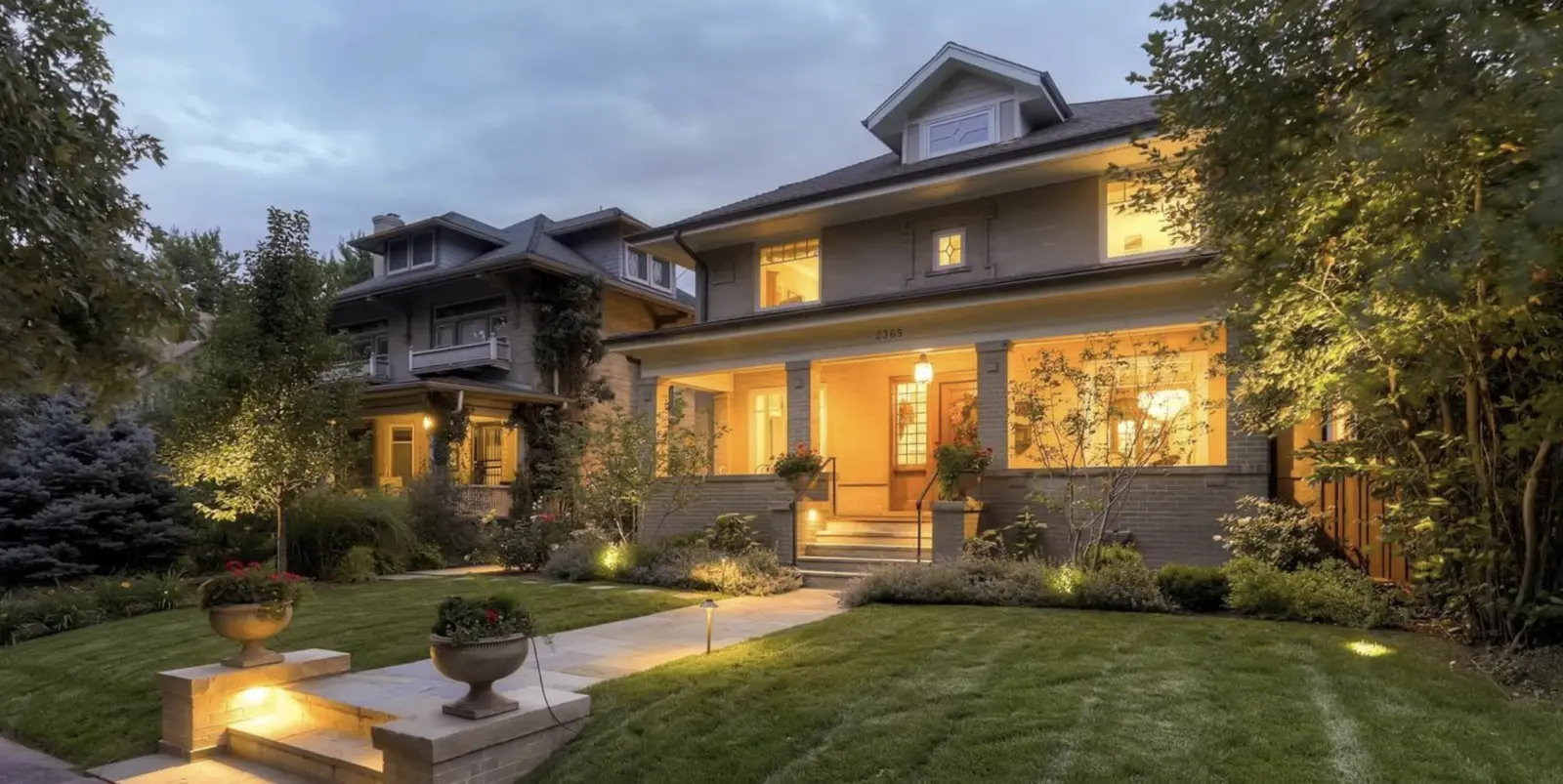
Understand Denver Neighborhoods Before You Choose One.
In-depth Denver neighborhood guides combining local knowledge, architectural perspective, market context, and independent research to help you make better real estate decisions.
LOCAL KNOWLEDGE. ARCHITECTURAL PERSPECTIVE. BETTER DECISIONS.
Explore Denver Neighborhoods in Depth
Each neighborhood guide examines the built environment, housing, parks, schools, commercial life, transportation, market context, and ownership considerations that shape the experience of living there.
Larger lots, predominantly detached homes, mature streets, and a quieter residential character distinguish these centrally located neighborhoods from denser parts of Denver.
Historic mansions, apartments, condominiums, cultural institutions, and dense city blocks create one of Denver’s most varied and distinctly urban residential environments.
A large master-planned community with multiple subneighborhoods, newer housing, parks, trails, schools, and distinct ownership environments.
Grand historic homes, classic apartment buildings, and elegant tree-lined streets around one of central Denver’s most distinctive green spaces. Its combination of architecture, park access, the Denver Botanic Gardens, and an urban location gives the neighborhood a character all its own.
Luxury housing, mature residential streets, significant architectural variety, and proximity to Cherry Creek create several of central Denver’s highest-value residential environments.
Historic homes, compact blocks, major cultural and medical institutions, and proximity to City Park create residential environments shaped by both history and change.
A highly livable central Denver neighborhood known for early-20th-century homes, mature trees, and a strong residential rhythm. Bungalows, Denver Squares, and smaller-scale infill sit close to parks, neighborhood businesses, and some of the city’s most established urban amenities.
One of central Denver’s most architecturally distinctive residential neighborhoods, known for grand historic homes, mature tree-lined streets, generous lots, and an established residential character. Its architecture and historic setting give the neighborhood a refined identity that is distinctly different from the surrounding areas.
Condominiums, apartments, historic buildings, offices, entertainment, transit, and walkable destinations create a fundamentally different ownership and lifestyle experience from Denver’s residential neighborhoods.
Mature streets, predominantly detached housing, varied architectural eras, neighborhood commercial nodes, and central-east Denver access define these connected but distinct residential areas.
Historic homes, varied residential districts, neighborhood commercial streets, and close proximity to downtown create a highly connected northwest Denver urban environment.
Larger lots, mature landscaping, substantial homes, redevelopment, and architectural variety create an established residential environment with significant property-to-property differences.
A former Air Force base transformed into a planned community with varied housing, parks, civic spaces, adaptive reuse, and neighborhood commercial destinations.
One historic Denver community with three distinct subareas, varied architecture, established streets, and materially different housing and market contexts.
Older housing, compact residential blocks, neighborhood commercial districts, light rail, and proximity to the University of Denver create a well-connected south-central Denver environment.
Historic residential blocks meet adaptive reuse, apartments, art, restaurants, nightlife, and redevelopment in one of Denver’s most complex urban neighborhood environments.
Mature residential streets, larger lots, varied housing, and proximity to the University of Denver create a quieter neighborhood with strong central-city connections.
Historic homes, mature streets, exceptional park access, and one of Denver’s most recognizable residential environments.
Explore Denver's Official Neighborhood Map
The City and County of Denver recognizes distinct statistical neighborhoods across the city. Use this reference map to understand official neighborhood boundaries and how adjacent areas relate geographically.
City and County of Denver · Statistical Neighborhoods · March 2025
More Than a Neighborhood Overview
Most neighborhood pages tell you what a neighborhood is known for.
The Neighborhood Atlas asks a more useful question:
What should you understand before deciding whether this neighborhood is right for you?
Each guide looks beyond surface-level descriptions to examine the characteristics that can influence daily life, homeownership, and real estate decisions.
That means understanding not just what is present in a neighborhood, but how those features interact—how architecture affects maintenance, how streets and commercial areas shape daily routines, how housing types influence market behavior, and how different parts of the same neighborhood can function very differently.
HOUSING + ARCHITECTURE
Understand predominant housing types, architectural periods, lot patterns, renovation considerations, construction differences, and characteristics buyers may want to investigate more carefully.
NEIGHBORHOOD STRUCTURE
See how streets, blocks, density, development patterns, subneighborhoods, and physical boundaries influence the experience of living within a neighborhood.
PARKS + OUTDOOR LIFE
Understand access to parks, trails, recreation, open space, and the relationship between those amenities and surrounding residential areas.
SHOPS + RESTAURANTS
Explore the commercial districts, neighborhood business clusters, restaurants, shops, services, and gathering places that help define everyday life.
SCHOOLS
Review the schools serving the neighborhood, available third-party information, enrollment considerations, and important distinctions between school boundaries and neighborhood boundaries.
TRANSPORTATION + MOBILITY
Understand major streets, transit, bicycle connections, pedestrian conditions, commuting considerations, and access to other parts of Denver.
REAL ESTATE MARKET
Explore housing inventory, pricing patterns, market segments, property differences, and the factors that can make neighborhood-wide averages misleading.
BUYER + SELLER PERSPECTIVE
See the neighborhood from both sides of a real estate decision—including characteristics buyers frequently value, issues worth investigating, and factors sellers should understand when positioning a property.
More Than a Neighborhood Overview
Most neighborhood pages tell you what an area is known for. The Neighborhood Atlas asks a more useful question: what should you understand before deciding whether this neighborhood is right for you?
A Neighborhood Is Not One Thing. Neither Is a Real Estate Decision.
Architecture, streets, parks, schools, commercial areas, transportation, and housing markets overlap to create the experience of a place. Understanding those relationships is more useful than evaluating any one feature in isolation.
Looking at a Neighborhood From More Than One Angle
A home is more than its finishes, and a neighborhood is more than its restaurants and median sale price.
The Neighborhood Atlas combines architectural understanding, real estate experience, local knowledge, market analysis, and independent research to examine how neighborhoods actually work.
The useful question is not simply, “Do I like this neighborhood?”
It is: “How does this place actually work, and what does that mean for the way I would live, own, buy, or sell here?”
01 — HOUSING STOCK
How does the age of the housing affect ownership?
Older homes can offer craftsmanship and architectural character while also presenting different expectations for electrical systems, plumbing, insulation, foundations, additions, mechanical systems, and renovations.
02 — LOCATION WITHIN THE NEIGHBORHOOD
Does the experience change depending on where you are?
Frequently. Major streets, parks, schools, commercial districts, development periods, housing types, and even individual blocks can create meaningful differences within the same named neighborhood.
03 — MARKET CONTEXT
What does the market data hide?
Neighborhood-wide statistics can combine properties that compete in very different market segments. Housing type, condition, location, lot characteristics, architectural quality, and subarea can provide more useful context than a single median number.
04 — WHAT IS EASY TO MISS
What might a buyer overlook during a showing?
Lot configuration, orientation, additions, renovation quality, drainage, neighboring properties, street context, future maintenance, and the underlying structure of the home can sometimes matter more than cosmetic presentation.
Understand the Tradeoffs, Not Just the Amenities
The Neighborhood Atlas is not designed to rank Denver neighborhoods or identify a universal “best.” Different places solve different problems well, and nearly every advantage comes with a corresponding tradeoff.
TRADEOFF 01
Historic Character ↔ Maintenance
Older neighborhoods may offer craftsmanship, mature streets, and architectural richness while requiring greater tolerance for maintenance, renovation, and older building systems.
TRADEOFF 02
Newer Construction ↔ Architectural Variety
Newer communities may offer contemporary floor plans, newer systems, planned amenities, and more predictable construction while providing less historic character and architectural variation.
TRADEOFF 03
Walkability ↔ Activity
Proximity to restaurants, shops, parks, and neighborhood destinations can make daily life more convenient while sometimes bringing more traffic, parking demand, pedestrian activity, and noise.
TRADEOFF 04
More Space ↔ Convenience
Larger lots, quieter residential streets, and lower-density development may provide more privacy and outdoor space while placing shops, restaurants, transit, and other daily destinations farther away.
The goal is not to eliminate tradeoffs. It is to understand them before they become surprises.
The right neighborhood depends on what matters to you.
Compare Neighborhoods More Intelligently
Instead of relying on one ranking, score, or median price, compare neighborhoods across the characteristics that shape daily life, ownership, and long-term fit.
01 — ARCHITECTURE
What kinds of homes define the neighborhood?
Look at architectural periods, construction types, lot relationships, additions, renovation patterns, and whether the housing is primarily historic, contemporary, custom, production-built, or mixed.
02 — HOUSING CHOICES
What ownership options are actually available?
Detached homes, townhomes, condominiums, newer construction, and historic properties can create very different ownership structures, costs, maintenance responsibilities, and buyer markets.
03 — URBAN FORM
How is the neighborhood physically organized?
Compare lot sizes, blocks, alleys, street widths, setbacks, density, garage patterns, and the relationship between private homes and public space.
04 — DAILY LIFE
What can you realistically reach and use?
Consider walkability, parks, recreation, shops, restaurants, services, schools, and whether daily destinations are concentrated nearby or spread across a larger area.
05 — TRANSPORTATION
How does the neighborhood connect to the rest of Denver?
Look at major streets, transit, bicycle routes, commute patterns, and access to downtown, employment centers, airports, highways, and other destinations that matter to you.
06 — SCHOOLS
Which schools actually serve the property?
Neighborhood names and school boundaries are not interchangeable. Review current assignment information, enrollment rules, programs, and third-party ratings independently.
07 — MARKET STRUCTURE
Does the neighborhood really function as one market?
Subareas, housing types, lot sizes, condition, architectural quality, and location can create several different competitive segments inside one named neighborhood.
08 — OWNERSHIP
What will this place ask of you after closing?
Consider construction age, maintenance, renovation history, HOAs, building systems, lot conditions, insurance, additions, and the less-visible responsibilities that come with ownership.
A better comparison starts with your priorities.
Two neighborhoods can both be excellent choices for very different reasons. The useful question is not which one ranks higher—it is which set of characteristics and tradeoffs better matches the way you want to live and own a home.
Research Before Conclusions
The Neighborhood Atlas is intended to be useful enough to influence real decisions. That requires a higher standard than simply collecting neighborhood descriptions from around the internet.
Each guide is developed using research, primary and authoritative sources where available, real estate market information, field observation, and professional analysis.
Accuracy before marketing.
The purpose of the Atlas is not to convince someone that a neighborhood is desirable. It is to help them understand the neighborhood well enough to make their own decision.
01 — VERIFY THE FACTS
Start with authoritative information.
Whenever practical, factual claims are grounded in sources such as government agencies, school districts, transit agencies, planning documents, historic records, public datasets, and other authoritative sources.
02 — ADD MARKET CONTEXT
Look beyond a single neighborhood statistic.
Real estate analysis considers the differences that can exist within a neighborhood, including housing type, location, property condition, architectural quality, lot characteristics, subareas, and other factors that may influence how homes compete.
03 — INTERPRET THE BUILT ENVIRONMENT
Explain why physical characteristics matter.
Architectural and neighborhood observations are used to help readers understand housing stock, development patterns, renovation considerations, streets, public space, and other aspects of the built environment that may affect ownership and daily life.
04 — SEPARATE FACT FROM INTERPRETATION
Be clear about what is known and what is analysis.
Verified facts, third-party information, professional observations, and interpretation are not treated as interchangeable. Sources are cited where appropriate, and professional analysis is presented as analysis rather than objective fact.
SOURCE STANDARD
Primary sources whenever practical.
Official and authoritative sources are preferred for factual claims. Secondary sources may add useful context, but they should not replace better evidence when better evidence is available.
A LIVING RESOURCE
Neighborhoods change. The Atlas should too.
Market conditions, businesses, schools, transportation, planning decisions, and neighborhood conditions can change. Guides are intended to be reviewed and updated as new information becomes available.

Michael Thomas
Architect + Real Estate Broker
REMAX of Cherry Creek
Architecture Changes the Way You See Real Estate
I created the Neighborhood Atlas because buyers and homeowners often need more than the information found on a typical neighborhood page.
As both a licensed architect and an experienced Denver real estate broker, I tend to look at homes and neighborhoods through two overlapping lenses: how places are designed and built, and how those characteristics affect real-world real estate decisions.
That means asking questions that may not be obvious from a listing or a neighborhood statistic:
How was this neighborhood developed? How does its housing stock differ from nearby areas? What should someone understand about the age and construction of its homes? Why do certain blocks or subareas behave differently in the market? What characteristics might create value for one buyer but become a disadvantage for another?
The Atlas is my attempt to make that way of thinking useful to anyone trying to understand Denver more deeply.
ARCHITECTURE
Understand the building.
Design, construction, age, renovation, site conditions, and physical context can materially affect how a home functions and what ownership may involve.
REAL ESTATE
Understand the market.
Homes do not compete only by ZIP code or neighborhood name. Property type, condition, location, design, and buyer expectations can create very different market segments.
DECISION-MAKING
Understand the tradeoffs.
The goal is not to declare a neighborhood good or bad. It is to make its advantages, limitations, and ownership considerations easier to see.
Homeownership Resource
Need Help With the Home Beyond the Neighborhood?
The Neighborhood Atlas helps you understand where you are buying or living. When you need help with the property itself, the ttArch Home Services Directory can connect you with Denver-area professionals for repairs, maintenance, renovation and moving.
NEED HELP COMPARING YOUR OPTIONS?
Trying to Decide Which Denver Neighborhood Fits Your Priorities?
The Neighborhood Atlas is designed to help you research neighborhoods independently. If you want help comparing specific areas, evaluating a home, or understanding how a property fits within the Denver market, I’m happy to help.
Michael Thomas • Denver Real Estate Agent & Licensed Architect • ttArch Real Estate